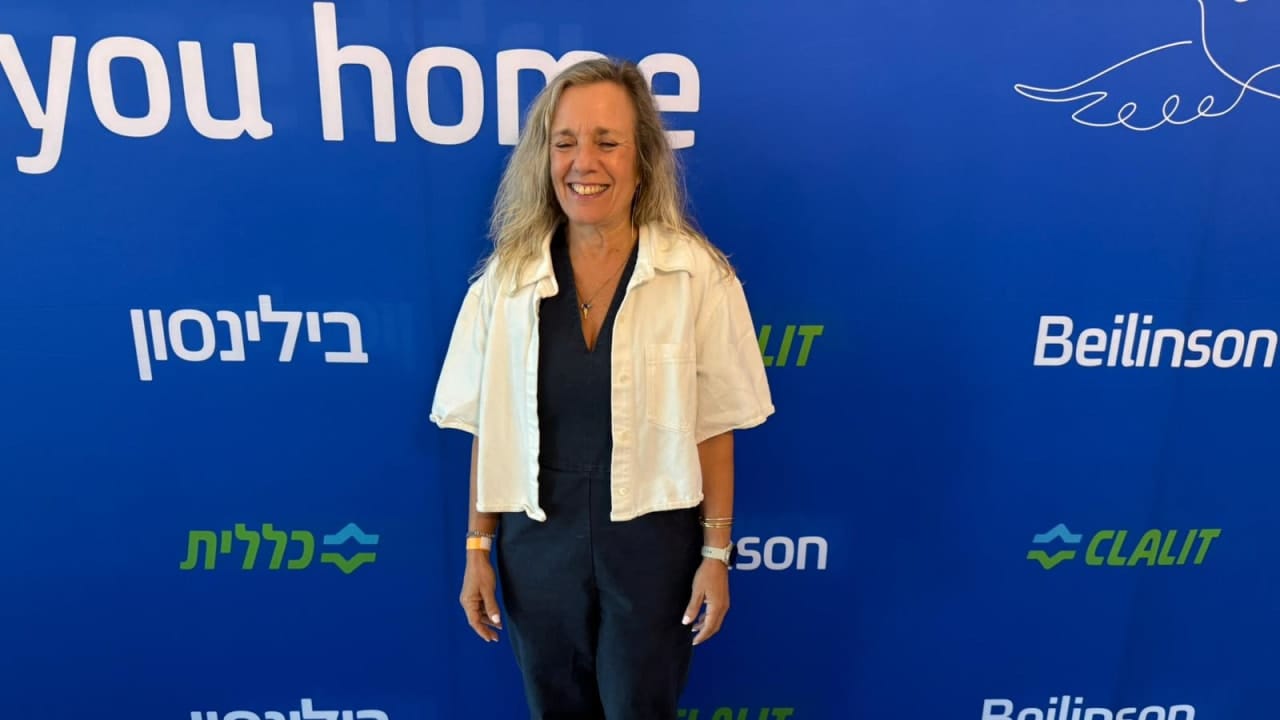
Prof. Noa Elikim Raz, head of the Returning Department at Rabin Medical Center-Beilinson Campus, and Dr Sigal Frishman, head of nutrition at the hospital, spoke to Maariv on Tuesday, describing the treatment and care the hospital is providing to the released hostages, particularly the psychological and nutritional aspects.
The Health Ministry carefully assigned the 20 hostages released on Monday to each of the three hospitals so that those who were together in captivity or knew each other beforehand would be hospitalized in the same ward, allowing them calm, conversations, and shared rehabilitation of both body and mind. Five hostages out of the 20 released on Monday are hospitalized in Beilinson campus: Guy Gilboa-Dalal, Alon Ohel, Eitan Mor, Avinatan Or, and Evyatar David.
Raz described the first morning saying "The department is slowly waking up. This is the hostages first day not in captivity, and that's quite something."
"Many of them did not sleep all night. It's important for us to match the tests to each person's pace and speed of recovery, without putting any pressure on them," Raz explained.
"Being held underground has a price, the immune system weakens, wound healing is slow, and the entire body becomes tired," they added.

"We were prepared for every scenario, from complete fasting to severe starvation"
"Since the previous returning hostages, we know and are prepared for weight loss and depletion of muscle and iron reserves," Frishman explained.
"The longer the time in captivity and the harsher the conditions – no proteins, no vegetables, no sunlight, the nutritional situation gets worse. But we also know the body is capable of rehabilitation. It has amazing compensatory mechanisms," she elaborated.
"We’ve seen this with previous hostages, and also from descriptions from the Holocaust period. With proper treatment and cooperation from the patient, everything is rehabilitable," she added.
Frishman explained that each hostage is assigned a personal dietitian who constantly monitors their condition.
"On the first day, we meet each one, ask how much weight they’ve lost, what they’ve eaten, how their digestive system is functioning, what cravings they have. On the second day, we return again, ask how it was, whether they slept, how they felt after the meals. Monitoring is daily," she explained.
The hospital's approach is based not only on physical rehabilitation but also on restoring a sense of control.
"We ask what they feel like eating, what makes them feel good. Some wanted sushi, others a hamburger, some prefer pizza or ice cream. We integrate it moderately, according to their ability. It’s very important to return the choice to them – this is part of the psychological rehabilitation as much as the physical one," Frishman clarified.
What about food from home?
"Families bring sweets, cookies, soft drinks, and homemade food, and there is room for that too," Frishman told Maariv.
"We want them to feel at home. Everything is done in full cooperation with the families, who understand the need for a gradual process. Once the patient is freed from fear, they start eating. It’s always emotional," she added.
"They really want to return to their routine, and that’s the key. When there is motivation, the body recovers quickly," Frishman said optimistically.
"The main danger is in the first two days, when the body receives food again. After that, reserves are gradually built up - muscle, bone, iron. The young and strong will return to themselves faster, but everyone will get back on their feet," she elaborated.

What was the moment that moved you the most?
"This time there was an emotional flood that I haven’t encountered in previous rounds. Maybe because this is the last return of the hostages, maybe because these are people who were there for two years, and we already know them and their families," she answered.
"Every smile of theirs, every first taste of food, is a moment you don’t forget. You see the soul returning to the body. Life itself returning to the plate. We feel a great privilege to treat the returning hostages and a great honor to be part of their rehabilitation back to real life. I am an optimistic person by nature, and I am sure everyone will be okay," Frishman expanded.