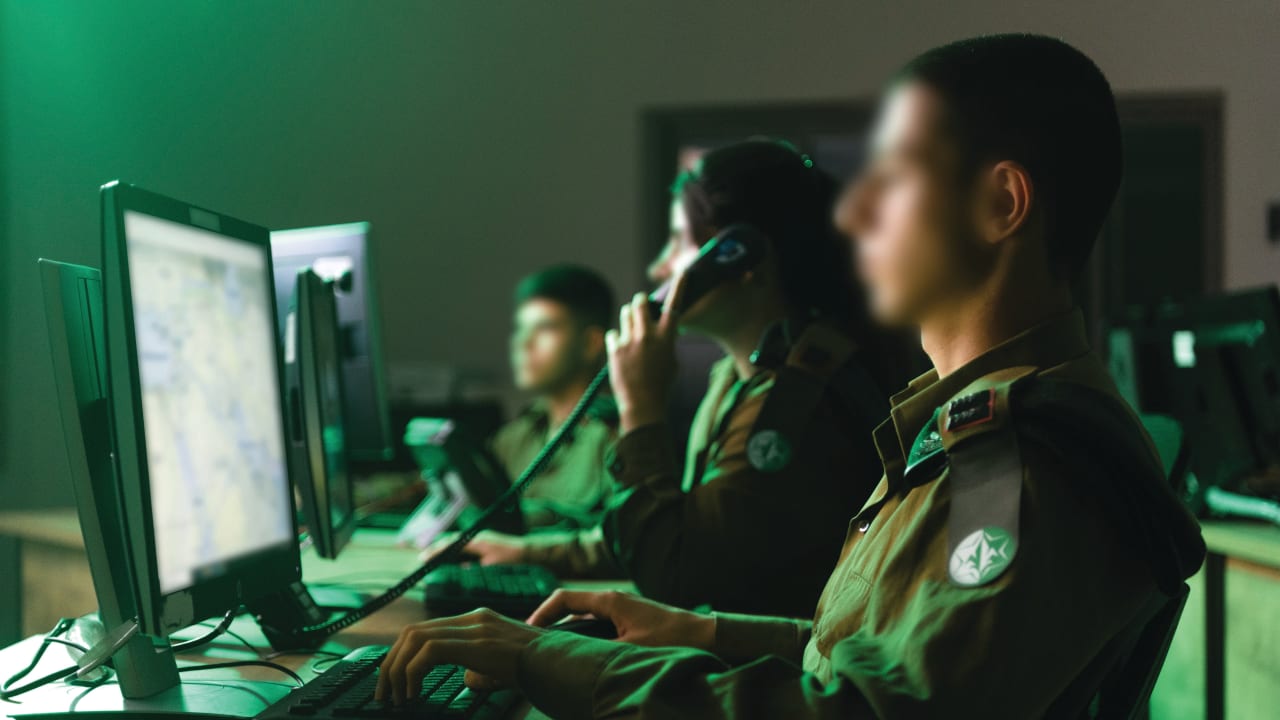
The key to dealing with cyber-artificial intelligence race still concerns “the people behind the algorithm,” former IDF 8200 Unit intelligence officer Maj. (res.) Julia Kogan Ehrlich said on Tuesday.
Speaking at the Cybertech Global conference in Tel Aviv, Kogan Ehrlich, now a start-up advisory and angel investor, conducted a debate with other former Unit 8200 officials about what people should focus on learning, such as “knowing a lot or knowing how to learn fast.”
The consensus among former Unit 8200 officials was that quickly adaptability, resilience, and mental flexibility were crucial to handling the AI race.
Kogan Ehrlich also said that AI might enable humans to build more creative kinds of companies, with a leap forward in these new companies’ capabilities.
Earlier at the conference, Ashdod Port Board of Directors chairman Shaul Schneider said that 80% of Israeli exports enter through seaports, with 40% of these cargoes arriving in Ashdod.

With this in mind, he said, 100,000 cyberattacks target the port on a monthly basis.
Cyprus, Greece, Israel collaborating in cyber arena
On the same panel at the conference, Cyprus Commissioner of Communications George Michaelides and Israel National Cyber Directorate maritime official Gadi Benmoshe said that the new three-country deal between Cyprus, Greece, and Israel, which was recently publicized, is already operating in the cyber arena.
Michaelides said that the countries are collaborating or will collaborate on four pillars.
These include: 1) Building and sharing threat intelligence, and eventually sharing incidents and incident management; 2) Joint training and computability, given that many maritime officials do not have sufficient cyber skills or awareness; 3) Passing joint legislation and regulations and investing in think tanks to manage future investment in the smartest ways for future stages; and 4) Joint research and innovation that bring together start-up and academic experts for national purposes.
During a separate panel on threats hackers pose to railway systems, France’s Alstom VP of cybersecurity, Eddy Thesee, said they are trying to strike a balance when dealing with China in the cyber and infrastructure spheres.
On one hand, Thesee said, China is a huge and unavoidable country. He noted Beijing has built many Israeli light rail lines.
Contrariwise, he said, France and many democratic countries are careful about what access and information they share with China, with implications for its record as a nondemocratic country that might also use such items for problematic purposes.