The Jewish community in Australia, estimated at 117,000 people, is one of the most concentrated Jewish populations globally.
The majority of Australian Jews (84%) reside in just two cities: Melbourne and Sydney, where they form tight-knit, identifiable communities in specific suburbs. This high concentration has historically fostered strong communal bonds and infrastructure.
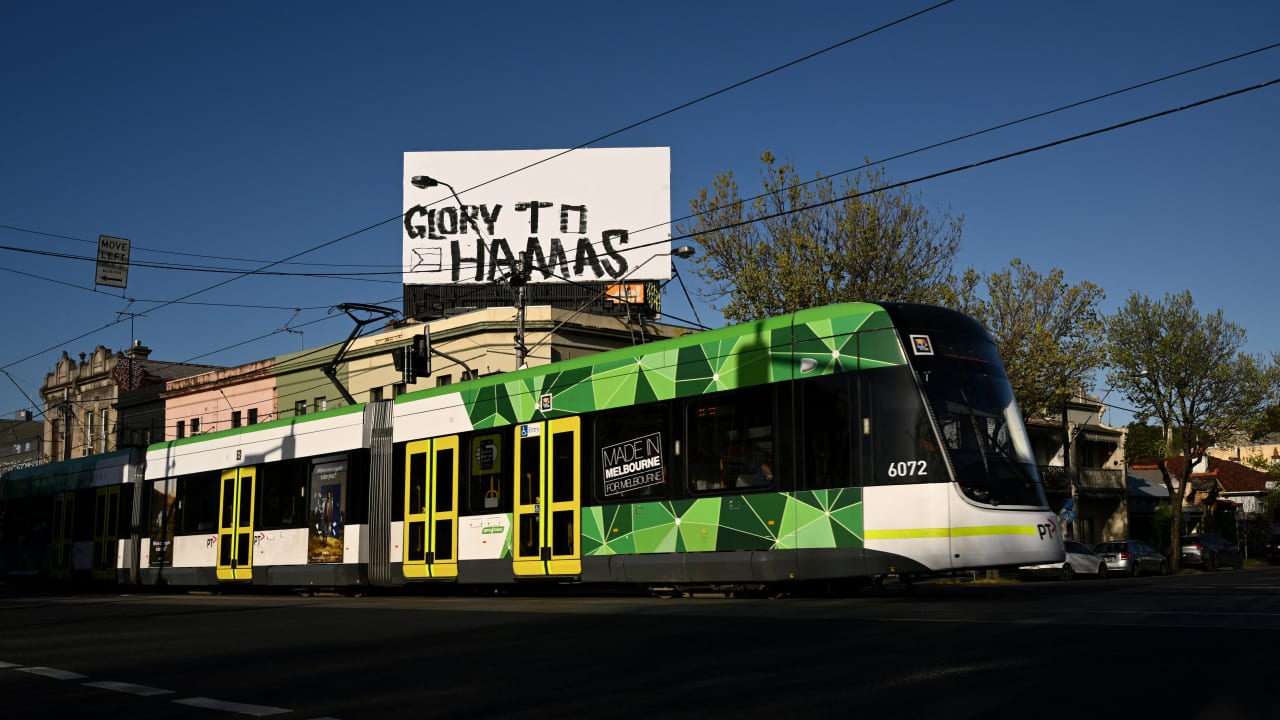
However, this high visibility made the community an easy and direct target for antisemitic and anti-Israel protests, leading to a dramatic rise in incidents – such as attacks on communal property – and causing a profound sense of personal insecurity among its members.
The religious profile is diverse, though many community members are often characterized as nonpracticing Orthodox, a reflection of historical Anglo-Jewish influence. While only 6% identify as strictly Orthodox, a much larger portion report being “traditionally religious” (33%), with a significant number (43%) identifying as “Jewish but not religious.” The Australian Jewish community’s high concentration and strong internal cohesion – evidenced by its low intermarriage rate (30% for partnered Jews) – significantly shaped its response to the surge in antisemitism and the need to support Israel after Oct. 7.
This strong communal affiliation enabled a unified and swift communal response, leveraging powerful central organizations (such as the Executive Council of Australian Jewry or ECAJ) to organize large solidarity rallies, lobby the government, and coordinate security across institutions. This structure provided a strong, cohesive voice in support of Israel’s right to self-defense, a position deeply rooted in the community’s traditional and Zionist identity.

While the community initially exhibited near-total unity, the prolonged conflict in Israel has since led to the emergence of a smaller but vocal progressive dissenting voice, challenging the mainstream consensus on support for the Israeli government’s specific military conduct.
I contacted Michael Gencher, executive director of StandWithUs Australia, and asked his views on the current situation of Jews in Australia.
“Since Oct. 7, Jewish Australians in the Diaspora have been dealing with a mix of shock, fear, sadness, guilt, frustration, anxiety, and exhaustion that has shaken many to the core. Antisemitism is driving much of what we feel.
The rise in hostility has made people anxious in ways they never thought possible here in Australia. Parents worry for their kids at school and university, where antisemitism is more visible than ever, and many families think twice before wearing or displaying anything that identifies them as Jewish,” he said.
Some 70% to 75% of Jewish kids in Melbourne and 62% in Sydney attend Jewish day schools. Non-government schools, which include Jewish day schools, receive significant funding from the Australian government (both Commonwealth and state). This funding significantly reduces the reliance on high tuition fees compared to the US.
Frustration, grief, and guilt
“Alongside this fear sits frustration. Frustration that governments and institutions have not stepped up strongly enough, frustration that antisemitism is downplayed, and frustration that the Jewish community constantly has to explain and defend itself.
“There is also a deep sense of grief. Grief for the lives lost in Israel, and grief for the loss of the feeling that Australia was a safe and welcoming home.
“Guilt is heavy, too. Guilt for being safe while loved ones overseas are under fire, guilt for being able to switch off when Israelis cannot, guilt for enjoying normal life moments like a family birthday or a day at the beach when others are suffering,” Gencher said.
Community exhaustion
“The constant pressure of confronting antisemitism daily has left many exhausted, emotionally drained from protests, media coverage, and the need to keep responding. Leaders and volunteers especially are burning out from carrying so much of the community’s burden.
“At the same time, there has been a strong pull back to community. Synagogues are fuller, people are leaning on each other more, and there is both pride and solidarity when we come together in public.
“That resilience is real, but it is fragile. Communities are finding strength in unity, but they need real support to withstand the antisemitism, guilt, frustration, and uncertainty that have become part of everyday life,” Gencher elaborated.
Support for Israel
“Honestly, most Jews here don’t blame Israel or even [Prime Minister Benjamin] Netanyahu for what we’re dealing with. What we feel day to day is the hate in the media, the rubbish on social media, and the way it spills into protests and campuses. That’s what makes life hard.
“Sure, some people don’t like Netanyahu or the way Israel is handling Gaza, but that’s a separate conversation from the antisemitism we’re copping here.
“It also depends who you ask. Older Jews and the more religious/connected crowd are pretty solidly pro-Israel. Younger ones are more mixed. Some are really active and strong advocates; others are confused or a bit distant, especially if they’re not so connected to the community and are just seeing the stuff online.
“Our community is smaller and tighter than in the US, so we don’t see the same level of ‘distancing,’ but you can feel shades of it, especially with the younger generation.
“At the end of the day, most people don’t think Israel is the reason for the hate here. They see it as antisemitism using Israel as the excuse,” he said.
Two Diaspora communities: A comparative lens
The differences in post-Oct. 7 resilience and response between the US and Australian Jewish communities, beyond communal structure and geographic concentration, were fundamentally shaped by key demographic and socio-religious factors.
Communities with higher proportions of traditional or Orthodox Jews, such as Australia, demonstrated enhanced internal cohesion and a rapid, unified mobilization, as Jewish institutions already formed the core of their social lives.
Conversely, the more diverse, secular communities, particularly in the US, faced greater challenges, such as pronounced internal polarization and a significant trend toward “distancing” among less-affiliated youth exposed to anti-Israel narratives on university campuses. The high rate of intermarriage in the US further complicated resilience, introducing potential “traumatic invalidation” within families where non-Jewish partners might not share the same emotional connection to the trauma or to Israel, even while creating opportunities for new allies.
Moreover, the Australian community’s high proportion of Holocaust survivor descendants instilled an intense, almost instinctual vigilance and unity, contrasting with the US context, where the response was often complicated by deep political polarization, forcing many liberal Jews to confront anti-Zionist sentiment from the political Left – a traditional ally.
Jewish education, particularly through day schools, consistently correlates with stronger Jewish identity and increased pro-Israel support across the US, Australia, the UK, and France, even when controlling for family background. (Prizmah: Center for Jewish Day Schools – Research Corner). But the largest population of Jews is in the US, where the lowest percentage of Jewish children, 5%, attend private Jewish day schools.
Jewish communities are also losing the PR war in social media. A 2024 survey of 18-40-year-old Jews regarding their news sources about Israel revealed that 57% listed “social media sites, such as Twitter/X, Instagram, Facebook, YouTube, TikTok, or Snapchat” as a source. Pro-Palestinian content on TikTok has vastly outnumbered pro-Israel content.

Turning pain into strategy: What comes next
The events of Oct. 7 starkly revealed the vulnerabilities of Diaspora Jewish communities, but they also illuminated potential pathways toward resilience.
The emotional, psychological, and communal devastation cannot be healed through slogans or symbolic gestures – it demands a strategic response.
One of the most urgent priorities is investing in Jewish education (notably in the US), particularly day schools, which serve not merely as academic institutions but as incubators of identity. Ensuring that Jewish children, especially in the US, grow up with a strong sense of belonging and historical awareness requires dedicated funding, increased accessibility, and proactive outreach.
The American Jewish community can learn from the Birthright program. Taglit-Birthright Israel, launched in 1999, aims to strengthen Jewish identity and connection to Israel among young Jews through free guided trips to Israel. Studies show that participants feel more connected to Judaism, are more likely to support Israel, and prefer Jewish partners for marriage. It seems more vital than ever to assure that every Jewish child has an opportunity to attend a Jewish day school.
Equally vital is the creation of cross-Diaspora learning networks. By building platforms for sharing best practices, crisis response strategies, and educational tools across borders, communities can strengthen their collective resilience.
While Australian Jews express strong pride in their Jewish identity and connection to Israel, they also report feeling vulnerable and increasingly isolated in the face of rising antisemitism. The global community of Jews would be far better off by strengthening their connections and joining forces to create a global Jewish strategy.
Another critical front is the digital battlefield. The narrative war is being lost where young minds spend their time – on TikTok, Instagram, and YouTube. Jewish organizations must invest in digital storytelling, forge partnerships with influencers, and establish rapid-response teams capable of countering misinformation with compelling and authentic content.
Support for mixed families must also evolve. Intermarriage is a reality. Instead of viewing it as a threat, communities should provide empathetic resources that help non-Jewish partners understand Jewish trauma, history, and the connection to Israel. This approach can transform potential invalidation into unexpected solidarity.
Finally, building psychological infrastructure is essential. Emotional exhaustion, guilt, and fear are not just individual burdens – they pose risks to communal strength. Investing in trauma-informed care, mental health support, and spiritual resilience programs will better prepare Jewish communities to face future crises with courage and clarity.
The challenge is in front of us. Let’s go solve the problem. It is time to unite and face the common enemy and – as Israeli author and columnist Gol Kalev would describe it – the assault on Judaism.
The writer is a cognitive-behavioral psychotherapist specializing in adult and couple therapy, with a subspecialty in treating anxiety, adjustment, and depressive disorders and addiction. drmikegropper@gmail.com; www.facebook.com/drmikegropper