The US Centers for Disease Control and Prevention said on Monday that one American tested positive for Ebola as part of its work in the Democratic Republic of Congo, where there is an outbreak of a rare strain of the virus, but advised that the immediate risk in the US was low.
The CDC did not name the individual, but the Serge Christian mission organization said one of its medical missionaries, Dr. Peter Stafford, was exposed while treating patients at Nyankunde Hospital in the DRC.
"The person developed symptoms over the weekend and tested positive late Sunday," Dr. Satish Pillai, the incident manager for the agency's Ebola response, told reporters on a media call.
The CDC is working with the US State Department to move the American to Germany for treatment and care, said Pillai, adding that six other people who were exposed were also being moved to Germany.
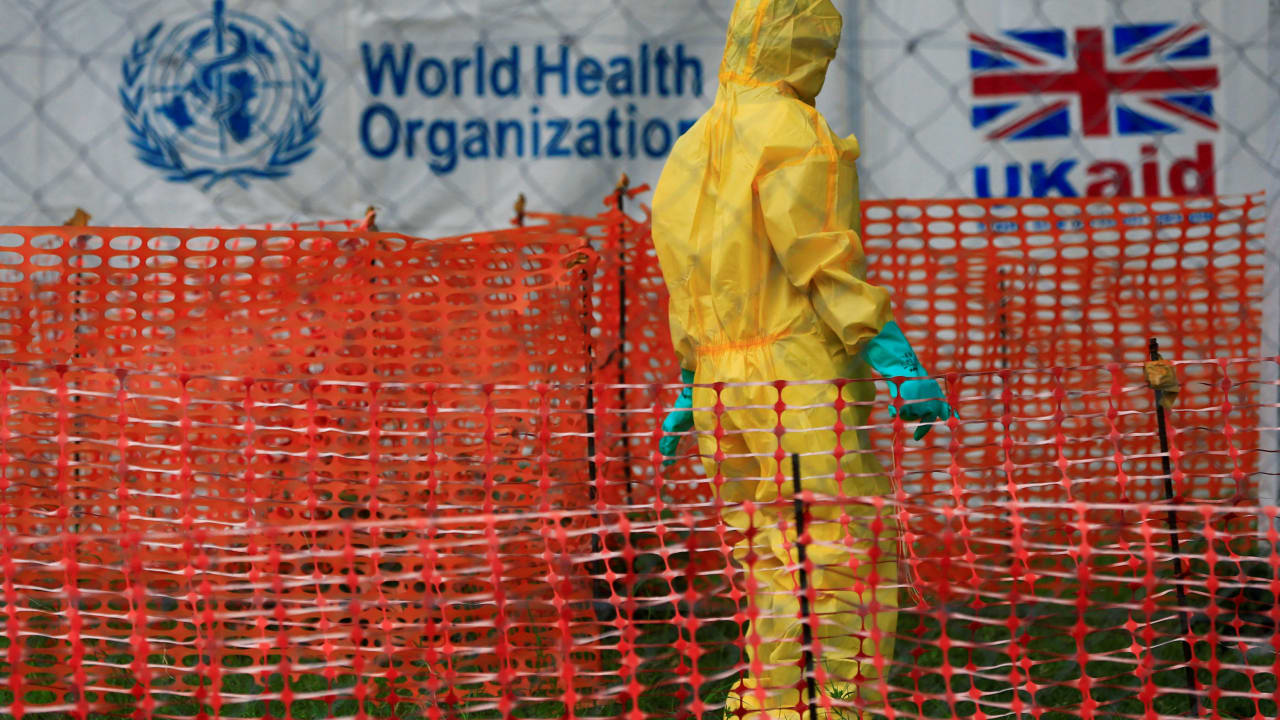
Medical personnel were rushing on Monday to the front lines of a new Ebola outbreak in eastern Democratic Republic of Congo, where late detection of the virus and quick spread have alarmed health experts. There have been 105 suspected deaths and 393 suspected cases, the Congo Health Cluster said on Monday.

Serge said Stafford was one of three missionaries, including his wife, who were caring for patients, but that the other two remain asymptomatic.
CDC deploying technical experts to outbreak area
The CDC is deploying technical experts from its headquarters in Atlanta to the outbreak area, Pillai said.
The US is working to develop a monoclonal antibody therapy as a potential treatment for this strain of Ebola, he said, with the work taking place in the Biomedical Advanced Research and Development Authority, known as BARDA.
The US has the capacity to test for the virus through its public health laboratory network, said Pillai, and the risk to the United States remains low.
However, cuts to the agency under the Trump administration and the official withdrawal of the United States from the World Health Organization this year will hamper response efforts, former CDC Director Dr. Thomas Frieden, who led the agency through the 2014-2016 Ebola outbreak in West Africa, said in an interview with Reuters.
"I'm very concerned about the ability of the US government, especially the CDC, to respond to emergencies like this. The CDC has been hollowed out. There are thousands and thousands fewer staff, many of whom worked on problems like this."
Frieden said that when the West Africa Ebola outbreak a decade ago was first identified, there were 40 cases, and that outbreak had been going on for weeks or even months, and ultimately resulted in more than 28,000 reported cases and 11,300 deaths.
When the current outbreak was first identified, there were as many as 400 cases. "It's already in two or three countries. It's in places that are very hard to access. So this is going to be really tough to manage, and that's why global collaboration is so very important," he said.
CDC travel restrictions
The CDC said earlier on Monday it was suspending the entry of some travelers for 30 days to reduce the risk of Ebola spread.
The order applies to travelers who have departed from, or were present in, the DRC, Uganda, and South Sudan during the past 21 days, regardless of their country of origin, the agency said in a statement.
The measures will not apply to US citizens, US nationals, lawful permanent residents, members of the US military, government personnel overseas, their spouses and children, according to the order.
Other exemptions include individuals whom customs officers determine should be excepted from the order, and non-citizens to whom it would apply but are approved to enter by the Department of Homeland Security.
Dr. Jeanne Marrazzo of the Infectious Diseases Society of America said interventions such as limiting travel can be valuable when done in coordination with other countries, but policies that "single out non-US citizens won't prevent viruses from crossing our borders."
A key risk with this virus, however, is its long incubation period, which can extend up to 21 days, potentially allowing exposed individuals to travel internationally while asymptomatic, thereby evading routine symptom-based screening measures, the CDC said.
It issued the order under Title 42, a section of US public health law that grants federal health authorities the power to prohibit migrants from entering the country to prevent the spread of contagious diseases.
The agency said it would also screen and monitor travelers arriving from areas affected by Ebola outbreaks in the region and ramp up contact tracing, laboratory testing capacity and hospital readiness nationwide.
Pillai said the US government was still working on its final plans for DRC World Cup athletes and international travel hubs. Houston is serving as the host site for the DRC team during the World Cup, which begins next month, and several US cities will be hosting other teams.
The CDC will also coordinate with airlines and port-of-entry officials to identify and manage travelers who may have been exposed to the virus.