
Significant overweight in children does not necessarily indicate disease, according to researchers at Tel Aviv University (TAU), who found that even if the amount of food consumed by obese children can’t be reduced, their health can still be protected by ensuring the nutritional quality of their food and reducing fatty liver damage.
The groundbreaking study was led by Prof. Yftach Gepner and doctoral student Ron Sternfeld from TAU’s Gray Faculty of Medical and Health Sciences and the Sylvan Adams Sports Science Institute, together with Prof. Hadar Moran-Lev and Prof. Ronit Lubetzky from Tel Aviv Sourasky Medical Center’s Dana Dwek Children’s Hospital.
It’s a cultural battle
Fully 60% of Israeli adults and 35% of children and teens are overweight or obese. Due to political pressure, in early 2023 the then-Shas-controlled Health Ministry and the government canceled the tax on sweetened drinks (sugar and artificial sweeteners), which, abroad, has been found to reduce consumption of this junk food, Gepner told The Jerusalem Post.
Metabolic Dysfunction-Associated Steatotic Liver Disease (MASLD) – the new name for fatty-liver syndrome – is not symptomatic, Gepner continued. Almost 40% of the world’s adult population suffers from it, as do a smaller percentage of children. This metabolic syndrome is caused by a poor lifestyle – bad diet of ultra-processed food, little or no exercise – and only rarely by genetics.
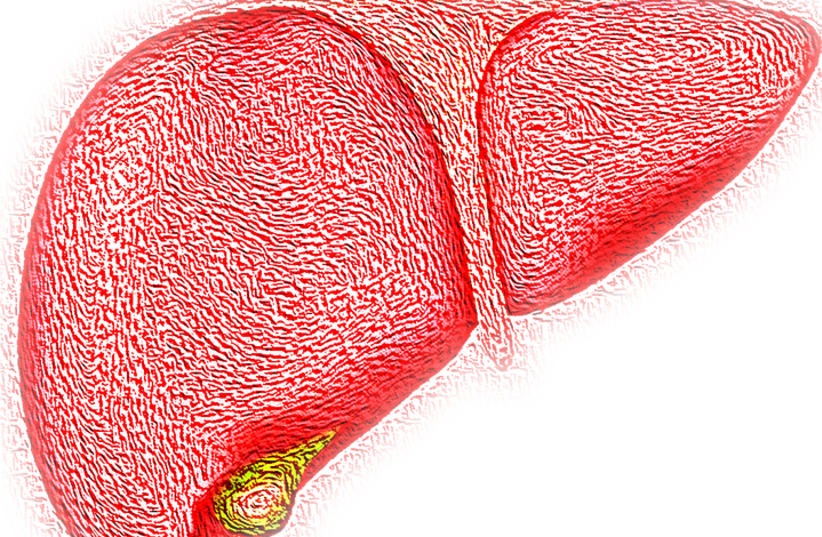
“Improving one’s lifestyle can reverse MASLD, even without losing weight,” he said. It’s often detected accidentally, either during an abdominal ultrasound or through routine blood tests showing elevated liver enzymes. While it might sound harmless, liver fat is not normal – it’s a sign of metabolic dysfunction that can damage the liver and, over time, trigger fibrosis (scarring), cirrhosis (severe scarring), liver failure, and even liver cancer. “We diagnosed a 14-year-old teen whose liver consisted of 40% fat!”
The findings have just been published in the journal Frontiers in Nutrition under the title “Hepatic fat and dietary intake as determinants of metabolic health in obese adolescents: A cross-sectional MRI study.”
The researchers used innovative methods to examine 31 obese Israeli teens in an attempt to understand why some have developed illnesses as a result of their excess weight, while others so far remain healthy. They discovered that the percentage of fat in the livers of those youths already experiencing illness was two-and-a-half times higher – 14% compared to 6% – compared to a group of healthy obese teens.
The researchers stressed that, according to the findings, the health of obese children is influenced not only by the quantity, but also by the quality and composition of the food they eat. “The study indicates that even if obese kids don’t lose weight or eat less, their health can be protected by monitoring the components of their diet and minimizing fatty-liver damage.”
Sternfeld explained: “This is a cross-sectional study, which means we did not follow the children over time but rather examined them thoroughly at one point in time. Therefore, we can show only correlation but not causality in our findings. Nevertheless, the study is important and unique, investigating why some obese children remain metabolically healthy, while others of the same weight already show signs of metabolic disease.”
To do this, the team conducted a wide range of medical tests and reviewed the medical records dating back to when they were fetuses in their mothers’ wombs. The highlight of the study was the use of magnetic resonance spectroscopy (MRS technology) – an advanced, non-invasive method that directly assesses liver composition, enabling precise measurement of liver fat percentage during MRI (magnetic resonance imaging) scans.
This provides a “virtual biopsy” by measuring the concentration of specific chemicals (metabolites) in tissues. It’s performed using the same machinery as a standard MRI, but it uses specialized software to generate a spectrum of biochemical information rather than an anatomical image. This is one of the few studies ever to use MRS for diagnosing fatty liver in obese children.
To identify the best predictor of metabolic disease in obese children, the researchers examined 31 teens treated at the Obesity Clinic of Dana Dwek’s Gastroenterology Institute. They were similar in age and body weight, which includes muscle, fat, bone, and water.
One group was still metabolically healthy while the other already showed abnormal rates of fasting glucose, blood lipids, cholesterol, and/or blood pressure. The researchers found that the factor most linked with metabolic illness was the percentage of fat in the liver: 14% in children were already showing illness, compared to only six percent in the group of obese-but-still-healthy children.
“We checked many different criteria and found no difference between the two groups,” Sternfeld recalled. “For example, we found no difference in the visceral fat that surrounds internal organs in the abdomen and is considered a major metabolic risk indicator. In contrast, a dramatic gap was found in the percentage of fat in the liver. To our surprise, we found that some obese children do not have fatty liver.”
Gepner said that comparing the children’s diets, they found that those already ill consume higher levels of sodium, processed food, and certain saturated fatty acids from animal protein, mainly red meat.”
“This means that the quality, not just the quantity of the food, plays a role. A diet that consists of a lot of ultra-processed grains, animal protein, and sodium may exert a notable influence on metabolic health during early stages of life. A Mediterranean diet can provide protection against metabolic illness, even in the case of obesity.”
The study strengthens the hypothesis that the liver is the most important metabolic organ and should be a primary target for preventive medicine.
The adolescents were all getting routine care at the hospital’s obesity clinic between January 2021 and August 2023. Participants underwent a full day of assessments, which included the scans, along with various physiological performance tests such as isometric mid-thigh pull and handgrip dynamometer strength tests, and resting metabolic-rate measurements.
The findings underscore the potential influence of prenatal and lifestyle factors in distinguishing metabolic health profiles in adolescents with obesity, Gepner said.
“Although causality cannot be inferred due to the cross-sectional design of the study, the observed associations suggest that the amount of fat in the liver can serve as a meaningful marker of metabolic risk in this population.”