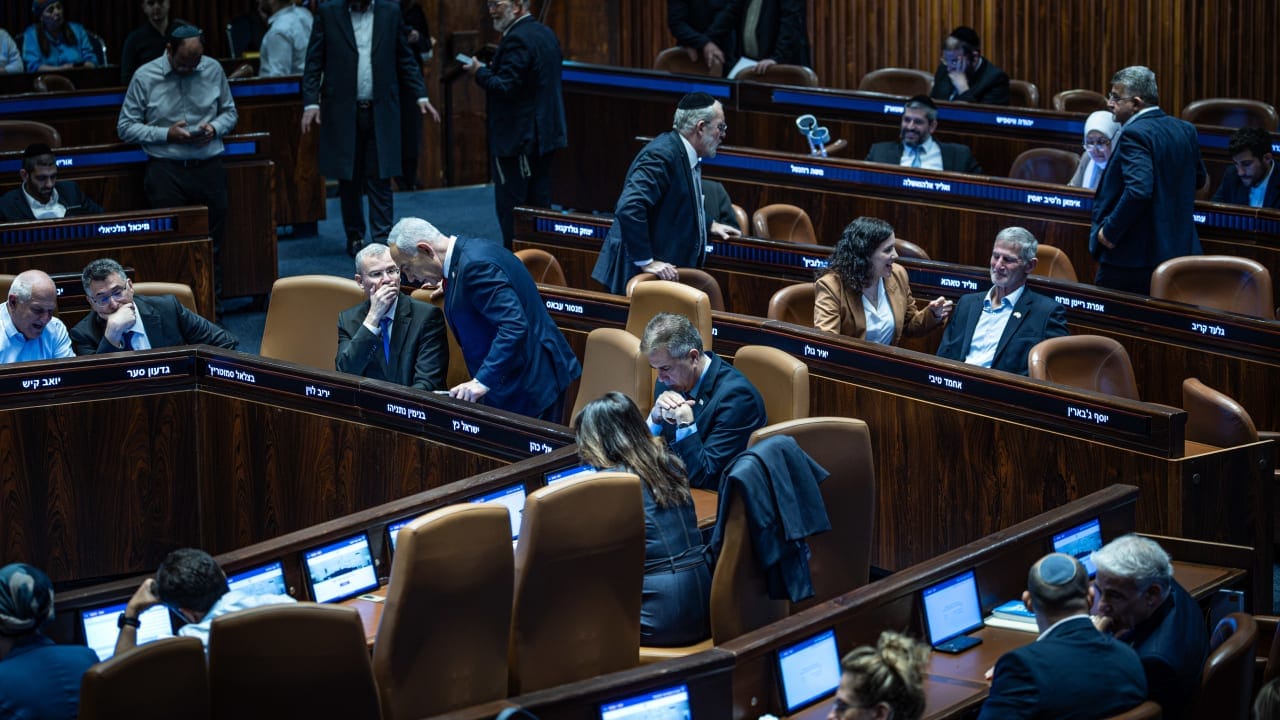
The Knesset plenum passed two bills sponsored by Likud MK Ofir Katz in preliminary readings on Wednesday, including one seeking to bar MKs who refuse to recognize Hamas as a terrorist organization from exercising their parliamentary rights.
The votes were boycotted by lawmakers from the bloc led by Yashar chairman MK Gadi Eisenkot, which called Likud's move to submit the bill a “political theater” and said they would not cooperate with legislation advanced by Prime Minister Benjamin Netanyahu’s bloc.
The bill seeking to strip MKs who refuse to recognize Hamas as a terrorist organization of their parliamentary rights passed in a vote of 48-0, despite Netanyahu’s bloc lacking a parliamentary majority currently, as all parties in the Eisenkot-led bloc boycotted the vote.
Yashar said the bloc would “not take part in Likud’s political theater,” adding that every proposal Likud put forward in the plenum was an “embarrassing provocation” and part of its usual “political tricks and gimmicks.”
Yashar faction chairman MK Roy Folkman said that the Netanyahu-led bloc, after four years in power during the 25th Knesset, was now no longer in a position to dictate the legislative agenda.
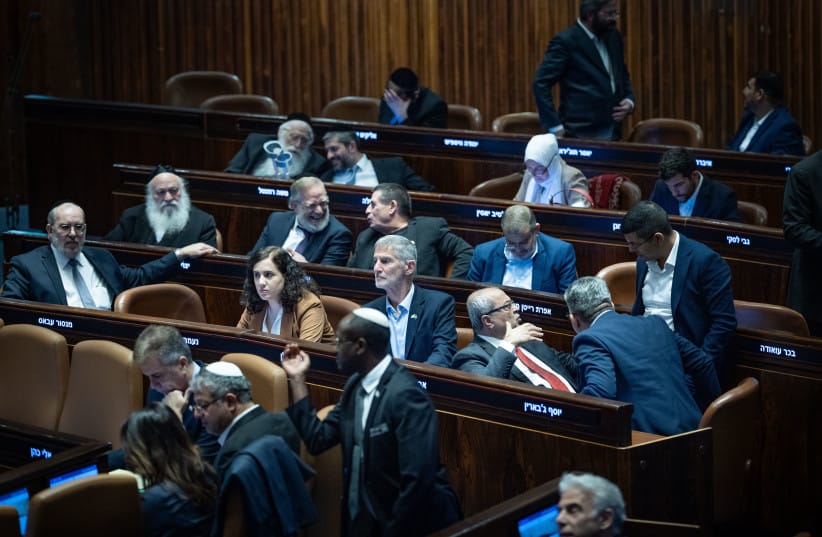
“Those who trampled the Knesset and Israeli democracy for four years will not dictate the agenda to us now,” Folkman said.
“Netanyahu and Likud have suddenly remembered to advance laws they did not even bother to bring forward during those four years, precisely when they are losing their power."
“We will not let them drive a wedge into the Change bloc. We will continue working to repair the damage left by the outgoing government,” Folkman added.
Eisenkot-led bloc uses Knesset majority to advance legislation
The Eisenkot-led bloc has been seeking to advance as much legislation as possible during the period before a new government is formed, while it holds a parliamentary majority with the support of the Arab parties – a majority Netanyahu’s bloc lost following the October 27 elections.
The election results showed that the opposition bloc received 67 seats, including 19 held by the Arab parties, while Netanyahu’s bloc won 53.
However, no new government has been formed yet, as most party leaders have drawn a red line against partnering with the Arab parties.
Nevertheless, the Arab parties’ support allows the bloc to pass key legislation even while Netanyahu heads a caretaker government.
Although the Likud bill passed its preliminary reading, its progress could be stalled in committee debates, as the Eisenkot-led bloc now has greater control over the Knesset agenda after ousting Knesset Speaker Amir Ohana (Likud) and appointing Yashar MK Matan Kahana as his replacement.
Bills to repeal Netanyahu's judicial overhaul advance in Knesset
Following Ohana’s ousting, the Knesset plenum also passed a series of bills in preliminary readings on Wednesday, sponsored by the Eisenkot-led bloc, seeking to repeal key components of the judicial overhaul passed by Netanyahu’s outgoing coalition.
Parties in Netanyahu’s bloc have condemned the Eisenkot-led bloc for relying on the support of the Arab parties, Ra’am and the Joint List, to pass legislation.
Eisenkot has addressed the criticism, condemning efforts to disregard the Arab population and its representation in the Knesset through Arab parties.