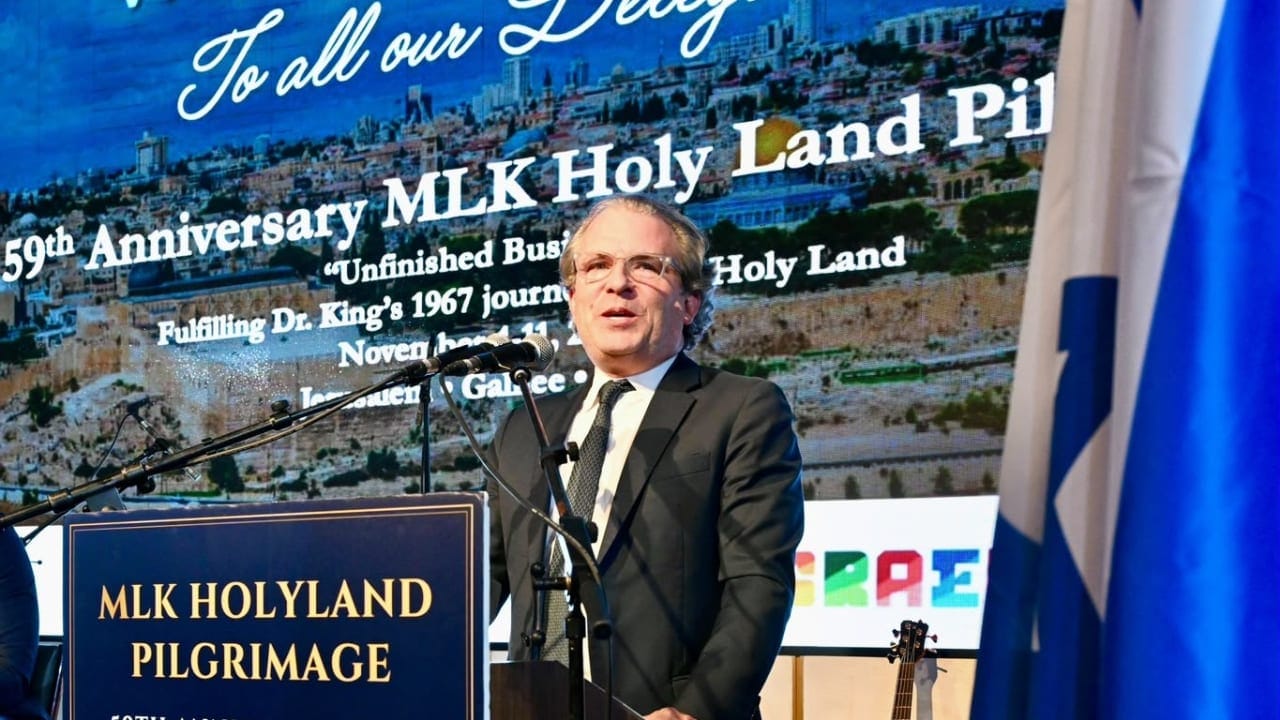
American Jewish Congress President Daniel Rosen announced a new initiative aimed at strengthening relations between Black and Jewish Americans during an address to hundreds of Black Christian leaders in Jerusalem on Monday.
The initiative, titled “The Next Chapter,” will operate under the organization’s AJCatalyst social impact incubator and promote community projects jointly led by Black and Jewish leaders.
“We rightly celebrate the historic relationship between Black and Jewish Americans. But those relationships were not built simply through speeches and declarations. They were built by people who showed up for one another,” Rosen said.
“Every project must be led together. A Black leader and a Jewish leader, side by side,” he added.
AJCongress and the 1963 March on Washington
During his address, Rosen recalled the American Jewish Congress’s involvement in the US civil rights movement, including the participation of its then-president, Rabbi Joachim Prinz, in the 1963 March on Washington.
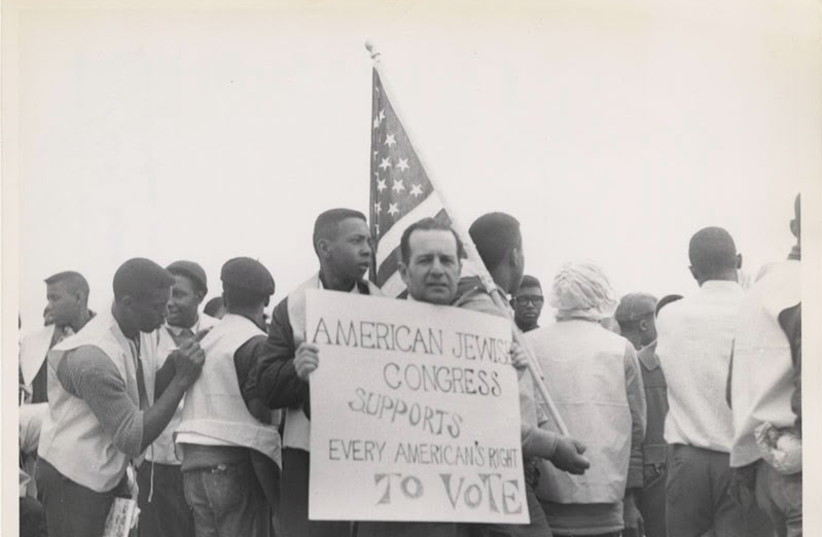
Prinz spoke shortly before Martin Luther King Jr. delivered his historic “I Have a Dream” speech, calling on Americans to speak out against racial discrimination.
Rosen also thanked the pastors for their support for Israel and the Jewish community following the October 7, 2023, Hamas massacre, stressing the importance of mutual solidarity.
“Just as you have stood with the Jewish community in difficult times, we must be there for you,” he said.
Retracing MLK’s planned visit to Israel
The pastors are among a delegation of 500 African-American and African Christian leaders who arrived in Israel last Thursday as part of the “Unfinished Business” pilgrimage, organized by the Black Christian Leadership Council on Israel Relations.
The pilgrimage was inspired by King’s planned visit to Israel in November 1967. King had intended to lead hundreds of Black Americans on a tour of the country, but the trip was postponed following the Six-Day War. It was rescheduled for 1968, the year of his assassination.
During their visit, members of the delegation also met with Israelis affected by the October 7 massacre, including released hostage Elkana Bohbot.