An atmosphere of fear, concealed identity, and exclusion has spread across the US healthcare system and medical schools since the October 7 Hamas terrorist attack, according to a series of investigations and a research report from the Center on Extremism (COE) published on Wednesday by the Anti-Defamation League (ADL) in partnership with the American Jewish Medical Association (AJMA).
Among other findings, Jewish medical students are forced to conceal their military service in the IDF on admissions forms and residency applications out of fear that their submissions will be rejected.
The investigations are based on focus groups and in-depth interviews with 115 participants: 31 medical students from 14 states, 44 healthcare professionals from 12 states, and 40 Jewish patients from 15 states. They expose how anti-Israel hostility and antisemitism are infiltrating institutions meant to provide equitable, non-discriminatory medical care.
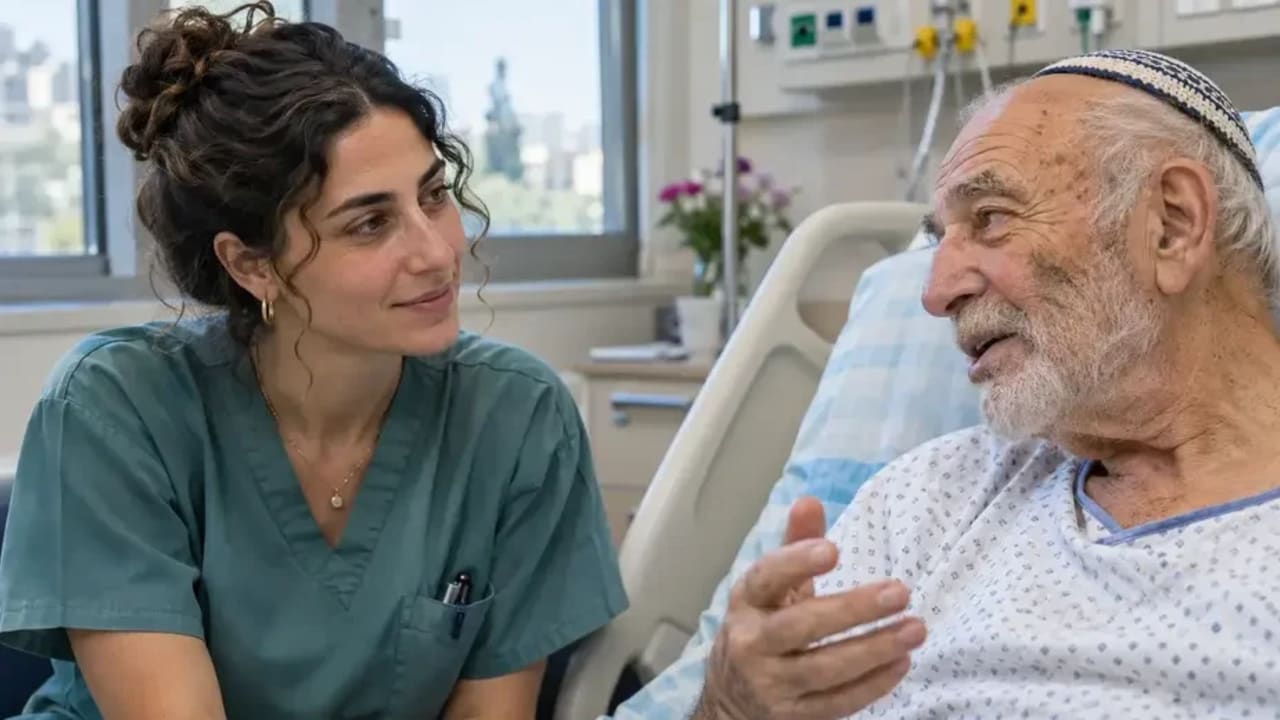
For Jewish patients, the shift has been dramatic. Many interviewees said they erase the religion section on hospital intake forms and downplay visible Jewish markers out of fear of receiving substandard or dangerous care.
One patient recounted that during an acupuncture session, while needles were inserted into her body and she was unable to get up, the practitioner began berating her, saying, "Israelis are baby killers; you are a baby killer."

Some seek out Jewish doctors to receive safe, fair treatment
An Israeli-born patient described how, moments before surgery, he noticed his surgeon wearing "Free Palestine" pins and a map of Israel in the colors of the Palestinian flag on her identification badge. "I was scared. If this person thinks I have no right to be born there, maybe she will make a mistake? Maybe her hand will slip?" he testified.
During a congressional hearing, it was also revealed that Jewish patients at fertility clinics refrained from filing complaints about hostile treatment out of fear that staff would harm their embryos.
Kashrut and Shabbat observances have also been undermined. A patient who requested kosher food in advance repeatedly received meals that did not meet her dietary standards and was eventually served a tray containing a piece of pork labeled with a "kosher" sticker. Others were discharged from hospitals in the middle of Shabbat in violation of prior agreements, or encountered doctors who displayed sudden coldness and hostility upon learning that a family had held a bris at home.
Many patients avoid young physicians who graduated recently due to the wave of anti-Israel campus protests, actively seeking out Jewish doctors under the assumption that only with them will they receive safe and fair treatment.
Staff and students face daily risk assessments
Medical staff, including physicians, nurses, psychologists, and social workers, are also forced to conduct daily "risk assessments" regarding whether to reveal their identity. According to a scientific review published in 2026 and cited in the report, 88% of surveyed Jewish medical students and physicians in the US reported experiencing antisemitism since October 7, compared with 40% prior to the attack.
One healthcare professional recounted that as early as his residency, a senior physician advised him not to reveal that he was Jewish: "Maybe it is better that you do not answer that question anymore and just dodge it somehow, because your name sounds too Jewish."
A Jewish psychologist who expressed willingness to treat a Zionist patient in a Chicago Facebook group discovered her name had been added to a "blacklist" of "Zionist" therapists to be boycotted, even though she had never spoken publicly about Israel. Another Jewish physician described a "mass purge" of Jewish female doctors from a professional Facebook group numbering roughly 80,000 physician mothers.
A junior faculty member testified that two Jewish members of his promotion and tenure committee warned him that "junior Jewish faculty members will not receive promotion and tenure this year, and you should start looking for a job." Another employee reported that his institution refused to recognize a Jewish employee resource group (ERG) and canceled its observance of International Holocaust Remembrance Day in favor of an "All Genocides Matter" day.
Among medical students, fear of lower grades and damaged residency prospects has led to widespread self-censorship. Students omitted any mention of Jewish activities or IDF service from their applications ("You do not know who is reading the application; it could get it thrown in the trash"), and some abandoned careers in academic medicine altogether in favor of private practice.
A student who wore a Star of David necklace at a training event described how another student pointed at him and shouted: "He loves genocide!" Others reported that classmates refuse to get into the same elevator with them and that they are forced to work on clinical teams alongside students who compared Israel to the Nazis on social media, even after medical school administrators were notified and failed to take meaningful action.
Organized networks behind the radicalization
The accompanying COE document exposes the organized apparatus driving the radicalization, led by groups such as Healthcare Workers for Palestine (HCW4P) and Doctors Against Genocide (DAG), which claim more than 20,000 members worldwide. These groups distribute "protest toolkits" to disrupt medical conferences and hospital operations and spearhead boycotts against Israeli lecturers and institutions.
At demonstrations organized by HCW4P in New York and Philadelphia, flags of Hamas, Hezbollah, and the Popular Front for the Liberation of Palestine were waved, protesters wore Hamas headbands, and demonstrators held signs reading "Long live October 7." In New York, banners were also displayed featuring a swastika inside a Star of David under the headline "Stop the US-Israeli Holocaust in Palestine," alongside signs calling to "dismantle the synagogues of Satan," while activists spread a modern blood libel alleging that Israel operates a state-run organ-harvesting network.
The report also points to Prof. Rupa Marya of the University of California, San Francisco (UCSF), who claimed on X that students were afraid of a first-year Israeli student who might have participated in "genocide" while serving in the IDF, later admitting that the student did not exist at all, and displayed a photo of an Israeli hostage being forced to kiss a Hamas terrorist as her profile banner.
Sharp criticism is also directed at the American Psychological Association (APA), which, according to the report, ignored appeals from thousands of Jewish psychologists, watered down its definition of antisemitism, and added a clause regarding the "misuse of antisemitism allegations." This led in recent months to a federal recommendation to suspend recognition of the association's accrediting body for one year.
The investigations also identified bright spots: institutions where administrators and staff demonstrated solidarity after October 7, employed rabbis, and provided Shabbat elevators and kosher food.
"When a person walks into a hospital, they entrust their health, and sometimes their life, into someone else's hands. The last thing they should have to worry about is whether being Jewish will affect the care they receive," said Jonathan Greenblatt, CEO of the ADL.
Evelyn Shakman, executive director of AJMA, added: "Antisemitism is taking root in the very institutions responsible for training the next generation of physicians. Medical schools bear the responsibility of ensuring that prejudice and discrimination have no place in the environments where they learn, train, and treat patients."
In light of the findings, the ADL and AJMA are calling on healthcare institutions to adopt their "Five Asks": explicitly including antisemitism and anti-Zionist harassment in non-discrimination policies; establishing confidential and reliable reporting mechanisms; implementing mandatory education and training for staff and students on antisemitism and Jewish identity; supporting Jewish employee resource groups (ERGs); and consistently enforcing policies for religious accommodations regarding kosher food, Shabbat, and holidays.