Weizmann Institute of Science
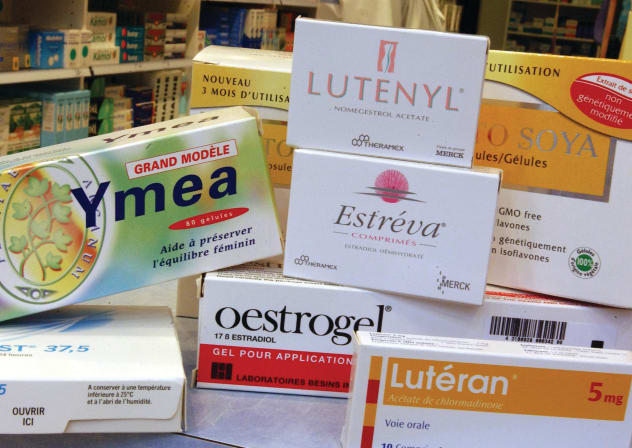
'Not a gradual slide': Menopause can reshape women's bodies in a sudden shift, Israeli study finds
Menopause may be less gradual than previously thought, with abrupt changes in bone health, liver function and cholesterol, Weizmann Institute of Science researchers find.

Iranian plot to assassinate Israeli nuclear scientist results in four convictions

From Weizmann computers to start-up nation: How Israel grew to become a high-tech powerhouse

Nobel Prize, Israel Prize laureate, Ada Yonath, dies aged 87
Opium usage dates back to ancient Israel, new study finds
While the world often historically associates the opium trade with the far east, Israeli researchers have found that the highly-potent drug played a major role in biblical times.

Neurons caught rapidly switching gears - study
Weizmann Institute's study suggests neurons are not programmed for a single task, but rather are highly dynamic and agile.

A surprising precision weapon against Crohn’s and ulcerative coli
Weizmann Institute of Science researchers found a way to kill inflammation-causing bacteria in the gut that causes inflammatory bowel disease by using viruses that infect them.

Israeli scientists make model synthetic mouse embryo with stem cells - study
The Synthetic embryo models could also eventually become a reliable source of cells, tissues and organs for transplantation.

Meet the monk who found heredity in a pea
Johann Mendel was born in 1822, in a small village in the Austrian Empire, to a family of limited means.

Why do pianos and guitars sound different?
Even when playing the same exact notes, each musical instrument sounds differently due to a variety of conditions.

The science and politics behind abortion
Following the justices’ decision, starting from the sixth week of pregnancy and in some cases even from the moment of conception, abortions became illegal in at least nine US states.

Israeli researchers use AI to reveal evidence of early uses of fire
A team of Israeli scientists say they have uncovered traces of fire dating back at least 800,000 years.

Weizmann Institute professor becomes first Israeli to win prestigious Kavli award
Prof. Sagiv secured this year’s Nanoscience prize for his team's pioneering work on self-assembling monolayers on solid substrates within the field of nanochemistry.

The party drug that can be taken as an antidepressant - Israeli study
An Israeli study has revealed that the mechanism of ketamine’s action on potassium channels in neurons may lead to improved therapies for depression.
