Neuroscience
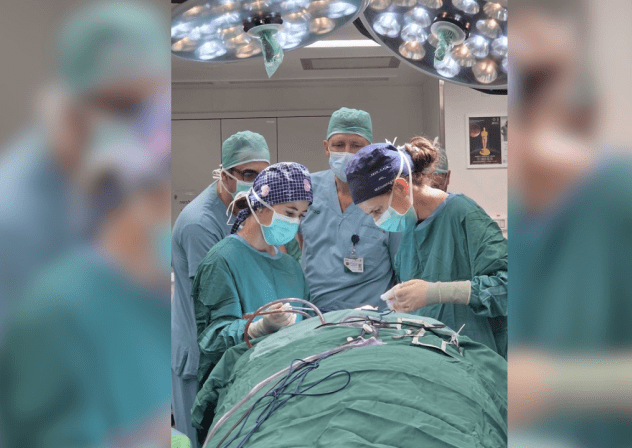
Israeli patient receives new non-invasive treatment for epilepsy in first outside Europe
The EASEE brain stimulation system, first developed in Germany by PRECISIS, is designed to treat epilepsy without opening the skull or inserting electrodes into the brain.

Two out of three 2026 Nobel Medicine laureates were recognized with Technion's Harvey Prize in 2016

How does breathing alter the brain? Inside the science of sighs with a world-leading neuroscientist

Russian cyborg pigeon drones begin real-world testing phases, sparking concern over military misuse
Human-caused climate change is likely to worsen neurological and psychiatric diseases
The researchers stressed the urgent need to understand the impact of climate change on people with neurological conditions so as to protect their health

As new findings about tumors and glucose starvation have opened a therapeutic window
It is a novel approach to brain cancer based on a decade of research in his lab.

Vagal-nerve stimulator implanted for first time into ten-month old epilepsy patient
Implantation of epilepsy treatment device marks first in such a young and low weight patient, says pediatric neurosurgeon.

New research shows that people can learn to be happy, but it is hard work
The authors concluded that, alone, psychoeducational courses are likely to be only minimally effective.

Genetic mutation in Labrador dog breed hardwires them for obesity - study
A genetic mutation in a quarter of all Labrador retrievers hard-wires them for obesity. As people carry such mutations, drugs currently in development for human obesity could help them.

Weizmann study makes a step towards treatment for incurable Huntington's disease
In a significant development, researchers at the Weizmann Institute received promising results after testing possible treatments for Huntington's disease (HD) on mice.

People are more willing to bend their morals when it comes to politics - US study
Why politics brings out the worst in us.

Weizmann Institute team finds new insight to pituitary disorders
There’s a new Weizmann Institute hypothesis on your hypophysis (pituitary gland)

WATCH: 'The more you read, the more curious you become'
Nivedha Mohan Raj, PhD student at the Sagol School of Neuroscience at Tel Aviv University, in conversation with Tamar Uriel-Beeri, Managing Editor of Jpost.com.

Elon Musk's Neuralink implants brain chip in first human
The company's initial goal is to enable people to control a computer cursor or keyboard using their thoughts alone.
