Homo sapiens
Evidence of what may be world’s oldest cremation found in Ethiopia, new study reveals
The burnt bone fragments were one of three Homo sapien fossils discovered in the sediment of the Faro Daba beds in the Dawaitoli Formation.
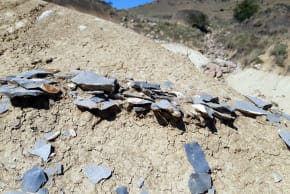
Early humans in South Africa used dedicated quarries for stone as long as 220,000 years ago - study

Fossils found in Moroccan cave may be a close Homo sapiens ancestor

Ancient lead exposure may have given Homo sapiens a genetic shield
China's 'Dragon Man' may be an undiscovered ancient relative of humans
The discovery of a new hominid species itself is incredible enough, but the story of Homo longi is especially unique due to the circumstances of its discovery.

New prehistoric human unknown to science discovered in Israel
Hebrew U and Tel Aviv University researchers found remains of a new type of ‘Homo’ who lived in the region some 130,000 years ago.

Humans, neanderthals coexisted in the Negev desert 50,000 years ago
The study also found that Boker Tachtit is the earliest known migration point from Africa for early Homo Sapiens (humans) from the Levant region.

Humans revealed to have been apex predators for two million years - study
The study conducted at Tel Aviv University shows that our ancient ancestors ate mostly meat.
Earliest evidence for stone grinding tool dates back 350,000 years
The discovery shows that our ancestors played games using rocks that were heated and used as different pieces.

Bulgarian fossils show early arrival of Homo sapiens into Europe
The research pushes back by thousands of years the arrival of Homo sapiens in Europe, a milestone in the history of a species that arose in Africa about 300,000 years ago and then spread worldwide.
