Evolution
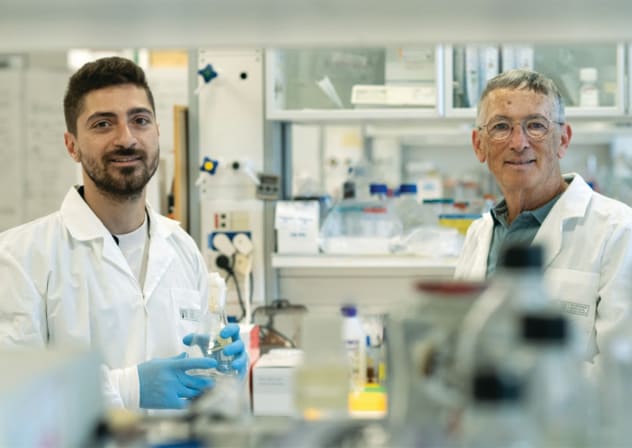
Israeli, Czech scientists recreate COVID-19’s evolutionary journey in a test tube
Scientists and doctors keep closely monitoring viruses that could jump from animals to humans, such as emerging strains of avian flu and bat coronaviruses.

The evolution of digital platforms: From media to online gaming

How casino technology mirrors broader trends in mobile entertainment
Scientists reconstruct the face of “Little Foot,” a 4-million-year-old human ancestor
Chimpanzees organize complex tool-use sequences like humans, revealing deep evolutionary origins
The study focused on one of the most complex actions performed by primates: nut cracking using stone tools.

The ‘Sword Tail from Bavaria’: fossil helps researchers piece together Pterosaur evolution
Skiphosoura bavarica lived toward the end of the Jurassic Period and would have been one of the largest flyers in its ecosystem.

Chinese Scientists Discover World's Smallest Dinosaur Eggs, Shedding Light on Theropod Evolution
Researchers identified a new species, Minioolithus ganzhouensis, shedding light on theropod evolution in the Late Cretaceous.

New study reveals birds convey politeness through wing gestures
While most non-verbal gestures have mostly been studied in humans and primates, Japanese researchers found that a small bird species uses wing movements to convey messages.

Sodom, Gomorrah, atomic bomb: Altruistic attempts to avert mass destruction - opinion
One can ask how it came about that an inherited set of connections leads to Abraham’s altruistic thinking and the arguments of the atomic scientists. The answer is evolution.

Humans continue to experience evolution, natural selection is ongoing - Newsweek
Evolution is occurring at a more rapid rate than ever before, however the drivers of the evolution have changed.

How bats evolved to avoid cancer - study
These characteristics make bats an interesting animal to study because they may have implications for human health.

Why are you better at recognizing upright faces?
New Hampshire researchers get clues from a person who sees the world upside down.

Tomatoes: From the ancient wilds to the modern table
American scientists agree on the evolution of the entire tomato species, from tiny to hairy and awful-tasting to the large and sweet.

Big brains helped animals survive mass extinction 120,000 years ago - study
A TAU team hypothesized that humans evolved modern traits as an adaptational response to the need to hunt progressively smaller and quicker prey.
