Biblical archaeology
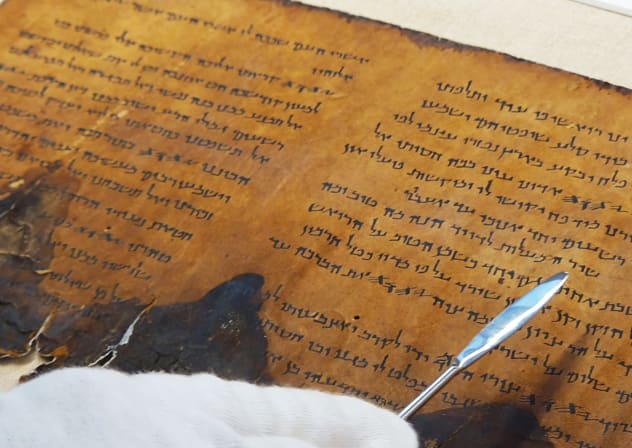
New AI-powered research project aims to uncover the origins of the Dead Sea Scrolls
Research methods will include state-of-the-art chemical, artificial intelligence, paleographical, and codicological analysis of approximately 250 samples of the scrolls from the IAA's collection.

Ancient stone at Tel Eton may provide new proof of King Hezekiah’s religious reform, study suggests

Ancient jars unearthed at biblical Shiloh days before annual wine festival
Persian-era mass grave of children found during excavations in Israel’s Tel Azekah - study
Israeli research uses Earth's magnetic field to verify event in Bible's Book of Kings
The discovery was achieved by scientists from Tel Aviv University (TAU), the Hebrew University of Jerusalem (HU), Bar-Ilan University (BIU) in Ramat Gan, and Ariel University in Samaria.

Grapevine: A well-deserved tribute
Movers and shakers in Israeli society.

Tomb of Joshua bin Nun renovated after pro-Hamas vandalism
The graffiti was removed by Yossi Dagan, head of the Samaria Regional Council, and IDF soldiers.

National Geographic lists Israel's Roman swords as top find of 2023
The find includes a cache of four Roman swords and the head of a deer-shaped handle, estimated to date back nearly 1,900 years, and are in excellent condition.

Radiocarbon dating proves biblical accounts of the Israeli city of Gezer
New dates provided by Austrian archaeologists allow testing of proposed correlations between texts and archaeological remains

New research might point out to location, remains of Noah's Ark
Archaeologists identify and analyze a ship-shaped mound in the Mount Ararat complex in eastern Turkey, described by the Bible as the Ark's final destination.

Israel unearths ancient Roman swords, javelin stolen by Jewish rebels
The weapons cache was most likely hidden by Jewish rebels some 1,900 years ago after being seized from Roman forces.

Were the limestone spheroids of 'Ubeidiya intentionally designed?
Spheroids are either handmade or naturally shaped stones chosen and transported to places where they are used, making them one of the longest-used technologies on record.

Israeli archaeologists unearth building destroyed during Babylonian siege of Jerusalem
The building, dubbed 'Building 100', had once belong to an elite member of Jerusalem's society, until it was destroyed by fire in 586 BCE.

UNESCO to rule on ancient Jericho as Palestinian World Heritage site
Jericho prides itself on being the oldest most continuously inhabited city in the world, dating back over 10,000 years and for being at the lowest point below sea level of any municipality.
