Ancient Egypt
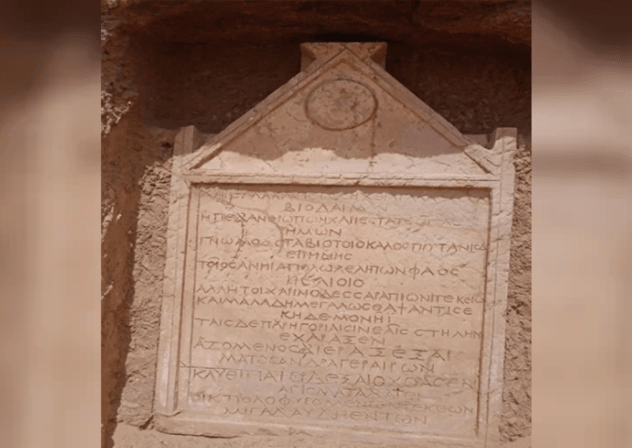
Ancient Greek elegy dedicated to judge found in ancient Egyptian tomb sealed with protection spells
Its 19-lines of ancient Greek text is written in red ink, dedicated to a person named "Pesikhtis," who, according to preliminary study, may have held the position of judge.

On This Day: Jean-Francois Champollion announces his success at decoding the Rosetta Stone

Ancient Egyptian fortress uncovers soldiers’ homes, royal inscriptions, and horse burial

Egyptian-Chinese mission unearths wine press at temple to ancient warrior goddess
Fragment of Homer's Iliad discovered inside Roman-era mummy during Egypt excavations
Several other mummies, three golden tongues, and a tongue made of copper were also discovered during excavations.

Over 20 sarcophagi belonging to ‘Chanters of Amun’ discovered during excavations near Luxor
Eight pieces of papyrus, some with their original clay seals intact, were also found within the chamber.

An ancient Egyptian temple was just found in Sinai after six years of digging
Analysis of the site also shows that the structure had been continuously used from the 2nd century BCE to the 6th century CE, with only minor architectural modifications happening during that time.
The hidden well: Exploring Miriam's leadership as a source of hope in war's shadow
Within a world of harsh decrees and cruelty, Miriam creates a human partnership that crosses boundaries for the sake of saving life.
