‘The recipient of a miracle does not recognize his miracle,” say the rabbis.
When we are in the eye of the hurricane – as we are so often in this roller coaster of a country – we often fail to appreciate the awesome, all-pervasive effect Israel has had on Judaism. The imprint of the State of Israel has indelibly changed not only our destiny but also our peoplehood.
This is certainly true vis-à-vis our calendar. The creation of Israel has resulted in several new holidays to celebrate or commemorate. Some are somber, like Holocaust Remembrance Day and Remembrance Day for the Fallen of Israel’s Wars; others are joyous, like Independence Day and Jerusalem Day. We have also injected new life into occasions that were rather moribund while in our exile, such as Tu B’Shvat, Lag Ba’omer, and Tu B’Av.
Events have also occurred that have added a new dimension to ancient observances. Yom Kippur, for example, will now always have an added element of sadness, as we mourn the many soldiers who fought and died in the Yom Kippur War. And now, Simchat Torah will forever be tragically linked to Oct. 7, which was specifically perpetrated by our enemies in the very midst of our festival.
A personal tragedy
The simcha, the joy, of this day is permanently stained by not only the horrendous loss of life we experienced but also by the ongoing war that, as of this writing, still consumes us. The exuberant dancing and feasting of the festival have been tempered – invaded, if you will – by the cruel crimes of Hamas and their hateful supporters.
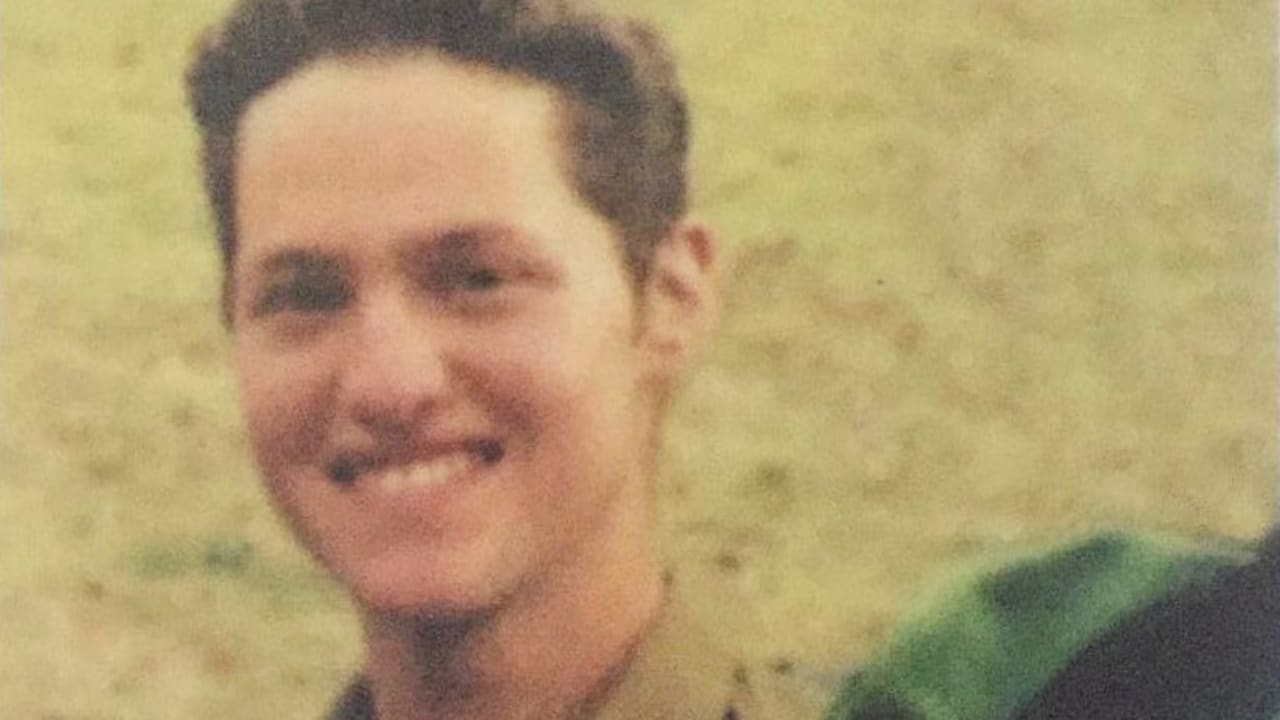
However, for my family, Simchat Torah has been tinged with melancholy and bitter memories for almost a quarter of a century. Simchat Torah was the last time we saw our son Ari – may God avenge his death – before he left for a dangerous mission in Nablus. His unit in the Nahal Reconnaissance Battalion had captured Hamas headquarters, and Ari fell in a firefight with the terrorists.

Ari had not been home for a Jewish holiday for more than a year. As an explosives expert, he was in constant demand from several units. But he insisted that for Simchat Torah he be let out to join our family, including his grandparents, who were visiting from the States. They were Holocaust survivors – my mother-in-law having been in Auschwitz – and Ari wanted to spend at least two days with them.
I was leading a group at a hotel that Simchat Torah, and Ari volunteered to be the gabbai, the conductor at the Torah reading. As is the custom, one after another of the men were called up to the Torah, by Ari, until all the aliyot honors had been given out. Only then did Ari realize that he himself had not taken an aliyah, so he decided he would lift the Torah (hagbaha) as his part. The image of Ari lifting that heavy Torah high above his head and dancing with it is forever imprinted on my soul.
Ari left the next morning to rejoin his comrades, and he fell near the end of the day; his yahrzeit is thus the day after Simchat Torah each year, the 24th of Tishrei.
Compounded with the national tragedy
But now there is a new wrinkle. The government has designated this date as the national commemoration of the Gaza atrocities. As such – although the exact nature of the commemoration is still to be decided – we will eternally be sharing our loss with that of thousands of other Israelis. Presumably, the military cemeteries will be jam-packed on that day; thus our own remembrance ceremony may be somewhat lost in the shuffle.
While several other families who also lost loved ones on the 24th of Tishrei have decided to hold their ceremonies at another time, our family, after much debate, is staying with the initial date.
For one thing, it is the actual date when Ari fell, and so the day itself has cosmic significance. But more importantly, we felt that the collective, communal observance outweighs our personal preferences. This is a principle we deeply believe in: The nation, as a whole, takes precedence over the individual. Yes, every person is a world unto himself or herself, and yes, God lives within each one of us. But for the country to survive, the majority must rule. As holy as any soldier – or hostage – may be, the welfare and cause of the many must be the determinant factor that guides us.
This lesson I learned the hard way.
A frightful question
Immediately after Ari’s killing, I was plagued by a frightful thought: “Had I committed some horrendous sin and so was now being struck with the biblical punishment of karet? While some define karet as “dying before one’s time,” others say this is seeing one’s child die before him. Ari’s death at the young age of 21 – just a month shy of his 22nd birthday – suggested that I may indeed have been visited upon by this frightening biblical decree.
And so, during the shiva for Ari, I turned to a group of rabbis who had come to pay condolences. I bared my soul and I posed the question to them. At first, they were stunned into silence and said nothing at all.
But then, one rabbi bravely spoke up and said, “No one today possesses divine knowledge – ruach hakodesh – to know why people die when they do or the way in which they do. Nor can they know who is being singled out for heaven’s punishment or for what sin.” A well-meaning comment, to be sure, but it did not soothe my anxiety. It gave me neither answers nor consolation.
Then another rabbi offered, “The great Talmudic sage Rabbi Yohanan saw 10 of his children die in his lifetime; could anyone possibly think that this great person was sentenced to karet?! And does the Torah not say Ish b’het’o yumat – ‘every person dies for his or her own sin, and not for that of others’”? I heard the logic in this, but deep in my soul, it, too, did not satisfy me or relieve my feelings of guilt.
But then, Rav Yehoshua Yogel, Ari’s rosh yeshiva at the Midrashiat Noam yeshiva in Pardes Hanna, rose to speak. He looked directly at me, and with a soft yet strong voice said the following:
“If Ari was simply your son, and yours alone, then perhaps you could be justified in your concern that God was punishing you with karet. But Ari was not just your son. No! As a proud soldier of Israel, as one who risked his life every day to defend the nation, he belonged not only to you but to all of Am Yisrael.
"And no one can dare say that all of the Jewish people are deserving of punishment, for the verse (Isaiah 60:21) says clearly, V’amech, kulam tzaddikim – ‘and your nation – all of them – are righteous’ and will forever inherit the land; they are the creation of My planting, the work of My hands to be glorified.’ You, I, everyone in this room, everyone in this country, every Jew in every place, shares Ari with you, and we cannot all be guilty of a sin. In fact, we are blessed to be a part of him.”
At that moment, I was relieved of my worry. And at that moment, I understood that what is happening here is bigger than any one person. It is about a new-old nation struggling to reestablish itself in a hostile, often hateful world. To achieve this monumental task, we must subordinate our own personal interests for a greater cause; we must put aside our wants and desires in allegiance to a historic challenge that is unique in the annals of history.
Perhaps this is the essential simcha in Simchat Torah. It is the joy that comes from knowing we are all in this together. Like the circular dances we do on this day, we are part of an ongoing circle of life; no one individual in this circle is more “central” than anyone else. It is this type of dance that can and will lead us to join together in both the defeat of our enemies and the march to greater glory. ■
The writer is director of the Jewish Outreach Center of Ra’anana. rabbistewart@gmail.com