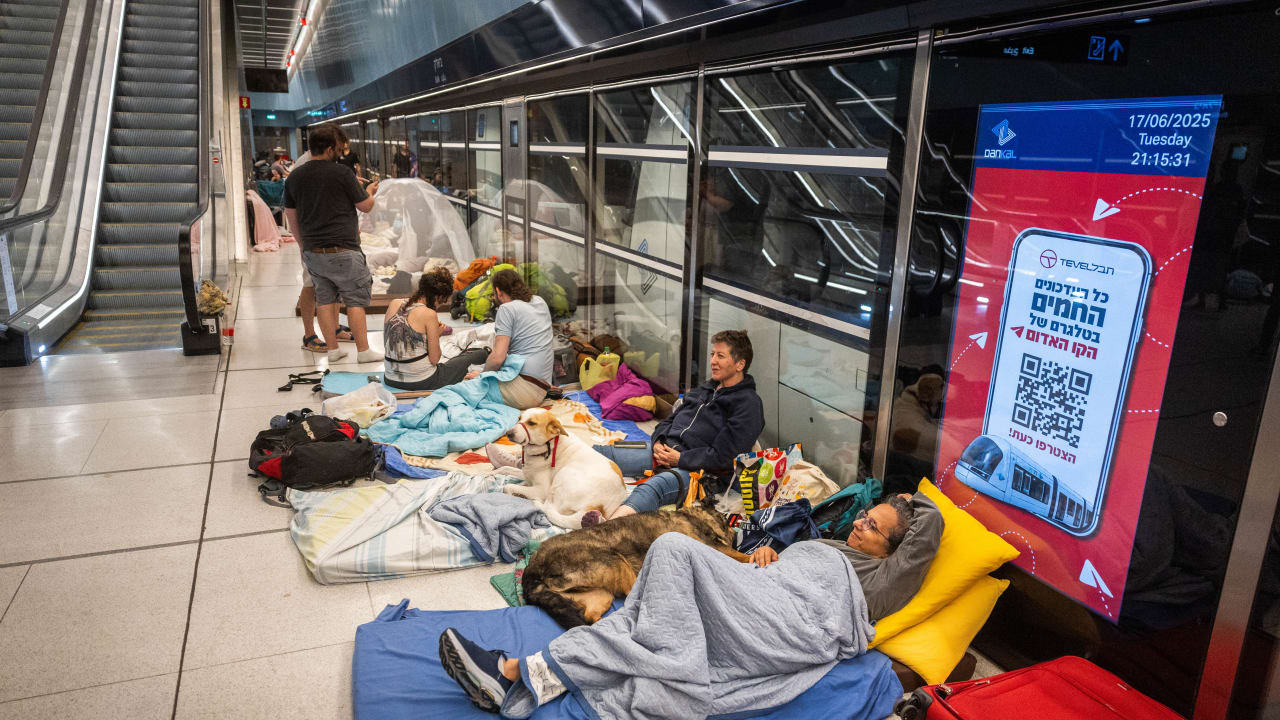
As a runner, my training has taken a dramatic turn. From running the usual coastal route, training has turned into a 10-minute bomb-shelter countdown once the alert reaches my phone.
At 3 a.m. on June 13, we were jolted awake. Fearful of what might come, my family packed a suitcase and rushed toward a safer location just north of Tel Aviv, where we have been ever since.
We hear all the sirens of the worst-hit areas. Sleep is a luxury; the wail of alarms often splits the night at its deepest point. Ten days later, with traffic at a minimum and many shops shuttered, we remember the “good old” days when the worst was the nightly solo missile from the Houthis.
Sleep deprivation and sirens take a toll
All said, sleep deprived, we march on with our daily schedule within reach of the mamad (bomb shelter), pushing through.
There are no masks in this lockdown, but layers of alerts and instructions from the Home Front Command. The growing number of alerts resembles COVID lockdowns zigzagging between prohibited and allowing up to 30 people. Schools and universities have moved to Zoom. Parts of the day are spent in the safe room as directed.

Over the first Shabbat, one of my family members collapsed from a severe stress attack and was taken to the hospital.
The ambulance, which should have taken 10 minutes to arrive, was delayed by almost an hour because it had to take cover under a hail of rockets. When it finally did arrive, I helped whisk the patient to the hospital in Yom Kippur-style empty streets. She made a complete recovery and today is taking the rocket attacks with a sense of personal stride.
My friend network, as it was after Oct. 7, was abuzz, checking in.
Back to COVID lockdown rules?
A visitor from the UK who’d come for a wedding found himself stranded in Eilat on a forced vacation. Friends in Jerusalem sent me videos of Iran-made “meteor showers” lighting up the sky, taken because sirens hadn’t gone off. I admit, I was tempted to catch a glimpse myself, until news of cluster bombs quickly sobered that thought.
As every friend I communicate with testifies, “We are sleep deprived, but doing well.” Doing “okay,” “well,” or “good” has become the new “I am alive and still standing.”
Bar-Ilan University, where I study law, has turned to Zoom as final exams loom. Classes that just two weeks ago were held in person now rely on a “raise hand” button to ask questions and have become pixelated: the all-too-familiar square boxes on a screen.
Finals are approaching, and no one knows quite what they’ll look like; although rumors suggest we’ll be using a remote testing platform called Tomax. Everything has now returned to Zoom: department meetings, check-ins, and classes. Some of our meetings are interrupted literally mid-sentence by the need to take shelter. It’s the price we pay to continue education in a war zone.
Regardless, optimism remains!
Yet morale is good. We celebrate the wins, whether a small run outside or attending synagogue in a small minyan (quorum) when regulations permit to pray together (which relies on the advanced registration of up to 30 men).
Writing this, I am interrupted by yet another missile barrage alert from Iran and must head to the mamad.
With our resilience, we find ourselves united in lockdown.
With daily news reaching us of triumphs in faraway Iran, we are confident that we will overcome. We aim for peaceful sleep, the ability to learn and meet in person, and a reality where sirens do not rule our day-to-day life anymore.