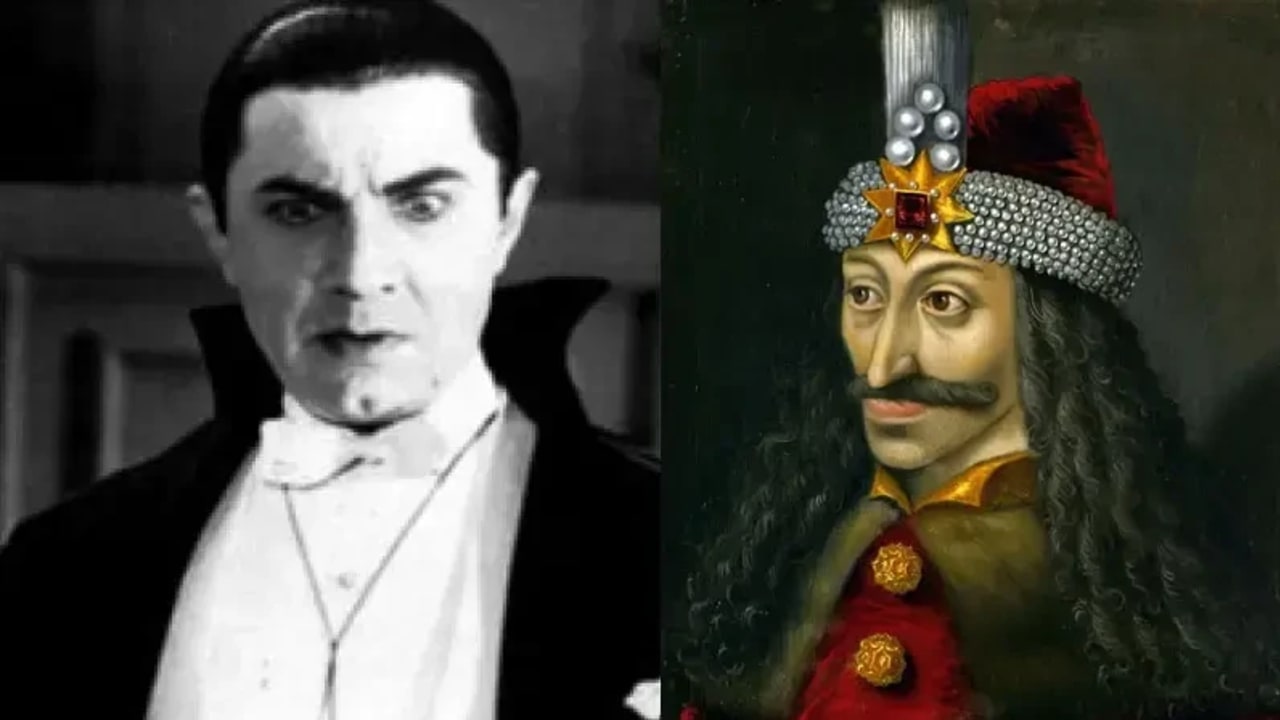
Long before Nosferatu, The Vampire Diaries, Twilight, or Buffy, there was one vampire the whole world talked about. And now, a hidden grave in Italy may reveal the secret of that vampire: Count Dracula.
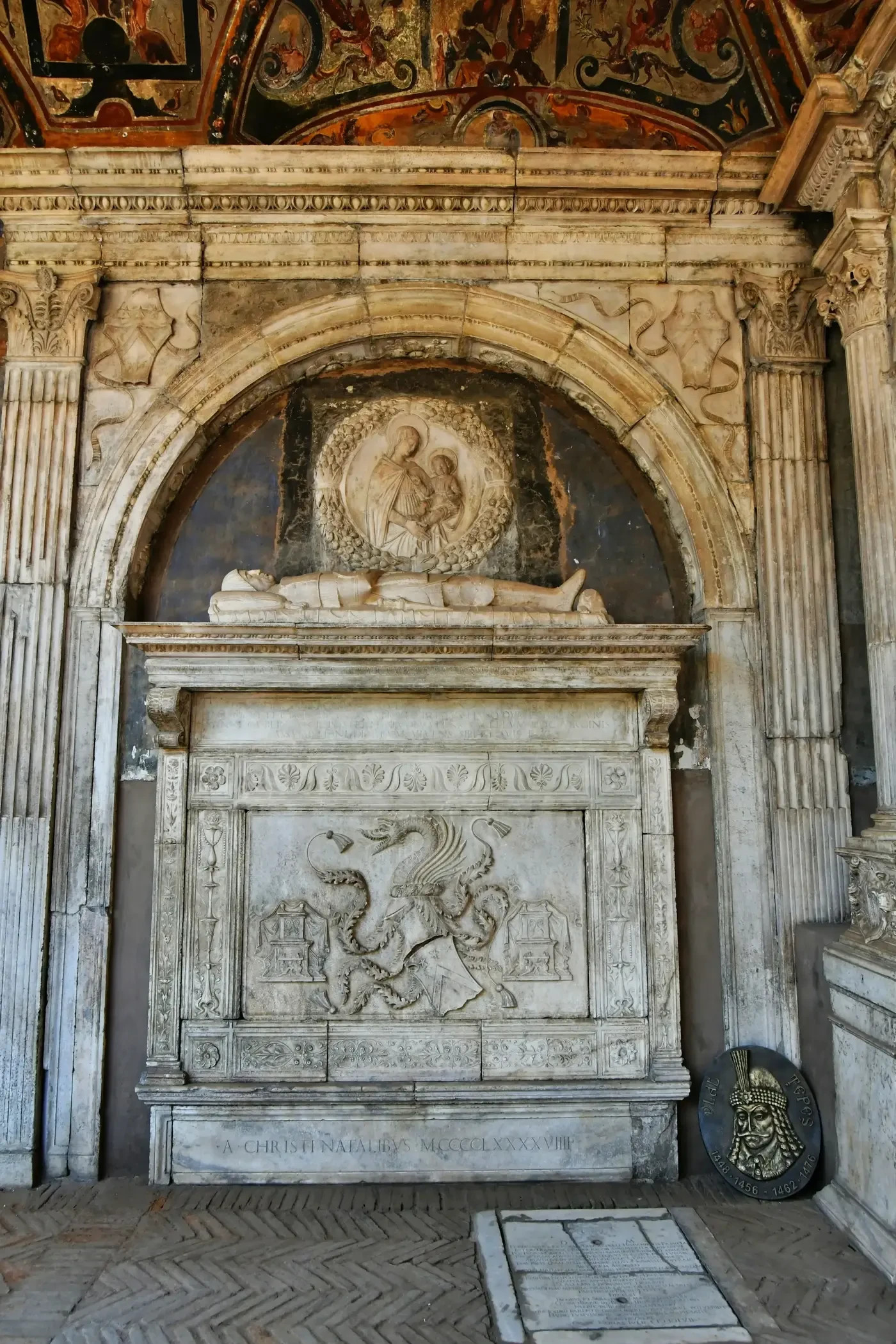
The Church of Santa Maria la Nova in Naples is considered a particularly popular religious site, but beneath the surface—literally—it may be hiding a dark secret hundreds of years old. At the heart of the Turbolo Chapel within the church complex, a mysterious grave was discovered, and the inscription engraved on it has given rise to one of the most exciting and intriguing theories of recent years: This may be the true burial site of Vlad III, infamously known as “Vlad the Impaler,” or as most of us know him—Count Dracula.
Vlad, the prince of Wallachia (now part of Romania), was known for executing thousands of people (according to him, tens of thousands). He was called “the Impaler” because his preferred method of execution was impalement: Driving a person’s body onto a sharp stake and leaving them there so their own weight would cause the stake to penetrate further into their body, leading to a slow and agonizing death.
He earned the nickname “Dracula” due to his membership in the Order of the Dragon—a Christian military secret society that defended Europe from Ottoman Empire invasions. The connection between him and vampires was made only in the late 19th century by Bram Stoker, the author of the novel Dracula, who likely chose the name for his character, “Count Dracula,” after conducting brief research at the British Museum, where he encountered the story of Vlad the Impaler. However, this connection has no basis in local legends or documented history.
Vlad was likely killed in battle in 1476, but his body was never found. For decades, Snagov Monastery near Bucharest was considered his burial site—until excavations there turned up only animal bones.
Now, after more than a decade of research, Italian scholars have succeeded in deciphering the inscription on the mysterious grave, which turned out to be a kind of hybrid of ancient Latin and ciphered writing. They identified the words “Blad” (which can also be read as “Vlad”) and “Balkan,” the region he ruled. Alongside the inscription appears a knight’s helmet decorated with a dragon’s head—a direct reference to the Order of the Dragon. But perhaps the most symbolic element is a pair of sphinx statues facing each other—a double homage to Egyptian Thebes and to “Tepes,” the Romanian nickname for Vlad, which means “the Impaler.”
The research began in 2014 following an intriguing theory: That Vlad’s daughter, Maria Balsa, smuggled her father’s remains from Romania after his death and brought them to Naples, where she was adopted by the wealthy Ferrillo family. According to this theory, she ensured her father was buried alongside her father-in-law, Matteo Ferrillo, inside the Turbolo Chapel. Now, that chapel is the focus of fascinating research, though the tomb itself remains sealed and closed to the public.
“What we deciphered appears to be a eulogy to Vlad of Wallachia, known as Dracula,” said Prof. Giuseppe Reale, the director of the religious complex, who added that the symbols on the tomb do not match Christian burial traditions—something that led the researchers to suspect it’s an exceptional case.
Vlad III became a mythical figure in Europe—especially following the legend that in 1462 he impaled 20,000 Ottomans to death at the entrance to the city of Târgoviște. He was imprisoned for many years, perhaps in Romania and perhaps in Turkey, and eventually fell in battle. But the real mystery began when excavations at the monastery thought to be his burial place revealed only animal skeletons. Doubts grew—and now it seems the possible answer lies in Italy.
Was Count Dracula buried in Naples? Does the fictional vampire conceal a story of escape, secret burial, and a family that tried to preserve the memory of a father in one of southern Italy’s oldest churches? There is still no definitive proof—but this theory, along with the symbols, historical connections, and the fact that his body was never found, lends weight to a hypothesis that could rewrite the history of the world’s most famous vampire.
Researchers are now considering using advanced imaging equipment and possibly opening the tomb in the future, but until then, the secret of Vlad the Impaler remains sealed in stone.