This writer has called for striking Iran’s nuclear weapons program for years, including in my book Target Tehran. Israel and the US finally did it – in just about the largest way possible.
Jerusalem and Washington should not lose sight of ending or capping Iran’s nuclear program, and Tehran is now probably offering the Trump administration a long-term uranium enrichment freeze or enrichment outside of its territory as part of a consortium – both positive developments.
But that is not the main issue at this moment. The main issue is conventional ballistic missiles.
Once again, America absolutely should make sure that the Islamic Republic’s nuclear program remains on ice, but it effectively has been there since the 12-Day War of June 2025.
Likewise, Tehran’s support of regional terrorism, especially against the Jewish state, should be held back as much as possible.

But Israel has also handled a lot of those issues on its own over the last two years of war, from Gaza to Lebanon to Syria.
Such terrorism is not gone, and may never be completely eliminated.
Yet, the situation is in the best place it has been since the 2006 Second Lebanon War, when Israel was problematically intimidated into allowing its adversaries to gradually surround it with a “ring of fire.”
If US President Donald Trump can get Iran to give less funding and assistance to these anti-Israel terror groups, that would be good news, but none of that constitutes an existential threat at this moment.
And with its current forward-leaning defensive strategy, those adversaries can be prevented from returning to the level of threat they presented prior to October 7.
Currently, the one immediate, potential existential threat is Iran’s approximately 2,000 ballistic missiles, which could still increase to an amount that would shatter Israel’s air defense shield.
Iran’s ballistic missiles are more dangerous now than ever before
The ballistic missile issue, in some ways, is more dangerous now than it was in June 2025.
Yes, in June 2025, Israel destroyed around half of Iran’s 400 ballistic missile launchers – and at one point, Tehran was down to about half of its pre-war supply of ballistic missiles.
But unlike the nuclear program, which the Islamic Republic has made zero progress in repairing over seven months, it has revamped its ballistic missile program and is getting closer to its pre-war totals.
With help from China (according to foreign reports) and other countries, IDF Chief of Staff Lt.-Gen. Eyal Zamir has warned that Iran could increase its ballistic missile production to 300 per month, and within a few years dwarf its prior ballistic missile totals. At 6,000, 8,000, or even 10,000 missiles in 2027-2028, analysts worry that even Israel’s awesome multi-layered defense shield would find it hard to keep up.
That is not the only way things may already be worse.
Iran has learned a lot – not just from June 2025, but from two prior ballistic missile attacks on Israel in 2024.
Already in June 2025, it recalibrated its attacks from a small number of IDF bases to a much wider number of civilian targets.
Also, the Islamic Republic started firing missiles then from parts of Iran that were farther away and harder for Israeli aircraft to reach.
Further, during the 12-day war, it started to improve its tactics for firing ballistic missiles faster, some from underground, and also used cluster bomblets to maximize harm.
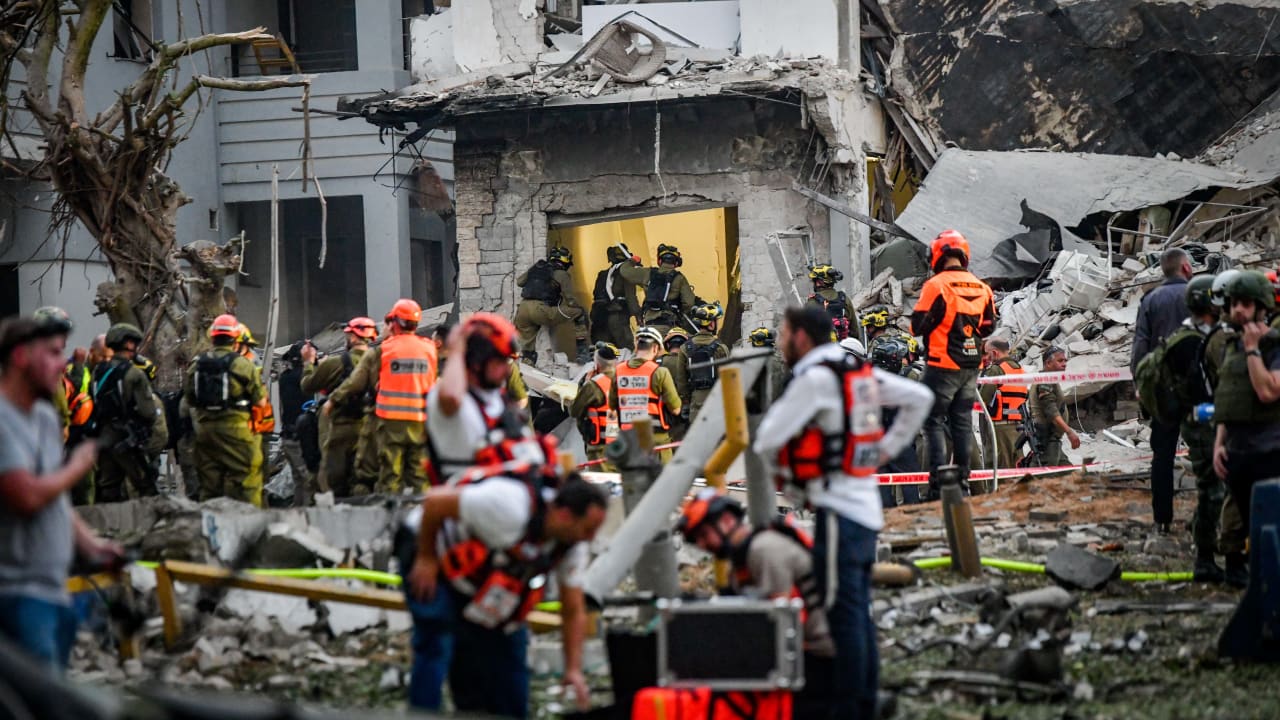
Twenty-eight Israelis were killed, and around 13,000 residences were damaged when just 36 missiles penetrated the IDF missile shield.
All of these changes make Tehran’s ballistic missile threat to Israel more dangerous than ever. Imagine if not 36 got through, but 360 did.
IDF chief makes case against Iran’s ballistic missiles in US
In recent talks with the US, one of the key reasons that the ballistic missiles issue did not quickly fall off the menu of negotiation topics was that IDF Chief of Staff Lt.-Gen. Ayal Zamir made the case directly and personally to US Chairman of the Joint Chiefs of Staff Gen. Dan Caine in a rapid visit to Washington, and then again to US Middle East Envoy Steve Witkoff in Jerusalem this week.
Zamir also had recently sent IDF Intelligence Chief Maj.-Gen. Shlomi Binder to make the same case.
The IDF chief has invested substantially in a personal relationship with Caine on top of the already strong relationship with CENTCOM Chief Gen. Brad Cooper, in order to help convince Trump to seize on the ballistic missiles issue, and not just the easier-to-jump-on infamous nuclear issue.
While there seems little question that the president would attack Iran if it does not give him some kind of domestic uranium enrichment freeze, there are serious concerns that Washington might end up with a weak position on the ballistic missiles issue to avoid a confrontation, given Trump’s fear of American soldiers being killed.
Zamir has made it clear that America giving in on the Iran ballistic missiles issue is a redline for Israel (on top of obvious redlines on the nuclear issue), and this could be part of why US Secretary of State Marco Rubio listed the issue as a must for negotiations.
If Iran is not ready to stop threatening Israel existentially on these two topics and chooses to attack the Jewish state, Zamir and the IDF are ready to unleash new surprises against targets that the Iranians will not expect.

There are still compromises Israel might be able to live with.
One is that the Islamic Republic be held to a certain number of ballistic missiles of a certain range, with some kind of enforcement mechanism.
But anything short of those minimum standards would mean that Israel would likely not be bound by an American deal, especially if Tehran significantly increased its ballistic missile supply as it has been doing for the last half year.
In that sense, while the nuclear and terror issues are important and America should get as much as it can from the Iranians on them, the heart of the current negotiations – and what Israel is keeping a razor-focus on – is the ballistic missile issue.