
Only one-third of American Jews say they identify as Zionist, even as nearly nine in 10 say they support Israel’s right to exist as a Jewish and Democratic state, according to a new survey conducted by Jewish Federations of North America.
The findings of the survey reveal that American Jews do not have a mutually agreed-upon definition of Zionism, with those identifying as anti-Zionist and those identifying as Zionist ascribing sharply different meanings to the term.
For example, about 80% of anti-Zionist Jews say “supporting whatever actions Israel takes” is a tenet of Zionism, while only about 15% of self-identified Zionists share the belief, according to the survey.
The significance of the survey
The survey marks the most detailed assessment of the sentiments of American Jews about Zionism by a major Jewish organization in the United States, finding that 14% of Jews ages 18 to 34 identify as anti-Zionist and that the only demographic with a majority of self-identified Zionists was Millennials between 35 and 44.
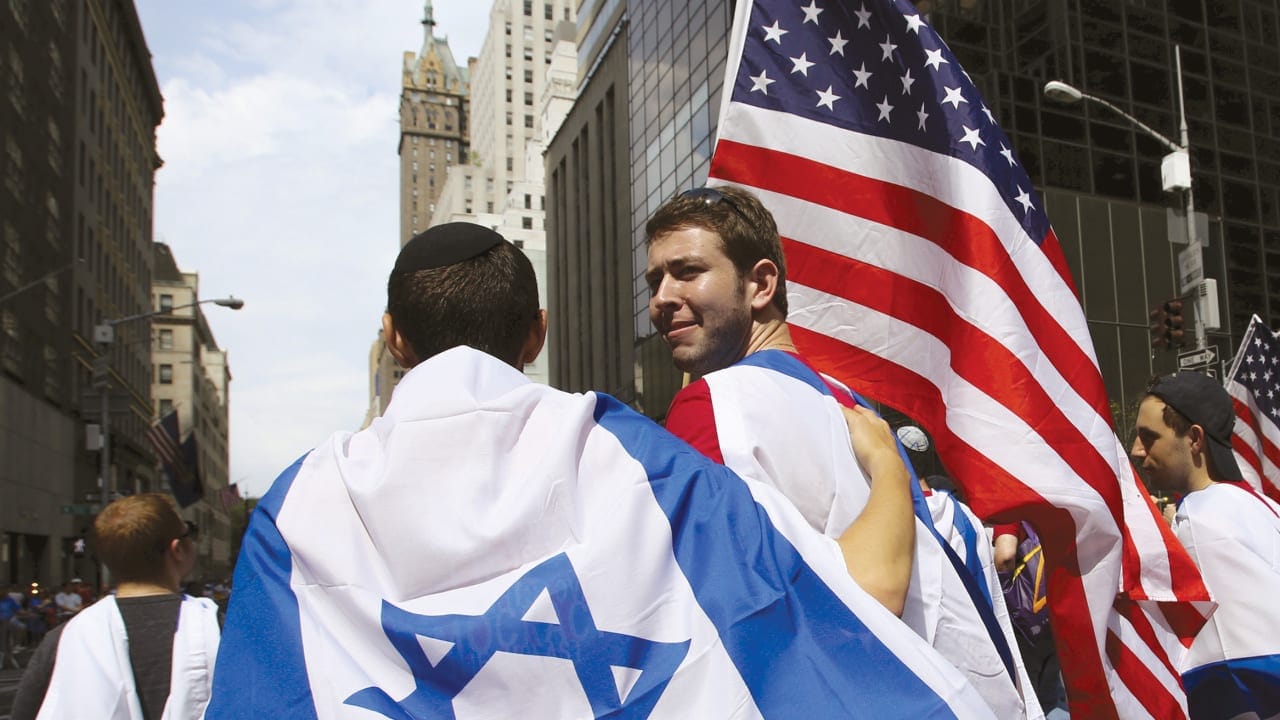
The survey comes as tensions following the Oct. 7 attack, Israel’s war in Gaza, and the election of New York City Mayor Zohran Mamdani have put a sustained spotlight on the tenor of American Jewish support for Israel - and divided Jewish communities.
The divisions, JFNA is concluding based on the data, are real but often overstated - a matter of concern as Jewish communities and institutions decide whether and how to engage with Jewish critics of Israel.
“If we misread the trend about ‘Zionism’ to mean that large numbers of Jews, especially young Jews, are turning against the existence of Israel itself, we will draw the wrong conclusions and take the wrong actions,” Mimi Kravetz, JFNA’s chief impact officer, wrote in an essay about the survey’s findings. “We risk responding with anger when the moment calls for steady leadership, pulling away when the moment calls for connection, and defensiveness when the moment calls for listening and understanding.”
Kravetz’s comments add JFNA, the umbrella organization of hundreds of local Jewish federations in the United States and Canada, to an emerging group of Jewish leaders calling to open dialogue with Jews who have recently taken stands against Israel or in support of its opponents. JFNA would continue to define itself as Zionist, Kravetz noted, “in large part because we adhere to the historic definition,” but she conceded that the term had undergone “definition creep.”

The survey's contents and results
Conducted in March 2025 by the research firm Burson, the survey posed a variety of questions to more than 1,800 Jewish and more than 4,100 total respondents about their relationship to Israel and Zionism, as well as about their beliefs about the definition of Zionism.
It was new territory for studies of American Jews. While a major 2021 survey of American Jews by the Pew Research Center had polled Jews on their relationship to Israel, that survey had avoided the use of the word “Zionism.” Other major Jewish groups that conduct population surveys have, in the past, typically avoided closely interrogating Jewish opinions about Zionism. JFNA’s venture into this territory came as part of the umbrella group’s series of post-Oct. 7 Jewish trend studies, which have also revealed what the group has termed a “surge” of Jewish engagement.
Overall, more than 70% of Jewish adults who responded to JFNA’s survey agreed that “I feel emotionally attached to Israel,” and 60% said Israel made them proud to be Jewish. At the same time, nearly 70% also agreed that “I sometimes find it hard to support actions taken by Israel or its government.”
One of the survey’s big sticking points emerged around self-identified Zionists. Only 37% of Jews surveyed said they identified as Zionist, while 7% labeled themselves anti-Zionist and another 8% said they were non-Zionist. Another 18% said they weren’t sure, while 30% said none of the labels described them.
At the same time, 88% of surveyed Jews believed that “Israel has the right to exist as a Jewish, Democratic state” - traditionally one of the most historically accepted definitions of Zionism. Seven percent of Jews disagreed with that sentiment, equal to the number who consider themselves anti-Zionist.
Difficulty defining Zionism
Respondents were also quizzed on what views they believed constituted “a part of Zionist beliefs.” Among Jews, 36% said Zionism only meant “the right of the Jewish people to have a Jewish state.” More than one in four Jewish respondents said they thought Zionists were expected to be “supporting whatever action Israel takes,” and 35% said Zionism meant “believing Israel has a right to the West Bank and Gaza Strip.”
Smaller numbers of Jews indicated that they thought “believing Palestinians are a made-up population” and “believing Jews are superior to Palestinians” were also core Zionist tenets.
To Kravetz, these results indicate that some Jews “are not rejecting Israel’s existence or the idea of a Jewish state. They are reacting to an understanding of Zionism that includes policies, ideologies, and actions that they oppose and do not want to be associated with.”
That is especially true for younger Jews, according to the survey, which shows stark differences along age lines. Less than half of Jews under 44 agreed that “in general, Israel makes me feel proud to be Jewish.” The lowest share of Jews who agreed that Israel has a right to exist as a Jewish and Democratic state came from the same age group, though even then, about three in four, a sizable majority, agreed with the statement.
Discomfort with the term 'Zionism'
Uneasiness in describing oneself as Zionist held true across nearly every age range, with only around 35% of Jews in most demographics using the term to describe themselves.
Of the Jewish respondents, 37% were Reform, 17% were Conservative, 9% were Orthodox, and 30% identified as other or as no particular denomination. Survey results shared with JTA were broken down by age range but not by other factors such as denomination; individuals were randomly assigned to receive certain questions.
The debate over Zionism remains fraught. The last few years have seen increased demonization of “Zionists,” alongside shifting definitions of the term, among progressives and far-right figures on social media and college campuses. At the same time, new advocacy groups like The Jewish Majority and the Movement Against Antizionism have called for shunning those expressing anti-Zionist or anti-Israel sentiment from Judaism’s big tent.
Still, more Jewish researchers are looking to better understand the intra-Jewish divide over Zionism and the various ways Jews understand the term.
For The Sake of Argument, an organization that promotes “healthy arguments” and works with several mainstream Jewish groups, including JFNA, recently undertook its own interview series with Jewish anti-Zionists. Co-directors Robbie Gringas and Abi Dauber Sterne plan to publish findings from their conversations with about 30 participants soon.

“It’s great that people are starting to talk about the elephant in the room,” Gringas told JTA from Israel. “We, the Jewish world, don’t yet know what to do with this. And in the meantime, we have to find a way to not break each other’s hearts as much as we have been.”
The pair’s main takeaway from their interviews, Gringas said, was that Jewish anti-Zionists were “sad, if not brokenhearted, about the ways in which they not only find no expression for their Judaism, but also find the Judaism that they’re meeting very challenging.” He added, “The people we met were very knowledgeable about Israel and about Judaism. They were rich human beings.”
The fact that more institutional Jewish groups are interested in learning about the motivations behind Jewish anti-Zionism is a positive step, Gringas said, adding that it aligns with the current challenges of the Jewish moment.
“We need to recognize that the world’s changed. We’re in a different time,” he said. “We’re not in a transition. We’re in a rupture. And we need to confront it and think about it carefully.”