Iranian Foreign Minister Abbas Araghchi claimed on Wednesday evening that nuclear talks with the United States were set to take place in Muscat, Oman, at around 10:00 a.m. on Friday.
"Nuclear talks with the United States are scheduled to be held in Muscat on about 10 am Friday," Araghchi wrote on X/Twitter. "I'm grateful to our Omani brothers for making all necessary arrangements." Reuters subsequently reported that a US official had confirmed talks with Iran were scheduled for Friday in Oman.
The statement from Araghchi comes hours after two sources familiar with the matter initially told The Jerusalem Post that nuclear talks between the US and Iran, scheduled for Friday, had fallen apart.
"The talks have collapsed," the sources had said, noting that the Iranians had been demanding to only discuss the nuclear issue while the Americans wanted to talk about ballistic missiles, Iran's regional terror proxies, and other issues. "This is an unbridgeable gap," the sources said.
Additionally, regional sources told the Post that Arab mediators had tried to persuade Tehran to discuss other matters, but the Iranians affirmed on Tuesday, "We are only ready for the nuclear issue."

After Araghchi published his statement, however, sources told the Post that Arab mediators had convinced the Americans to drop their position that the talks focus on issues beyond nuclear talks so that discussions could take place. The American position that these broader talks still must be held, however, is unchanged.
Earlier, N12 also reported that the talks had been cancelled. According to the outlet, in addition to the tensions over the subject matter to be discussed, there was also a dispute over the location of the meeting.
The meeting was originally planned to take place in Turkey, but Iran requested that the talks be held in Oman instead, Axios reported on Tuesday, citing two sources familiar with the matter. They additionally requested that the format of the talks be shifted.
According to Axios, US officials considered the requests but ultimately rejected them.
Earlier on Wednesday, US Secretary of State Marco Rubio said that meaningful talks between the US and Iran would have to include Tehran's missile arsenal and other issues.
A senior Iranian official, however, told Reuters that the talks would only be about Iran's nuclear program, and that its missile program was "off the table."
Previous reports also indicated that Iran has been pushing to restrict the negotiations to the discussion of its long-running nuclear dispute with Western countries.
"If the Iranians want to meet, we're ready," Rubio told reporters on Wednesday, adding that talks would have to include the range of Iran's ballistic missiles, its support for terrorist groups around the Middle East, and its treatment of its own people, besides the nuclear dispute.
US action against Iranian regime's crackdown on protests
The planned talks, and their subsequent cancellation, come after US President Donald Trump's threats of military intervention against Iran during its bloody crackdown on protesters last month and the deployment of more naval forces to the region.
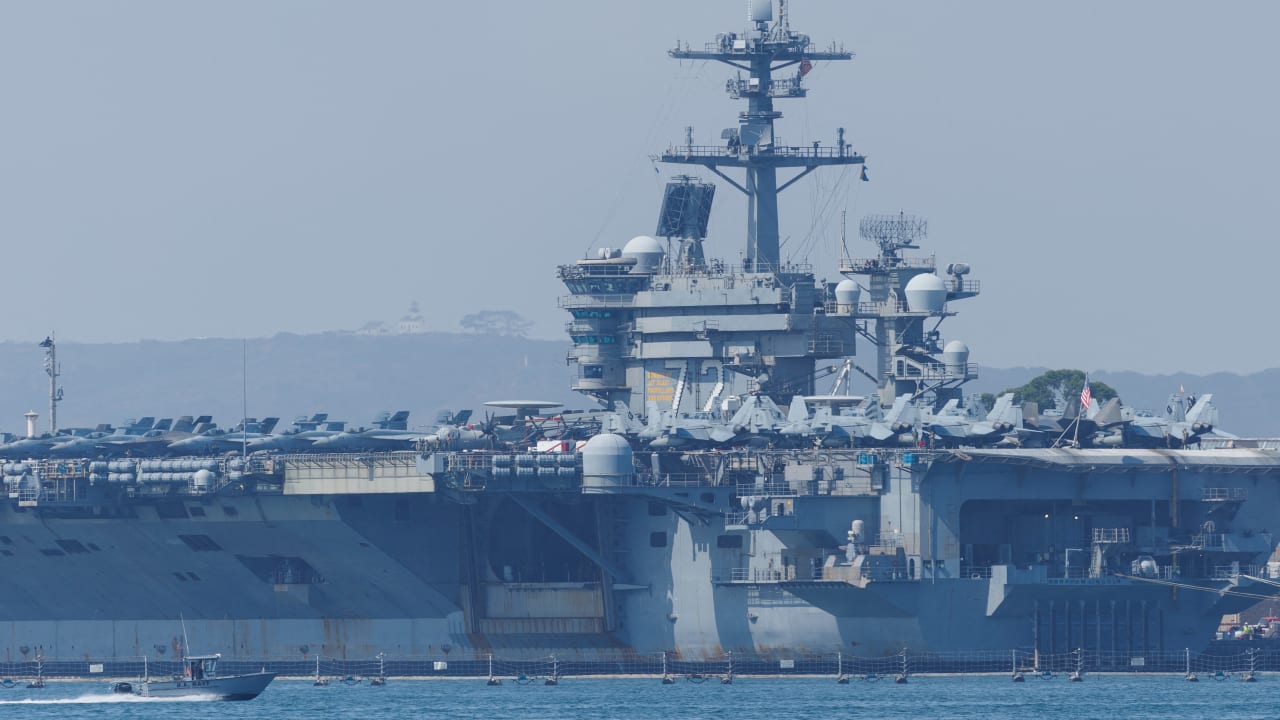
A number of US naval vessels, including the USS Delbert D. Black destroyer and the USS Abraham Lincoln aircraft carrier strike group, have been moved to the Middle East.
The USS Delbert D. Black is currently docked in Eilat, while the USS Abraham Lincoln is reportedly in the Arabian Sea.
On Tuesday, the US military shot down an Iranian drone that was observed approaching the USS Abraham Lincoln.
Navy Captain Tim Hawkins, a spokesperson at the US military's Central Command (CENTCOM), stated that an F-35C fighter jet was used "in self-defense and to protect the aircraft carrier and personnel on board."
On Saturday, CENTCOM released a statement warning the Iranian regime against taking "escalatory behavior" in international waters, asserting that the US "will not tolerate unsafe IRGC actions, including overflight of US military vessels engaged in flight operations, low-altitude or armed overflight of US military assets when intentions are unclear."
CENTCOM declared that they will "ensure the safety of US personnel, ships, and aircraft operating in the Middle East," adding that "the US military has the most highly trained and lethal force in the world and will continue to operate with the highest levels of professionalism and adhere to international norms" and urging Iran to act with the same level of professionalism.
Reuters, Tzvi Jasper, and Jacob Laznik contributed to this report.