

It was a world of black magic and voodoo, ritual slaughter, pagan rites, and blood worship. The master of these dark arts was a prophet named Balaam, whose fame had spread throughout the ancient Middle East. Legend had it that he had once been hired by the Emorites to cast a supernatural spell against the Moabites. The result was a resounding victory by Sichon, the warrior king of the Emorites, over Moab.
The memory of that defeat still lingered. Now our nation was marching toward Israel and toward destiny, and that was terrifying. We had already defeated Sichon, who himself had routed Moab. What chance did Moab stand against the people who had defeated their conqueror? Military resistance seemed futile. Their only hope was to hire the famed prophet Balaam and enlist his supernatural powers to curse our people.
Balaam soon realized that his plan would fail. We were a different people. We inhabited a world of monotheism, not sorcery. We had divine prophecy shaping our destiny, immunizing us against wizardly spells. We were different, and we stood apart from this ancient, dark world.
Balaam begins with a simple observation: “This is a people who dwells apart.” He uses the Hebrew word badad to convey how different and alone we stood.
Ironically, this verse, uttered by a pagan sorcerer, became a banner for Jewish identity. We stand apart.
Cultural distinctiveness
Over the past 2,000 years, the word badad came to represent cultural insularity. We lived different lifestyles. Halacha demanded that we marry differently, eat differently, and keep different calendars. These three markers of identity – family, food, and time – kept us distinct. Jewish law imposed strict limitations upon these three vital sectors of Jewish experience, ensuring that, though we lived among other nations and cultures, we would not disappear.
In modern times, many Jews have left classical halachic observance. Though the traditional markers of identity, such as family, food, and time, are still adhered to by many, additional identity markers have emerged that ensure some degree of cultural distinctiveness, such as Jewish language, cuisine, art, literature, and other aspects of Jewish culture. Even Jews who are not classically observant understand that we must maintain our cultural distinctiveness.
Orthodox Jews sometimes underestimate the value of Jewish culture. It plays an important role in our lives because culture becomes an important layer of identity. If we build Jewish identity solely upon religion, it occupies a narrower place in our identity. If we live Jewish culture, our identity becomes deeply and holistically Jewish, and that makes our religious experience more profound and resonant.
But additionally, Jewish culture is an important anchor for those who aren’t classically halachically observant. About two decades ago, I visited New York City for Shavuot. I spent the entire evening and the ensuing two days sharing Torah with the community in the spirit of Shavuot, the day the Torah was delivered.
I was informed that on Shavuot night, a parallel program offered events celebrating Jewish culture. Different parts of the building were devoted to different aspects of Jewish culture, including Jewish dance, Jewish film, Jewish food, and the State of Israel.
The person who informed me of this event expected me to be disappointed or even angry. I was very happy that these programs occurred. Ideally, I believe that Jews should be studying the word of God on the day that the Torah was delivered to man. However, Shavuot is also the day that marks our selection as a people. If people aren’t prepared to mark that selection through Torah study, it is better that it be marked through non-Torah activities than not be marked at all.
During most of the past 2,000 years, Balaam’s prophecy of badad was enforced by strict halachic guidelines. For many, it continues to be enforced by those eternal guidelines. For others, cultural distinctiveness is still shaped by Jewish culture.
The first ‘Ivri’
Of course, Balaam’s prophecy wasn’t just cultural and religious. It was also historical.
Our nation was founded by Abraham, a single individual who discovered a God responsible for all creation. He lived in a world of many gods and moral free-fall. His ideas weren’t immediately accepted. He was mocked and ridiculed. Yet he stood tall and steadfast, knowing that his revolutionary ideas would reshape history. He stood alone.
The term Ivri is often interpreted as “the man from the other side.” Initially, it referred to Abraham, who had traveled from ancient Mesopotamia and crossed rivers to arrive in Israel. He literally came from the other side of the river.
Eventually, though, this nickname became ideological, not just geographical. He stood alone on one side of the ideological divide, the only man who believed in one God. He wasn’t afraid to be alone. Eventually, the world came around and turned to his monotheistic ideas.
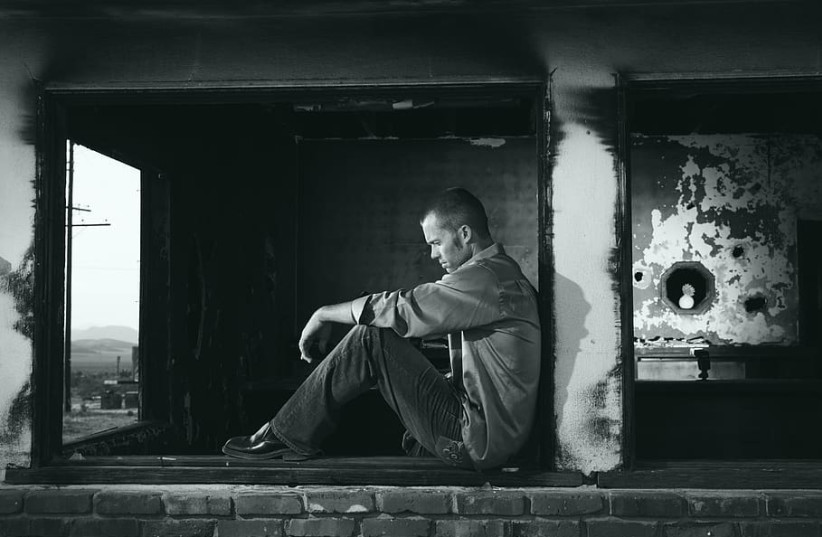
Alone once again
The past few years have returned us to that moment. The wars we have fought for our survival have led to an erosion of support for the State of Israel and the unleashing of rabid antisemitism against Jews worldwide. Israel has been roundly condemned and maligned. We are more alone now than we have been since the state was formed.
This challenge must be addressed with nuance rather than simplification or radicalization.
To be alone is, in many ways, to be a Jew. So it was with Abraham, and so it has been throughout our history. The past 80 years haven’t been typical. We became too comfortable with our acceptance and with our cultural, political, and societal integration. We felt too much at home and not alone enough.
We cannot be frightened by the prospect of being alone. The wars we are fighting are moral and historical. We are literally fighting for our survival. If the price is to stand alone, we cannot shrink from that prospect. This is part of our legacy.
As alone as we may be, our grandparents were far more alone, since they did not have an autonomous Jewish state behind them. The aloneness we experience today as a consequence of the wars being fought in Israel, and by those who defend and support Israel abroad, is built into Jewish history.
The price of aloneness
Yet this issue must be approached with nuance. International legitimacy and diplomatic standing are national assets. We can’t simply ignore our international standing. In a highly integrated world, the isolation of the State of Israel is itself a strategic risk. Some voices in Israel deride this issue or dismiss concerns about how we are viewed on the international stage.
In addition, from an ideological standpoint, though Abraham was alone, we stand at a different stage of history. We now have a state, and our national mission of representing the ways of God in this world can now be realized on a broader scale. How the Jewish State is viewed is, in some measure, a reflection of how God is viewed in this world. When our standing declines, the presence of God in the public sphere also declines.
We may not have much of a choice. We need to survive and protect ourselves so that there will be a State of Israel to reflect God. However, we should not trivialize how Israel is viewed. It is an important strategic asset. Additionally, it is part of our mission to be respected and admired as the people of God.
We have suffered setbacks in this area. Those setbacks were probably mostly unavoidable. However, we should avoid exacerbating them.■
The writer is a rabbi and educator at Yeshivat Har Etzion (Gush) in Israel. His latest book, Reclaiming Redemption, Vol. II: Faith, Identity, Peoplehood, and the Storms of War, is available at mtaraginbooks.com