
This Shabbat, we begin reading the third book of the Torah, the Book of Vayikra, also known as Torat Kohanim (“the priestly teaching”). The opening portion deals primarily with the laws of the sacrifices that were brought to the Temple.
Although this is a relatively complex subject, Jewish tradition establishes that this is the first portion taught to young children. Our sages explained:
“Rabbi Asi said: ‘Why do children begin their study with Torat Kohanim and not with Genesis? Because children are pure, and the sacrifices are pure; let the pure come and engage with that which is pure’” (Vayikra Rabbah 7:3).
The sacrifices symbolize a process of inner purification. Our sages (Midrash Tehillim 48) describe the emotional experience of a person undergoing this process: When a person would ascend to the Temple to bring a sacrifice for a transgression, he would be deeply saddened. Yet when he left the Temple after completing the process, he would be filled with great joy.
The purification of the heart also affects a person’s emotional state. When the heart is burdened with the weight of failures and sins, it brings a feeling of sadness. But when a person succeeds in correcting and purifying himself, a sense of relief and joy arises.
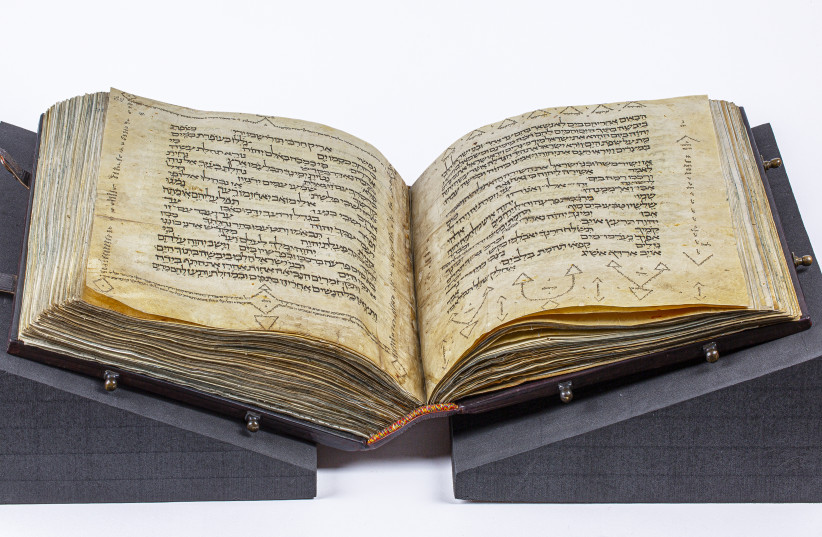
Today, unfortunately, we no longer have the Temple and are unable to offer sacrifices. Nevertheless, there are other ways to draw close to God. One example is the study of the laws of the sacrifices, for our sages teach that one who studies them is considered as if he has brought a sacrifice. Another path is the service of prayer in the synagogue, called a mikdash me’at – a “miniature sanctuary” – about which the verse states: “We will offer the words of our lips in place of bulls” (Hosea 14:3).
There is another path as well, one that has special meaning in our own generation: bringing hearts closer together, reconnecting Jews with their spiritual roots, and strengthening faith in the creator of the world.
The Ohr HaChaim HaKadosh writes in his commentary on the Torah that when a person brings another Jew closer to faith and to the ways of the Torah, this act itself is considered a kind of “offering to God,” for it restores a Jewish soul to its source and renews the spiritual bond between a person and his creator.
We are living in a time of tremendous global upheaval. Many feel that humanity is approaching significant and decisive moments. In the heart of every Jew arises the prayer that we may merit to see the fulfillment of the vision of the prophets – the rebuilding of the final Temple and the emergence of a new era that will bring redemption and peace.
To be worthy of such great days, every individual must work on himself, purify his heart, and strengthen his spiritual world. Judaism teaches, however, that responsibility is not only personal.
One of the unique characteristics of the Jewish people is the immediate sense of closeness between Jews anywhere in the world. A brief meeting is often enough to feel as if one has met an old friend. This phenomenon, unparalleled among other religions and ideologies, is rooted in the deep understanding that the entity known as the “Jewish nation” originated from a single great soul that was divided into 600,000 individual souls. From this stems the inner feeling that every Jew is an inseparable part of you – and that you cannot help but care about him.
'Why are you wearing a kippah?'
A story once told in the United States illustrates this beautifully. A Jewish man was driving on the road to Los Angeles on a Friday afternoon when he noticed a man standing beside his car with the hood open, asking for help. He stopped, examined the problem, and helped repair it. When they finished, he said to the man, “Shabbat shalom.”
The man did not respond. The driver tried again, in English and then in Yiddish, but still received no reply.
Finally, he asked him if he was Jewish. To his surprise, the man replied that he was not. “In that case,” the driver asked, “why are you wearing a kippah?” The man smiled and answered: “When I was young, my mother told me to always keep a kippah in the car. If I ever got into trouble, she said, ‘put it on your head and someone will stop to help you.’”
And indeed, that is exactly what happened.
The Jewish worldview does not allow a person to say, “Let my own soul be at peace. I will take care of myself, and let others manage on their own.” Our responsibility extends to others as well. This principle is known as mutual responsibility, expressed in the words of our sages: “All of Israel are responsible for one another.” This responsibility obligates every Jew to care for his fellow Jew, to help ensure that he lives in accordance with God’s will and fulfills His commandments – for we are one people, and our lives are intertwined.
This idea is not new. Already the father of our nation, Abraham, worked to spread faith in the One God throughout the world, as described in the Talmud:
“And he planted an eshel [tamarisk tree] in Beersheba, and there he called in the name of the Lord, the everlasting God” (Genesis 21:33).
The 3rd-century Torah scholar Reish Lakish said: “Do not read the verse as ‘and he called,’ but rather ‘and he caused others to call.’ This teaches that Abraham caused all who passed by to proclaim the name of the Holy One, blessed be He. How did he do this? After people ate and drank, they would stand to bless him. He would say to them: ‘Did you eat from what is mine? You ate from what belongs to the God of the world! Therefore thank, praise, and bless the One who spoke and the world came into being’” (Tractate Sotah 10a).
In this approach, there is no coercion and no compulsion, only a deep sense of mission – a responsibility and concern for humanity and society. It is a quiet but powerful call: to recognize the creator of the world, to strengthen faith, and to increase goodness and kindness.
Since the days of Abraham, this has been the path of the Jewish people – to illuminate, to guide, and to remind the world that human life carries meaning and purpose.
These days, the call becomes even clearer: to bring more light where there is doubt, to strengthen faith where there is confusion, and to bring hearts closer together – person to person and humanity to its creator.
In doing so, we will help bring the world closer to days of peace, tranquility, and prosperity.
The writer is rabbi of the Western Wall and Holy Sites.