
It is impossible to write this week’s column without referencing the terrible images of Rom Braslavski and Evyatar David, imprisoned for nearly two years in the evil clutches of Hamas. Their faces, released this past Sunday, pierced a nation already in mourning – not only for them but for the world’s indifference to their suffering.
That same day was Tisha B’Av, the date that marks Jewish destruction across centuries. This convergence served to reinforce the painful reality we face in this chapter of Jewish history – a world that questions Israel’s right to exist while tacitly supporting a terrorist organization that sows only darkness and death.
And yet, amid this darkness, our tradition calls us to listen. The word Shema, which opens this week’s parasha and echoes throughout the book of Devarim, offers a profound response. As Rabbi Jonathan Sacks notes, Shema is untranslatable into English: it means to hear, to listen, to pay attention, to understand, to internalize, to respond, and to obey. It is one of Devarim’s motif words, appearing no fewer than 92 times.
Moshe opens his final speech with words – but without someone to listen, to heed, or to respond, those words would vanish into silence. Listening, or shemi’ah, is the foundation of every relationship: parent to child, spouse to partner, teacher to student, doctor to patient, and citizen to society. Our relationship with God begins with listening – Shema Yisrael. So too does our relationship with each other. It is through listening that we build love, loyalty, and hope.
Why rabbinic literature begins with Shema
That may be why the entire corpus of rabbinic literature begins with the Shema. Rabbi Yehuda HaNasi, the editor of the Mishna, begins his monumental work – 63 tractates, nearly 4,200 mishnayot – not with belief, not with law, not with history, but with the command to recite Shema in the evening:
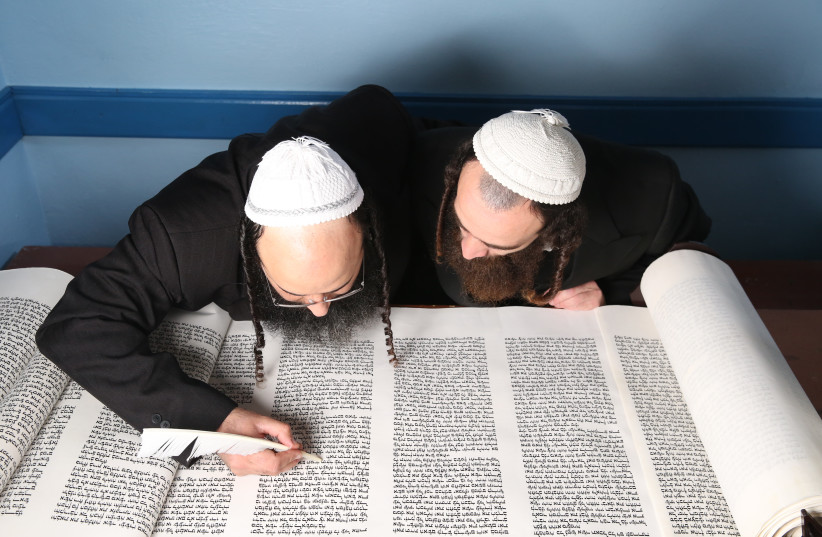
“From what time may one recite the Shema in the evening? From the time that the priests enter [their homes] to eat their terumah until the end of the first watch – the words of Rabbi Eliezer.”
This first Mishna is nothing less than a blueprint for Jewish survival in a post-Temple world. Strikingly, it begins mid-conversation. It assumes we already know what the Shema is and that it must be recited – an assumption drawn directly from this week’s Torah portion (Va’etchanan), where Moshe commands: “You shall speak of them… when you lie down and when you rise up.”
The Mishna, written over a thousand years later, does not replace the Torah – it continues it. From Moshe to Rabbi Yehuda HaNasi, a seamless chain of transmission endures. Rabbi Eliezer, living in the wake of the Temple’s destruction, insists on framing the timing of Shema around the Temple service.
THE MOMENT priests eat terumah after immersing – that becomes the earliest time to say Shema. The “first watch” – a third of the night – marks its latest. Even in a post-sacrificial age, he insists we measure time by the Temple.
We are meant to remember what was lost – and carry its rhythm forward. But the Mishna then presents two alternative opinions:
“The Sages say: until midnight. Rabban Gamliel says: until dawn.”
Rabban Gamliel tells a story to support his view: his sons came home late from a wedding, having forgotten to say Shema. He reassures them: as long as it’s before dawn, the mitzvah remains. And he adds – whenever the Sages say “until midnight,” it’s merely a safeguard; the true deadline is dawn.
Through this conversation, we encounter two essential qualities of Oral Torah: machloket – legitimate disagreement – and chessed, compassionate flexibility. Even after the Temple’s fall, the Shema becomes our new form of service – one that doesn’t rely on priesthood or hierarchy. Every Jew – man or woman, learned or simple – can stand before God twice a day and proclaim: God is One.
And the Mishna does more. It offers multiple time markers for when night begins – each rooted in different strata of society. A parallel baraita (Talmudic teaching) says nightfall begins “when a poor person sits down to eat his bread with salt.” Without a candle, his darkness comes early. Another says: “when regular people begin their Friday night meal.” Each marker – priest, pauper, family – offers a different human face. The Talmud dignifies all of them.
This diversity of perspectives is more than poetic. It is democratic. In Temple times, only priests could offer sacrifices. Now, every person is a vessel for holiness. The Shema becomes not just a declaration of faith but an act of spiritual equality – sanctifying time, across all walks of life.
That is the enduring power of Shema. To hear – even in the dark. To listen – when we feel silenced. To act – when it would be easier to despair. To love – when hate seems louder. To believe – even now. May we listen to one another with open hearts. May we listen to the silent cries of those still imprisoned in Gaza. May the night give way to dawn. May the words Shema Yisrael bring healing to this fractured world. ■
The writer teaches contemporary Halacha at the Matan Advanced Talmud Institute. She also teaches Talmud at Pardes along with courses on sexuality and sanctity in the Jewish tradition.