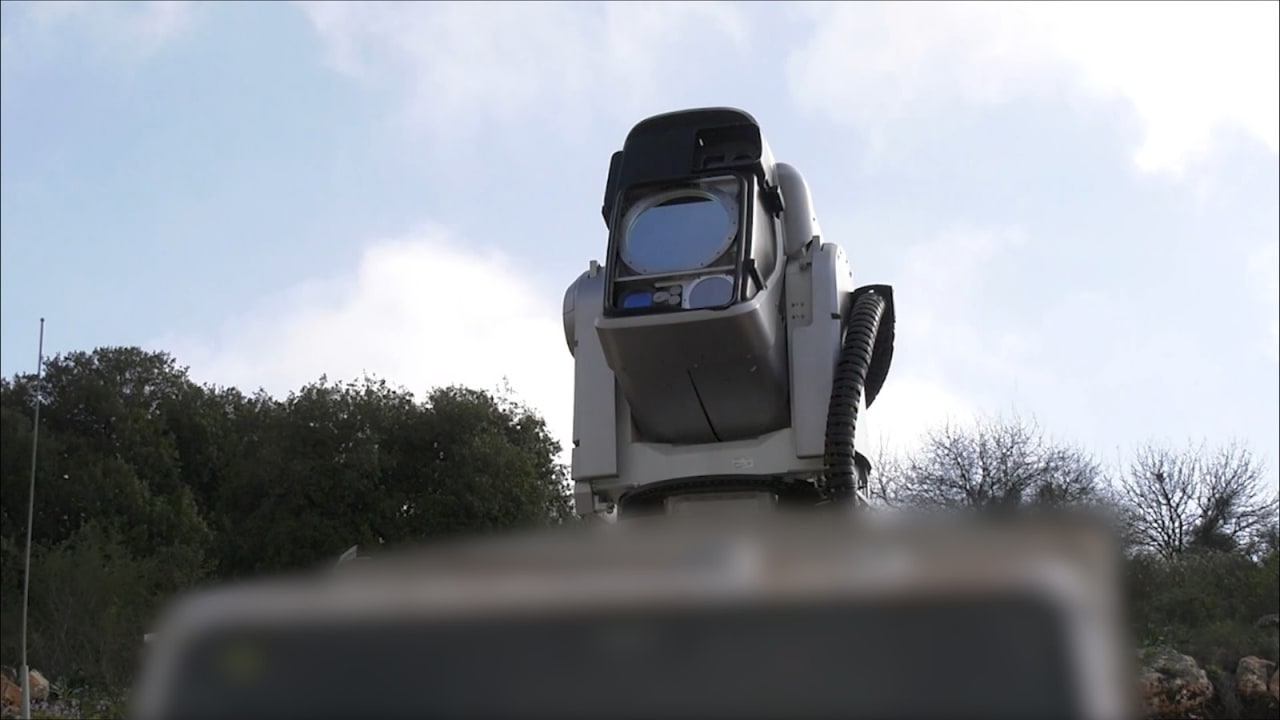
In dual revelations on May 28 and June 4, the IDF and Rafael said they have developed three laser platforms to use for air defense, and that one of the platforms shot down about 40 Hezbollah drones last fall.
They also confirmed earlier announcements that the laser would be fully and regularly deployed by the end of 2025, which is now only four months away.
How will this change Israeli security and life on the home front? There are several aspects that need to be addressed to answer that question. The most important one, cost, has been the most covered so far.
Iron Dome interceptors currently cost Israel $40,000 to $100,000. Before the war, Hamas spent an estimated $300 to $800 on its cheaper rockets, with costs less well-known regarding some of its better rockets.
Iron Beam, Iron Beam M (mobile), and Lite Beam cost almost nothing, since each time they fire, it is equivalent in many ways to turning on a light with a brief burst of electricity.

Less covered has been how Israeli lasers will project greater power to intimidate enemies from even bothering to fire short-range rockets and drones.
These lasers can shoot down threatening projectiles much faster and earlier in their trajectory, because a laser moves basically at the speed of light. They can also fire multiple laser beams at once to provide wider defense coverage than one defensive shot by Iron Dome.
How motivated will a Hamas or Hezbollah terrorist be to keep firing rockets when he sees the rocket shot down just over his head shortly after it leaves its launcher and long before it gets into any position of being able to be a threat?
Israel’s enemies have known that 85%-95% of their short-range rockets would be shot down by Iron Dome. But they also knew some would get through, and they got to watch their rockets sail off into the distance, with the moment they were shot down usually being too far off for them to see.
This change of hitting the threatening rocket or drone much earlier in their trajectory could also extraordinarily change life on the home front.
Until now, as soon as Israel’s enemies’ rockets lifted off, IDF warning sirens had to go off in a number of areas to give civilians enough time to reach safe rooms and bomb shelters should the rocket succeed at striking a residential area.
If the lasers can shoot down the rockets earlier in their trajectory, there may be no need to activate the air-raid sirens.
The psychological war, in which Israel’s enemies feel they have accomplished something by getting two million Israelis to run into safe areas in the middle of the night, even if they do not kill anyone, could be removed, thereby decreasing the motivation for firing such rockets.
Terrorist organizations have been shown to adapt
But Hezbollah and Hamas have shown they can learn and adapt. After all, the tunnel, rocket, and drone threats were all adaptations to use asymmetric, cheap weapons against Israel in areas where the Jewish state’s defenses were costlier and less hermetic. One alternative would be for these groups to switch to the Iranian and Houthi ballistic-missile threat.
Their problem would be that ballistic missiles are a much more complex operation to build, set up to fire, train firing teams, conceal before firing, and pay for. But if they can gain ballistic missiles, the lasers would likely still be useless for now, with a range limited to about 10 kilometers and focused on following much slower targets.
The Arrow 2 and 3 missile-defense systems shoot down ballistic missiles much higher in the Earth’s atmosphere, a place where lasers are not even close to reaching. Lasers lose their intensity over distance, especially if they have to travel through clouds and other inclement weather.
No one knows how long it will take to provide lasers that can shoot down long-range threats such as ballistic missiles, but no one is even really working on that yet. Given how long it took to develop Iron Beam, a 10-year waiting period could be a realistic prediction, and a lot can change in war and security in 10 years.
There is another time factor that could delay Iron Beam’s effectiveness.
Each shot is cheap, but producing enough laser batteries for it to be used on a large-scale basis, like Iron Dome, will be very expensive.
Iron Dome was first deployed in 2011, but there was a limited number of batteries. The real number is classified, but over time, public reports have placed the number of Iron Dome batteries as high as 12.
How long will it take to produce enough Iron Beam batteries to cover what 12 Iron Dome batteries can cover? While it will probably take less than 10 years, it will also probably take more than a year or two.
Make no mistake, the Iron Beam is a game changer, but it still may take some time for that change to be fully felt.