
A 41-year-old Israeli woman has been reported missing in the aftermath of the devastating floods that wrecked Nepal on Wednesday, killing nearly 800 people and leaving more than 3,000 people missing.
Israel's Consulate in Kathmandu and the Foreign Ministry's Situation Center are in contact with the missing woman's family and are working with local authorities in an attempt to locate her.
The woman, who Israel's Foreign Ministry identified as Katrina Sakowitz, is the second Israeli to be declared missing in Nepal. She holds both Israeli and Belarusian citizenship, and has lived in Milan for the last several years, according to KAN News. She was in Nepal as a tourist and did not identify herself as an Israeli citizen there, which KAN said is the Israel's Foreign Ministry did not identify her sooner.
On Thursday, tourism officials announced the first missing Israeli, noting that ZAKA had officially begun investigating their disappearance.
The Foreign Ministry released a statement on Thursday warning citizens to avoid traveling to the area due to the current natural disaster.
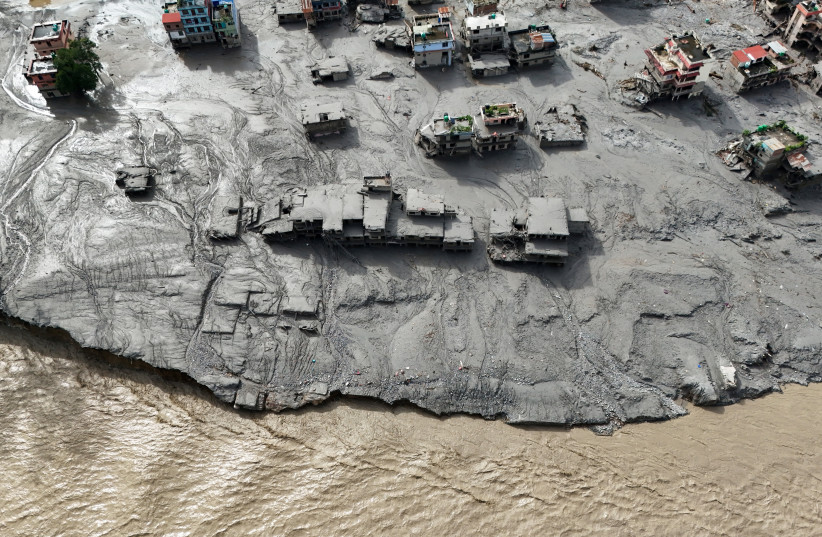
Red Cross estimates over 90,000 affected
Nepal’s disaster management authority said that 933 people were missing from hydropower projects in the flood-hit region. The Red Cross estimates that more than 90,000 people are likely affected by the disaster, which China has linked to the effects of climate change.
Hundreds of bodies, many unidentified, have been buried in shallow graves as they began decomposing in the humid weather in the plains of the Himalayan country after being swept down the mountains by the torrent.
Beijing has said 261 foreign nationals from 23 countries were unaccounted for in Tibet, near a key border crossing with Nepal.
China’s state-run CCTV reported Beijing has mobilized more than 2,100 rescue workers and allocated at least 220 million yuan ($33 million) to support relief efforts and has been airdropping equipment and supplies to frontline rescuers, while its soldiers used life-detection equipment to look for the missing.
Rescue operations have been suspended several times since Friday because of bad weather and concerns that a lake formed across the Nepal-China border by the disaster could trigger fresh flooding after it began overflowing into Nepal's rivers.
Reuters and Jerusalem Post Staff contributed to this report.