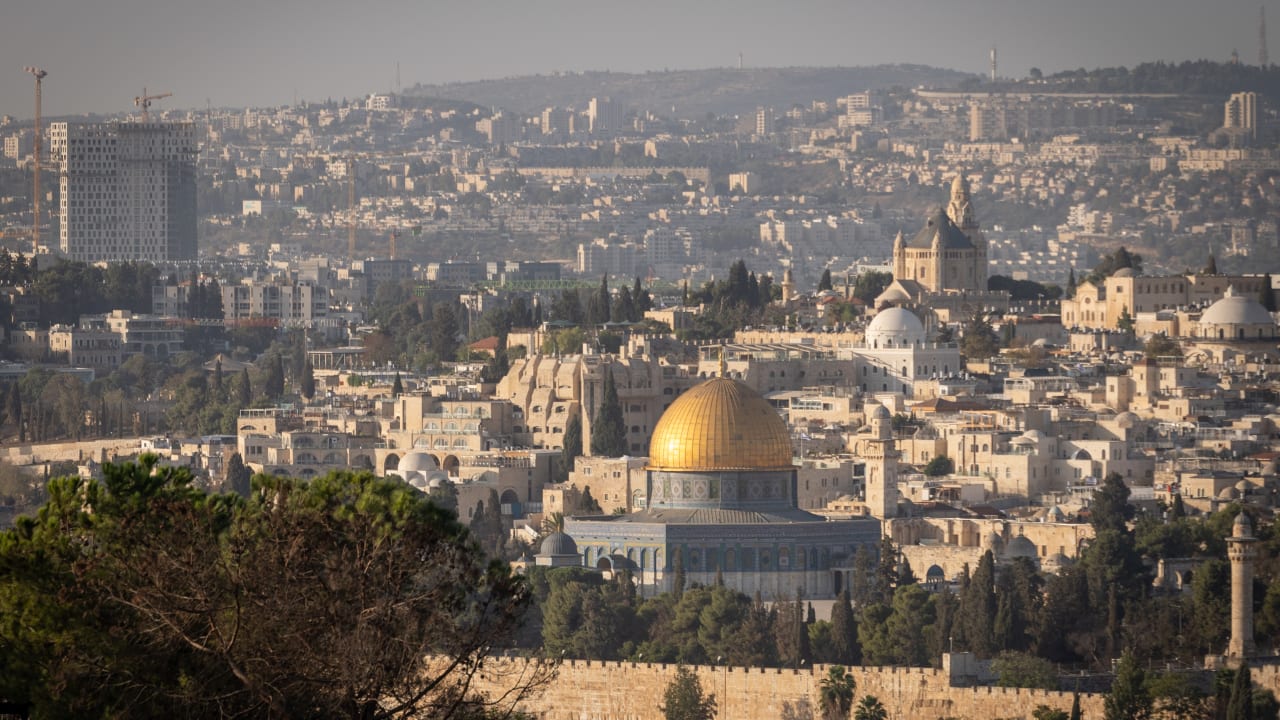
Israeli police have allowed Jewish visitors to bring prayer pages onto the Temple Mount in Jerusalem for the first time in years, a significant departure from the long-established status quo governing the highly sensitive religious site.
Under the new policy, Jewish visitors may enter the site with a single prayer page, but only if it is prepared in advance and distributed at the entrance by the Temple Mount Yeshiva. Visitors are still barred from bringing personal prayer books, phylacteries, or other religious items. The approved page includes visitor instructions as well as the Amidah, a central prayer said three times daily.
The decision comes just two weeks after Maj. Gen. Avshalom Peled took office as commander of the Jerusalem District of the Israel Police. Peled is considered close to National Security Minister Itamar Ben-Gvir, a far-right politician who has openly called for expanded Jewish prayer rights at the compound.
For decades, Israeli authorities have enforced strict limits on Jewish religious activity at the site, allowing non-Muslim visits but prohibiting prayer, singing, or ritual gestures. Hundreds of Jewish visitors have been detained or arrested over the years for quietly reciting prayers or carrying religious materials.
“We welcome the positive change and hope that the study pages will also be approved as they have been in recent years,” said the Temple Mount Administration, an organization that works to strengthen Jewish ties to the holy site.

The holiest site in Judaism
The Temple Mount, where the First and Second Jewish Temples were built, is the holiest site in Judaism.
The delicate status quo governing the Temple Mount goes back to 1967, when Israel liberated Jerusalem’s Old City from Jordan during the Six-Day War. Fearing a religious war, then-defense minister Moshe Dayan agreed to let the Islamic Waqf, a Muslim trusteeship, continue managing the holy site’s day-to-day affairs, while Israel would maintain overall sovereignty and be responsible for security. The Waqf is overseen by the Jordanian monarchy.
According to the status quo, while non-Muslims are allowed to visit the Temple Mount, they are not permitted to pray there.
Prime Minister Benjamin Netanyahu insists that Jewish prayer is not officially permitted at the site. However, the police, who are responsible for enforcing the ban, fall under Ben-Gvir’s purview. Ben-Gvir has advocated Jewish worship at the holy site for years. He openly led Jewish prayers at the site in August during Tisha B’Av, a holiday marking the anniversaries of the destruction of both the First and Second Temples.
Rabbis are increasingly divided over Jews ascending the Temple Mount. For centuries, the widespread rabbinic consensus was that Jewish laws of ritual purity still apply to the site, restricting Jews from visiting. But in recent years, a growing number of rabbis have argued that ritual purity laws don’t apply to all sections of the holy site and encourage visits to permitted areas to maintain Jewish connections to the Temple Mount.
According to Beyadenu, a Jerusalem-based non-profit, 68,429 Jews ascended the Temple Mount, a 22% increase compared to last year’s 56,057.