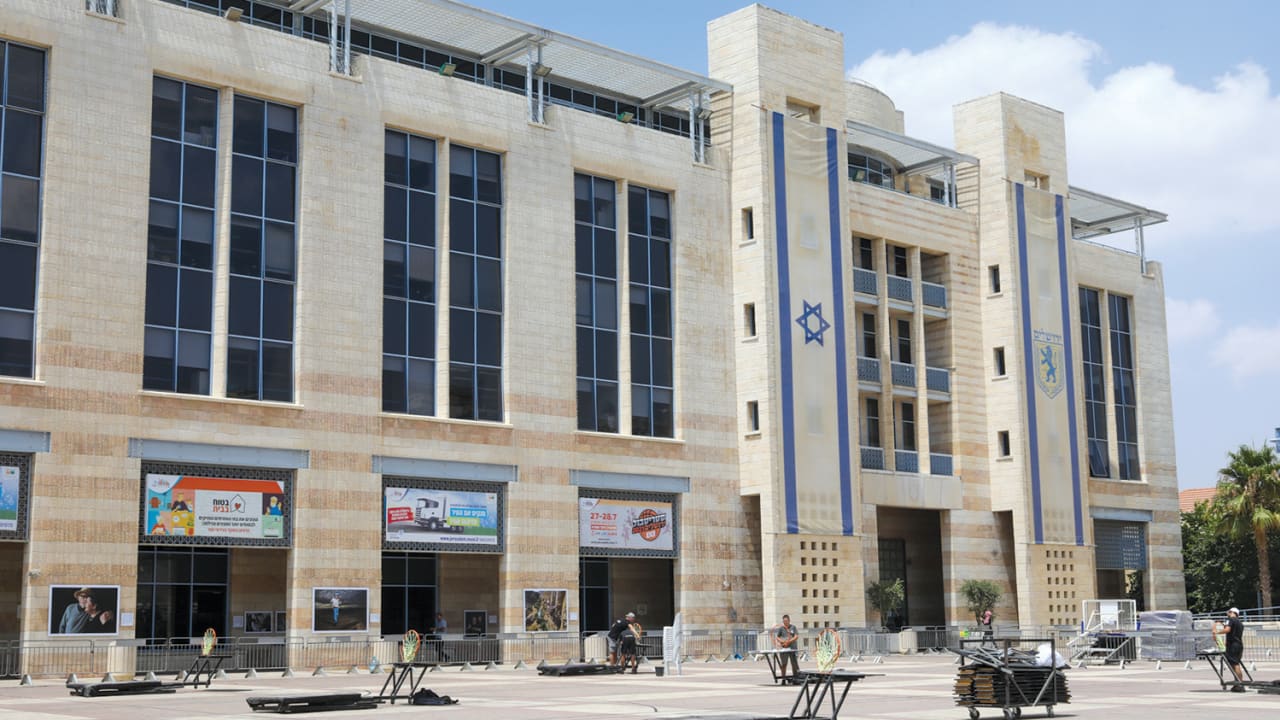

IF ALL goes according to plan, change is coming to Safra Square, where City Hall is located. Within 24 hours of the resignation of City Director-General Itzik Larry, a successor was nominated by Mayor Moshe Lion, who, if appointed, will make history as the first woman to hold the position. She is Ariela Rejwan, whose family has had strong connections with City Hall, even before the era of Teddy Kollek.
A mother of three, with a master’s in public policy from Hebrew University, Rejwan lives in Beit Hakerem, a neighborhood that can be considered a Rejwan family enclave. Following her service as an army officer dealing with the wounded, she entered the tourism industry and was the national business manager for the Diesenhaus Group.
She began working with the Jerusalem Municipality in 2009 as a voluntary education and community development leader. Former mayor Nir Barkat was impressed by what she had achieved in a voluntary capacity and appointed her as a senior adviser on education and community development. She was subsequently appointed to the position of executive director. After Lion succeeded Barkat in the 2018 mayoral elections, he asked her to stay on as deputy to the city manager.
Larry, who spent seven years as city manager, said he was proud to have been with Lion as the city underwent a revolutionary change. If, as anticipated, Rejwan steps into Larry’s role, there will be a formal transfer of power, even though she already knows all there is to know about the job.
Happenings on Keren Hayesod Street
■ MORE THAN half a century ago, the bus stops on Keren Hayesod Street were flush with the sidewalks. The traffic lights and the safety barriers that have been put up over the last couple of decades have helped make crossing the wide road less dangerous.
At the time, there were a lot of young people in the area – students at the Rubin Music Academy – who ran across the road throughout the day to purchase items from the mini-market on Lincoln Street, which no longer exists.
After the Rubin Music Academy moved its three divisions to its new home on the Givat Ram campus of Hebrew University in 2003 and changed its name to the Jerusalem Academy of Music and Dance, the building, which had originally been the home of members of the Schocken family, became the Shuvu School.
Most of the students came from the former Soviet Union, where they had been denied access to their Jewish heritage, and the school helped them and their parents reclaim it. During municipal or Knesset elections, the building also served as a polling station, which was very convenient for the nearby residents.
When the school moved out, the building, which is next door to the Prime Minister’s Residence, was used for various purposes by the prime minister’s security detail and was no longer used as a polling station. Voters had to go farther afield to a school on Kaf Tet B’November Street.
A beautiful open garden was planted in the front, and benches were placed in the section closest to the Prime Minister’s Residence so that visitors who might have to wait had somewhere to sit.
Once the residence was vacated in July 2021, a month after Benjamin Netanyahu lost office, the residence remained unoccupied. After several futile attempts to find an alternative, it was decided to gut the interior of the residence and rebuild it from within. Meanwhile, the premises next door have become neglected.
During the week, cars are parked on both sides of the whole length of the street, something that was forbidden when the Netanyahu family lived there. On weekdays, the vehicles include trucks used in construction, and workers are supervised by Shin Bet (Israel Security Agency) members.
Between the periods in which the building was used as an academy and a school, there was a change in traffic regulations, and buses were moved to the center of the road, with private vehicles relegated to the sides. Traffic lights were placed at busy intersections.
At the end of July, area residents met to discuss their concerns about the possible start of construction for a light rail route. It wasn’t like Emek Refaim, where years of discussion and objections went by before work finally began.
Within a few days, the road had been tarred to be suitable for bus traffic. Numerous bus routes pass through Keren Hayesod. One of the signs for a new bus stop is less than half a meter away from where the original bus stop stood more than half a century ago, but at the cost of an inlet that had been specially created for cars belonging to physically challenged drivers.
In addition to the inconvenience that preparations for the light rail infrastructure will cause, there are quite a few construction projects underway on the side streets off Keren Hayesod. As things stand, the traffic situation is already chaotic and will be more so when buses and cars are caught in it.
To make matters worse, bikes, scooters, and motorcycles, which for the past couple of years have made life a nightmare for pedestrians, will use the sidewalks to avoid the congestion. The worst offenders are the Wolt delivery motorcyclists, who, even when they use the road and not the sidewalk, almost always go over the crosswalk while waiting for lights to change.
A resident who is expecting visitors from overseas said she is embarrassed because there is nowhere to take them. They are coming to see the city, but it is no longer the Jerusalem that she would like to show them. It has lost its character and its aura of sanctity. It’s just an ongoing building site with cranes and towers dominating the skyline.
Torah on Tu B'Av
■ USUALLY, WHEN a bridegroom is called to the Torah on the Shabbat prior to his wedding, he reads either the Torah portion or its supplement but seldom reads both. At the Hazvi Yisrael (Hovevei) synagogue last Saturday, Noam Berk, the son of Esti and Jeff Berk, longtime members of the congregation, was the exception to the rule and read both in a loud, clear voice.
It was a given that this was where he would be called to the Torah because it was where he celebrated his bar mitzvah. His bride, Shira, is the daughter of Rashie and Todd Zalut. Considering that it was Tu B’Av, the festival of love, the bride and groom were most appropriately named. Her name means “song,” and his means “pleasantness.” Definitely a good match.
greerfc@gmail.com