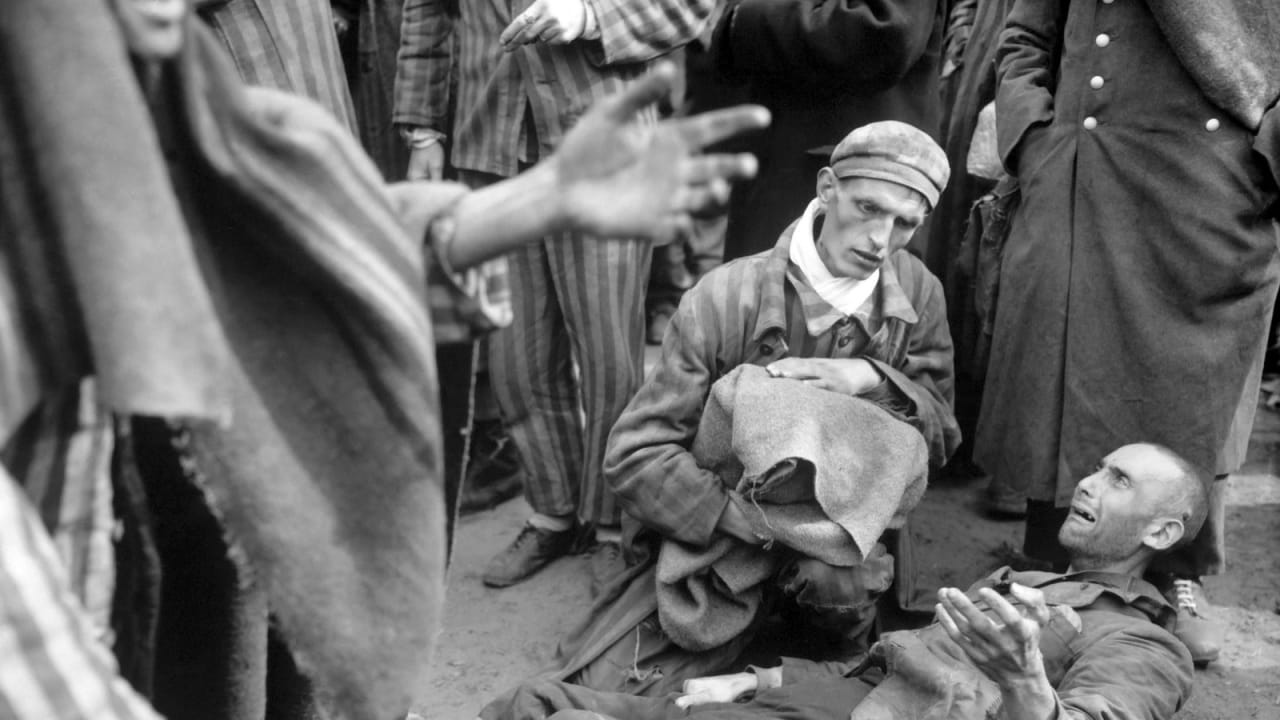
The recently released footage of Gaza hostages Evyatar David and Rom Braslavski highlights the similarities with the suffering in Holocaust concentration camps.
The footage, released by Hamas and Palestinian Islamic Jihad over the weekend, showed David and Braslavski appearing to suffer from extreme hunger, with almost identical symptoms to the black-and-white images from the concentration camps.
These symptoms include extreme malnutrition, body mass loss, damage to the nervous system, multi-system physiological deterioration, and severe psychological damage accompanied by a sense of powerlessness, detachment, and loneliness.
David and Braslavski have had to survive on minimal food rations, sometimes less than 800 calories per day. A nutritional table shown by David highlights that it may be far less, at around 200 calories. This reflects the digestive system of Holocaust survivors, which collapsed from malnutrition, just as is likely happening with David and Braslavski.
Among those who survived the concentration camps, there was documentation of severe damage to their nervous system due to a deficiency in vitamin B1, which included neuropathy, muscle cramps, tremors, and physical weakness. These symptoms indicate severe nutritional deficiencies that caused damage to the nervous system.

Hunger is not just physical either. Depression, post-traumatic stress disorder, and emotional numbness that was described among Holocaust survivors has also been documented among hostages. The human brain responds similarly to extreme conditions of hunger, captivity, and isolation.
These hostages are described as suffering from withdrawal, loss of interest, and low responsiveness to environmental stimuli, which are all indications of cognitive damage and a survivalist psychological response, which was also documented in Holocaust concentration camps and ghettos.
Metabolic damage which was documented among Holocaust survivors, including an increased risk of diabetes, high blood pressure, and metabolic syndrome, is also appearing in some of the freed hostages.
The imbalance of electrolytes, which are also known as blood salts, caused sudden death among concentration camp survivors who were fed large amounts of food at one. This phenomenon, also known as refeeding syndrome, also poses a risk to hostages, who sometimes receive large amounts of food just days before their expected release from terror captivity.
Refeeding must occur gradually, cautiously to prevent sudden death
The danger from disrupting the phosphorus, potassium, and magnesium balance in the first weeks of feeding large quantities of food could lead to hearth rhythm disturbances and multi-system failure. This must be a lesson that is learned, and refeeding must begin gradually and cautiously.
Conditions, such as captivity syndrome, and amblyopia of captivity, were documented among Holocaust survivors in the 1940s as a result of nerve damage from prolonged hunger, and are now being seen again in hostages who have already been freed. It is likely that the remaining hostages also suffer from these conditions.
Many freed hostages reported balance problems, sensory weakness in their limbs, and vision disturbances. These are not new symptoms, but a return of a known biological phenomenon.
Many Holocaust survivors retained feelings of anxiety around food, a need to hoard, avoiding leaving leftovers, or compulsive eating behaviors. Some couldn’t break the link between hunger and survival. This trauma is also appearing among hostages, some of whom are struggling to eat, suffering from vomiting, fear of scarcity, and sometimes even feelings of guilt surrounding eating.
A notable finding from comparing the conditions of Gaza hostages and Holocaust survivors is the rate of physiological deterioration observed both then and now. Survivors experienced sharp weight loss within a few weeks, and in many cases, lost up to half of their body weight.
The same process occurred with the hostages, who quickly went from functioning physical strength to weak, exhausted, and starving bodies. The body’s survival mechanisms are activated intensely, but they come at a destructive cost of organ shrinkage and functional collapse.
The central nervous and hormonal systems are similarly affected. The body responds to chronic hunger by sharply reducing thyroid hormones, increasing cortisol, and halting sexual hormone function.
In children, as was documented in the Holocaust and today, this causes stunted growth, delayed sexual maturation, and cognitive developmental damage. This is a state that not only jeopardizes lives but also the future quality of life for the kidnapped children.
Furthermore, the immune system is significantly weakened, a result of deficiencies in proteins, vitamins, and essential salts. Survivors experienced high rates of infections, including pneumonia and tuberculosis.
Similar illnesses, including recurrent respiratory infections, skin rashes, and intestinal infections, are reported among freed hostages. The body, which has been in undernutrition for months, loses its ability to protect itself and reacts with less intensity even to standard medical treatments.