
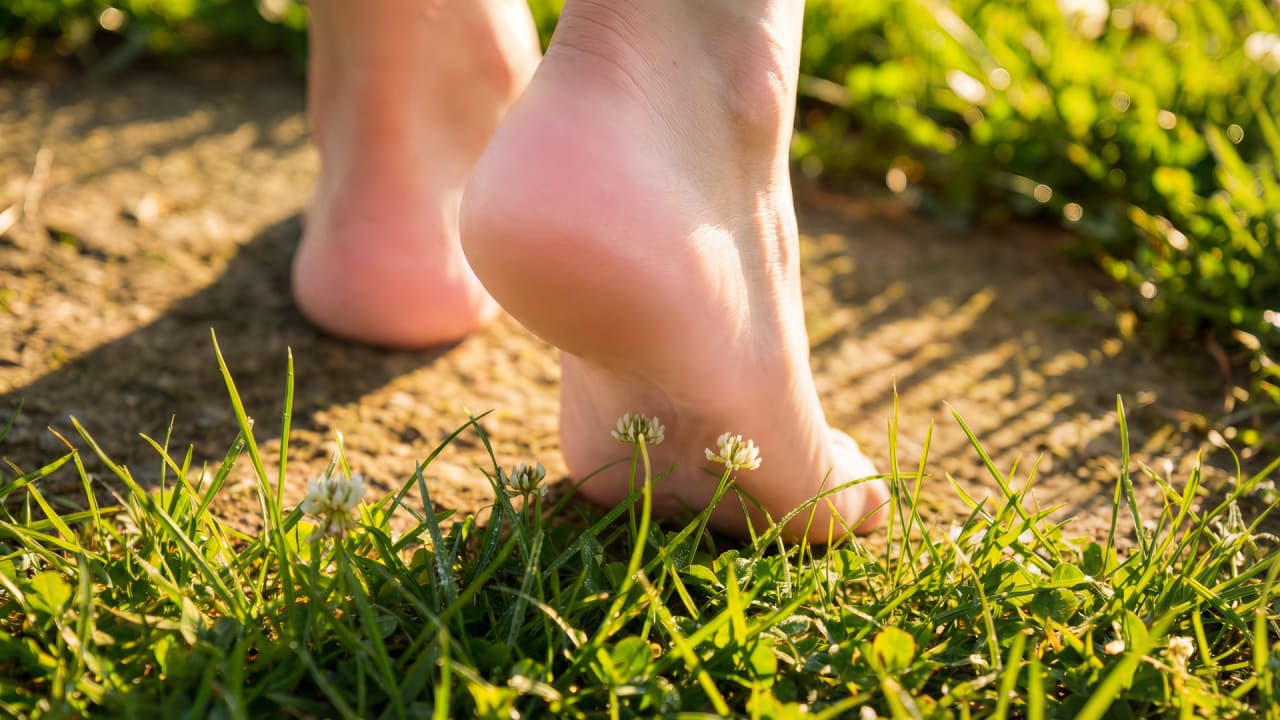
I love walking. It’s my way of being in the world. Movement brings clarity—ideas surface, decisions fall into place, and the day begins to make more sense.
Every day, I go out for a walk—a quiet date with myself. It is a deeply valuable part of my life, and one I am not willing to give up under any circumstances.
And it was during one of these walks that I one day passed a middle-aged couple heading toward me. As they went by, I briefly heard the woman say, “Let’s go home already, my feet are so sore.”
My gaze almost automatically dropped to her feet. She was wearing ordinary sneakers—seemingly comfortable at first glance, but with a thick sole, a narrow toe box, and laces pulled tight. Then I looked down at my own shoes. They were light barefoot-style shoes, with a wide toe box and a thin, flexible sole that, unlike the cushioned sole of conventional shoes, allows the foot to absorb impact on its own. And I suddenly wondered: when was the last time my feet had hurt because of my shoes?
To my surprise, the answer was never—at least not since I switched to barefoot-style footwear.
So when did we decide that squeezing our feet into narrow, anatomically incorrect shoes was normal? Most likely, it happened in the name of fashion and tradition.
Still, we have the power to bring comfort and confidence back into the way we move—and I want to show you how.
Barefoot-Style Shoes: Why It Matters
First, a few words on why anatomically correct footwear matters for long-term health.
On its own, this type of footwear won’t fix existing foot problems—you’ll need to work on those separately (more on that below)—but it can help prevent new ones from developing.
When shoes follow the natural shape of the foot, the toes can spread as they are meant to, helping with balance and stability and reducing strain.
Without thick cushioning or a raised heel, the foot moves more naturally and muscles that are often unused begin to work again. When the feet function well, the whole body benefits—posture improves, and there is less pressure on the knees, hips, and spine.
But the benefits don’t end with the physical.
When the distance between the body and the ground is reduced, a quieter, more attentive way of moving through the world naturally emerges. Each step becomes more conscious, the body more present.
Over time, this simplicity restores a sense of balance and inner steadiness, returning us to the way nature originally shaped us.
How to Start: Simple, Practical Tips
Of course, the transition to this type of footwear should be gradual. The body needs time to adapt.
Below are a few simple tips I personally use to support the transition to barefoot-style footwear.
- Go slowly
Start by wearing barefoot shoes for 30–60 minutes a day. Alternate them with your usual footwear and increase the time gradually. Mild muscle fatigue is normal.
- Use simple tools
- Toe spacers: Use them at home for 10–15 minutes a day to gently encourage the toes to spread. It’s important not just to wear them, but to walk in them as well—this is what brings results.
- Massage or tennis ball: Roll the sole of your foot for 1–2 minutes to release tension and improve circulation.
- Do basic exercises
These exercises gently wake up the muscles of the feet and lower legs, helping them regain strength, control, and natural support.
- Toe lifts: Lift and lower your toes slowly, 10–15 times.
- Short foot: Gently lift the arch without curling the toes, hold for a few seconds, repeat several times.
- Calf raises: Rise onto your toes and lower slowly, 8–10 times.
- Walk mindfully
Take short, relaxed walks. Keep your steps light and natural, letting the foot land softly rather than forcefully.
- Be patient
Your feet are learning again. Consistency matters more than effort.
A New Way of Being
Over time, a different way of stepping may become not only the foundation of healthy, comfortable feet, but also a different way of being—more grounded, more present, and more in tune with yourself and the world around you.
And perhaps, one day, you’ll hurry home not because your feet are tired or sore, but simply because someone there is waiting for you—and loves you.
This article was written in cooperation with Lado Okhotnikov