Twenty-four hours after the initial wave of US-Israel airstrikes against Iran in Operation Roaring Lion, the Israeli Air Force announced that it has established air superiority over Iran.
The operation, also known as Epic Fury, began on Saturday morning as stealth fighter jets launched long-range precision missiles to destroy critical targets and eliminate the Islamic Republic’s Supreme Leader Ali Khamenei.
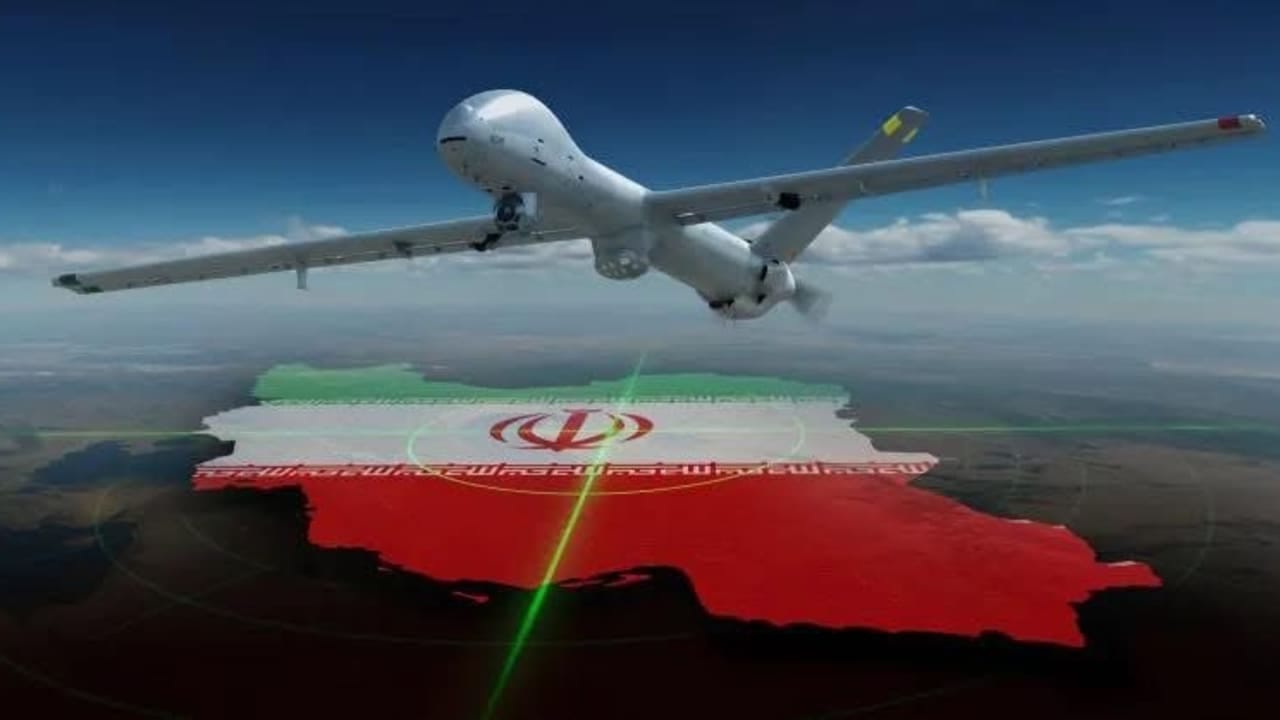
Neither the IDF nor the Pentagon has disclosed much about the platforms being used in the operation, but similar to June’s Operation Rising Lion, unmanned aerial vehicles (UAVs) were likely critical in the opening salvos, alongside the Israeli missiles and American Tomahawks.
UAVs are relied upon to act as a coordinated fleet able to maintain awareness across vast distances, verify information through multiple sensors, and adapt quickly as conditions change. By distributing roles across various aircraft, operators gain redundancy, flexibility, and the ability to sustain operations for long periods without exposing personnel to risk.
Unmanned systems are central components of how information is gathered, interpreted, and acted upon.

Israel has several types of UAVs, from ISR (intelligence, surveillance, and reconnaissance) to strike to loitering munitions (suicide drones).
During the 12 Day War between Iran and Israel in June, aka Operation Rising Lion, UAVs closed operational loops in an unprecedented fashion. Notably, 70 percent of all IAF flight hours were carried out by UAVs as opposed to piloted fighter aircraft, such as F-35s.
The UAVs struck critical targets, including ballistic missile launchers and air defense systems, neutralizing them before they could be fired against Israel.
UAVs likely used during Operation Roaring Lion
A breakdown of Israel’s fleet of UAVs likely used this time around during Operation Roaring Lion is as follows:
Israel Aerospace Industries Heron TP is a large, long-endurance aircraft capable of monitoring wide regions from high altitude. It is IAI’s most advanced UAV, with a 40-hour endurance capability, a maximum takeoff weight of 11,685 pounds (5,300 kilograms), and a payload of 2,204 pounds (1,000 kg.). It can be used for reconnaissance, as well as combat and support roles, and it can carry air-to-ground missiles to take out hostile targets.
The Heron TP can carry multiple advanced sensors at once, allowing it to map broad patterns, track developments over long distances, and maintain stable communications links.
In a coordinated mission, it could function as a strategic anchor, namely the aircraft that sees the farthest, stays aloft the longest, and provides the overarching picture that other systems rely on. Its satellite-based connectivity allows it to remain in contact even when operating far from its launch point, making it the natural platform for long-range situational awareness.
Elbit Systems’ Hermes 900 can assume the role of persistent observer. While smaller than the Heron TP, it is designed to remain airborne for extended periods and to focus on specific areas that require continuous attention. Its modular payload allows it to shift between maritime monitoring, border observation, and detailed electro-optical surveillance.
In an operation such as the currently underway Roaring Lion, Hermes 900 would be the aircraft that fills in the details by tracking movement, verifying information, and maintaining a steady watch over zones where commanders need uninterrupted visibility.
During Rising Lion in June, the IAF’s fleet of Hermes 900 Kohav helped locate dozens of Iran’s concealed ballistic-missile launchers and strike Iran’s mobile air defense systems, radar installations, and ammunition facilities.
Closer to the ground, loitering systems such as the SkyStriker and Harop would add flexibility and responsiveness. Although these platforms are often associated with strike roles, they also have the ability to remain airborne for extended periods, position themselves near areas of interest, and act as forward sensors. Their small size and quiet propulsion make them well-suited for monitoring narrow corridors, observing specific sites, and confirming information gathered by larger aircraft.
The Harop, with its longer endurance and autonomous search capabilities, can cover areas that are difficult for other systems to reach, while the SkyStriker can be deployed quickly to provide additional eyes in the air where rapid presence is needed.
A layered ecosystem of complementary roles
Israel’s fleet of unmanned aircraft has evolved from a supporting asset into the backbone of its long-range operational doctrine.
The events of last year’s Operation Rising Lion and now Roaring Lion underscore how deeply this has taken hold.
Air superiority may still be declared by fighter jets, but the situational dominance that makes such declarations possible is increasingly built by platforms whose operators never leave the ground.
By weaving together high-altitude reconnaissance aircraft, persistent mid-altitude observers, and agile loitering systems, Israel has created an aerial architecture that can sense, interpret, and respond faster than any single platform could on its own.
As regional threats grow more dispersed, mobile, and concealed, this layered network of UAVs is no longer a technological advantage - it is the operating system of modern warfare.
When all these systems operate together, they create a multi-tiered architecture in which each platform reinforces the others. Information flows upward from the smallest systems to the largest, while tasking flows downward, creating a resilient network capable of maintaining awareness across large regions without relying solely on manned aircraft.