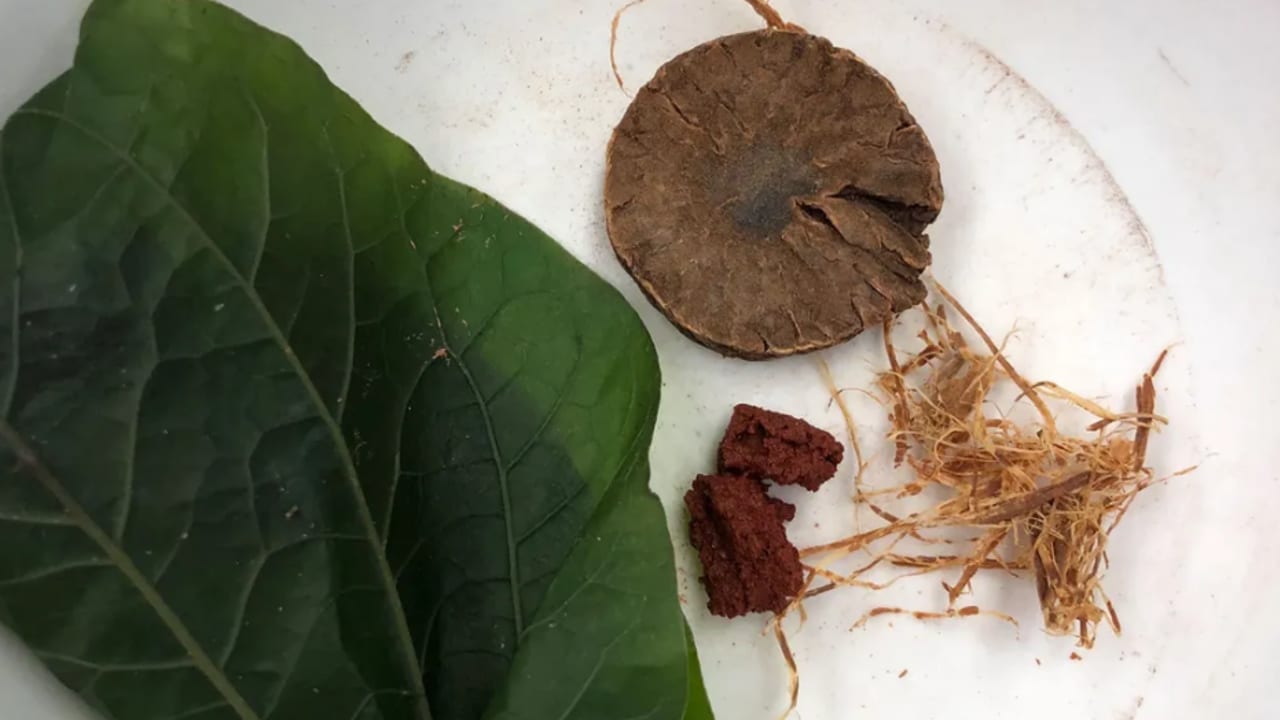
Recent revelations have brought to light fascinating insights into the ancient practices of Southeast Asia, thanks to a study by an international team of researchers examining dental plaque from Bronze Age Thailand. The study, published in the journal Frontiers in Environmental Archaeology, provided irrefutable evidence of betel nut chewing dating back approximately 4,000 years. The discovery was made at the burial site of Nong Ratchawat in Nakhon Ratchasima, central Thailand.
Betel nut, or Areca nut, has been an integral part of social and cultural rituals across Southeast Asia. Its use has declined today due to government measures and awareness of its link to oral cancers, but it held cultural importance for millennia. The ancient custom had stimulating and euphoric effects due to psychoactive compounds like arecoline and arecaidine, providing users with increased alertness and energy.
The research team analyzed the calcified dental plaque of six individuals at the burial site. Among them, an individual identified as Burial 11 intriguingly showed the presence of arecoline and arecaidine. Despite the absence of staining typically linked to long-term betel nut use, this individual appeared to be a habitual user. "Our method makes the invisible visible. We can now reconstruct behavior that would otherwise have been lost," said Dr. Shannon Tushingham, an anthropologist at the California Academy of Sciences.
The discovery opens up new avenues for exploring other archaeological sites where traditional evidence may not have survived due to environmental factors. The researchers hope to apply these methods to other locations, potentially offering new insights into ancient human behaviors. "Understanding the cultural context of traditional plant use is a larger theme we want to amplify—psychoactive, medicinal, and ceremonial plants are often dismissed as drugs, but they represent millennia of cultural knowledge, spiritual practice, and community identity," stated Dr. Piyawit Moonkham, the lead researcher and an archaeologist at Chiang Mai University.
While the absence of staining on Burial 11's teeth raises questions about ancient consumption methods or post-consumption dental hygiene practices, the research revealed new perspectives on the relationship between humans and psychoactive plants since ancient times.
Assisted by a news-analysis system.