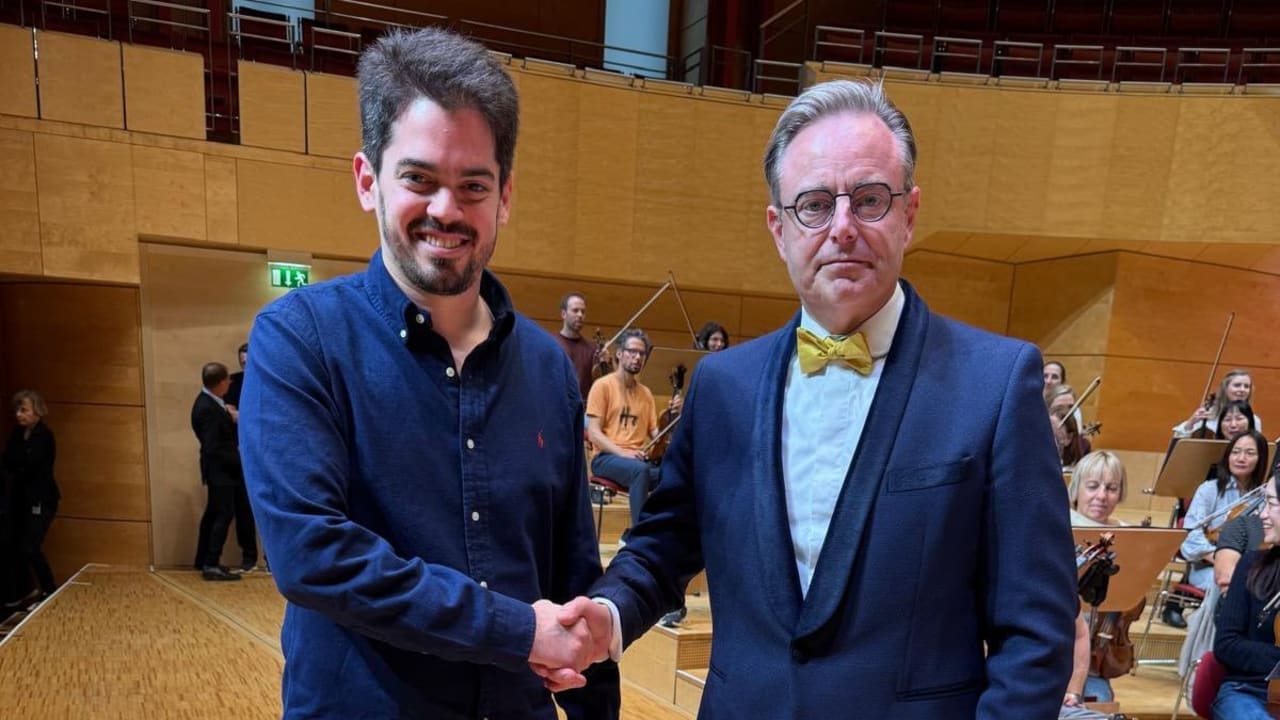
Music has long been a bridge between nations. For centuries it stood apart from political affiliation, offering a sanctuary of cosmopolitanism and cross-cultural exchange.
That ideal is now buckling under demands for ideological purity.
The clearest example is the growing blacklisting of Israeli musicians, including the Israel Philharmonic Orchestra and its music director, Lahav Shani.
A slippery slope
The IPO has long operated as an independent, apolitical cultural institution, and Shani followed that tradition – until recently, saying only that he strives for peace and reconciliation.
Still, the Boycott, Divestment and Sanctions movement and other pro-Palestinian groups have singled him out for his nationality – being Israeli and, perhaps worse still, Jewish.
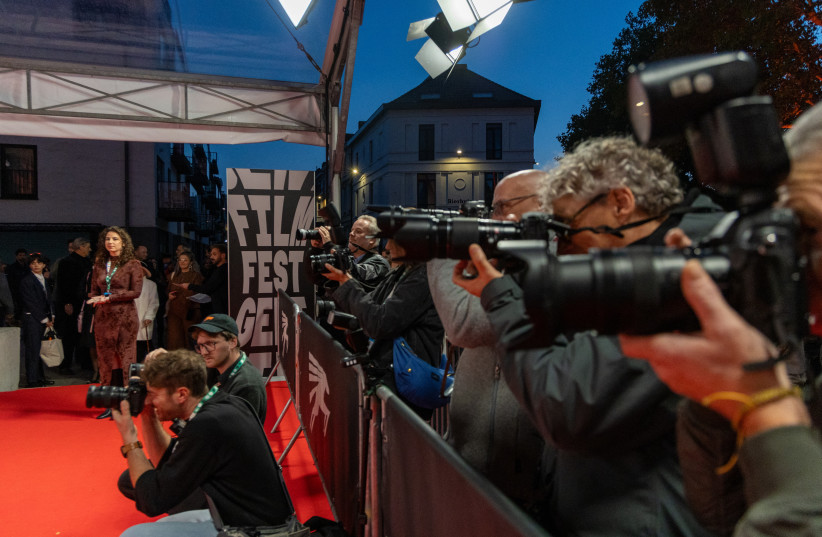
In September 2025, Belgium’s Ghent Festival, backed by Flemish Culture Minister Caroline Gennez, canceled a concert by the Munich Philharmonic because it was to be led by Shani.
The festival cited “insufficient clarity” about his stance toward the “genocidal regime” in Israel, while also pointing to security concerns over possible protests.
Yet the thin veil of hypocrisy unraveled when the festival’s chairman said the concert could go ahead if Shani denounced the “genocidal regime.”
The decision sparked outrage across Europe. Belgian Prime Minister Bart De Wever called it “reckless and irresponsible” and said it had been rightly “characterized as antisemitism.”
He later attended a Shani concert in Germany, met the conductor, and wrote on X: “There will never be room for antisemitism or racism in Belgium.”Other Belgian leaders pushed back hard as well: Reformist Movement leader Georges-Louis Bouchez called the cancellation a disgrace and demanded Gennez’s resignation.
Germany’s foreign minister called it unacceptable, and other German officials described it as a dangerous “loyalty test.”
The Munich Philharmonic stood behind its incoming chief conductor and refused to replace him; the orchestra and the city of Munich organized substitute concerts, including a prominent performance in Berlin.
Segments of Belgium’s own cultural establishment rallied behind the exclusion, with major Flemish arts institutions signing an open letter rejecting artistic neutrality.
The controversy has not subsided.
In early November 2025, the IPO’s concert at the Philharmonie de Paris under Shani was disrupted when pro-Palestinian protesters set off a flare and smoke bombs. Four activists were arrested, and France’s culture minister voiced support for the orchestra and opposed cultural boycotts.
In May 2026, three board members of Brussels’s Bozar Centre for Fine Arts resigned in protest over a planned November 24 concert featuring Shani and the Munich Philharmonic.
At issue is whether an Israeli artist in a prominent institutional role can be treated as a proxy for the Israeli government.
The orchestra and its defenders say he cannot, and that demanding political statements from him is unfair.
I agree. Such litmus tests rely on a crude form of collective guilt. They presuppose that Israel is committing genocide in Gaza, casting the boycotters as judge and jury and rendering the IPO and Shani complicit by association.
Once normalized, blacklisting inevitably expands to consume any artist who falls out of favor with shifting political orthodoxies.
The false parallel with Gergiev
Critics often equate Shani with the Russian conductor Valery Gergiev.
The comparison fails. Gergiev publicly and vocally supported Vladimir Putin and his regime. Shani, by contrast, leads an independent, non-state orchestra and has never acted as a political mouthpiece.
Yet even if he had remained completely silent, should that matter? The singling out of Shani has nothing to do with his personal beliefs and everything to do with his nationality and, bluntly put, his identity as an Israeli Jew.
Seen from a distance, the double standard is unmistakable. Western cultural institutions routinely separate American, British, and European artists from their governments’ policies. Israeli artists are uniquely held to account for theirs.
Stage protests versus cultural dialogue
Disruptions like the one in Paris are deeply counterproductive. They undermine cultural dialogue, all the more so when the program is drawn from the shared Western canon – in that case, Beethoven and Tchaikovsky.
Art music is uniquely capable of bringing peoples together, introducing the beauty of different traditions without reducing human experience to political slogans.
The domestic perspective
None of this means Shani has stood aside from Israel’s national crises.
Among other concerts of solidarity, in October 2023, following the October 7 massacre, Shani and the IPO performed a “Salute to Israel” program that included “Hatikvah,” Paul Ben-Haim’s Fanfare to Israel, and Beethoven’s Eroica Symphony.
In January 2025, Shani conducted Fanfare of Hope, a work commissioned from Israeli composer Bracha Bdil that weaves together Israeli folk and popular songs – including “Ein Li Eretz Aheret,” “Ballad for the Medic,” and “Winter ’73” – with syncopated, militaristic rhythms.
It is specifically these concerts that the Hind Rajab Foundation focused on, accusing Shani of helping to shape an Israeli national narrative.
In its report, the foundation described these concerts as acts of mobilization, arguing that placing photographs of the hostages in the front row ignored the suffering of Palestinians under bombing, siege, and displacement.
Notably, the report did not claim that Shani supports the government or the war – only that the concerts helped form a national narrative that overlooks Gaza.
Ahead of his scheduled November 24 concert in Brussels, Shani recently broke his silence in a Haaretz opinion piece, placing himself squarely on the Israeli Left.
He condemned politicians who refuse to partner with Arab Israeli parties and those who called for indiscriminate bombing in Gaza; urged empathy for the children and other innocents living in Gaza’s grim reality; demanded that those responsible for the October 7 failures take accountability; and denounced settler violence in the West Bank.
Yet even that did not satisfy the boycotters. Activists and Hind Rajab Foundation representatives swiftly dismissed Shani’s op-ed as inadequate, arguing that criticizing the government means nothing so long as he continues to lead an Israeli cultural institution and refuses to disavow his country.
Their reaction exposes the entire campaign for what it truly is: not a principled demand for moral clarity, but an unyielding exclusion based on nationality and identity.
A conductor should never have to pass a political examination to step onto the podium – especially when the examiners have already decided to fail him.