The Tel Aviv Jazz Festival is almost back with us, with the fourth edition of the event in its current guise set to run at Bet Romano November 19-21. The festival takes place under the aegis of the Municipality of Tel Aviv-Jaffa and the Teder Group, curated by trumpeter Sefi Zisling and bassist Jonathan Levy, with entry to each and every gig totally gratis.
Now that’s a pick-me-up if I ever encountered one, particularly when one considers the blurb that came with the festival event, and I quote: “Art is flourishing again, out of a genuine need for comfort, hope, and a personal connection with international guests.”
That sounds just the ticket – a rich slew of musical offerings, including from beyond the jazz fringe, and even some folks from abroad in these internationally politically constrained times.
Neal Sugarman will guest with a trio fronted by Israeli guitarist Ron Magril, called Blue Break Beats
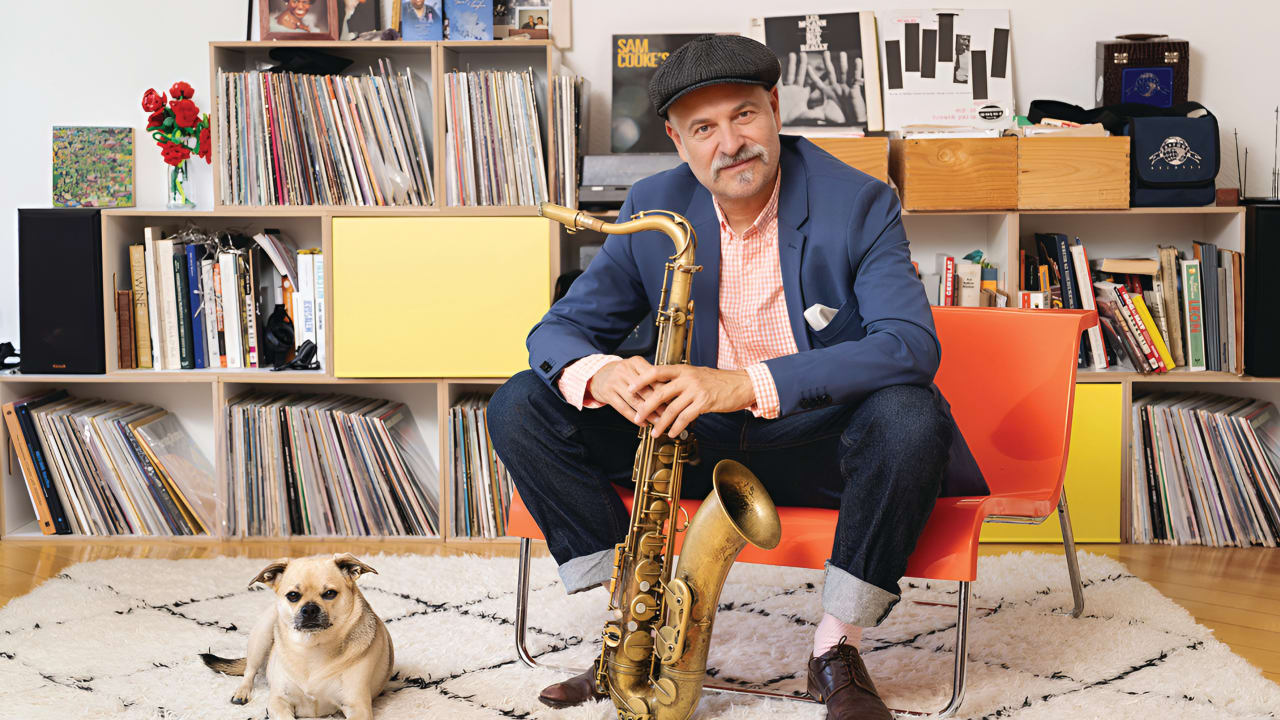
One guest who should bring a heaping helping of joie de vivre to these parts is Boston, Massachusetts-born 60-something saxophonist Neal Sugarman. Considering he has been based in Switzerland for the past eight years, at least his trip over here will be shorter, and he won’t have to deal with crippling jet lag.
Sugarman will guest with a trio fronted by Israeli guitarist Ron Magril, called Blue Break Beats. It is sure to be a seamless fit. The initial liaison came about when Sugarman was on a visit to these shores – the forthcoming Israeli foray will be his fifth or sixth – and was told about Magril by a mutual acquaintance.
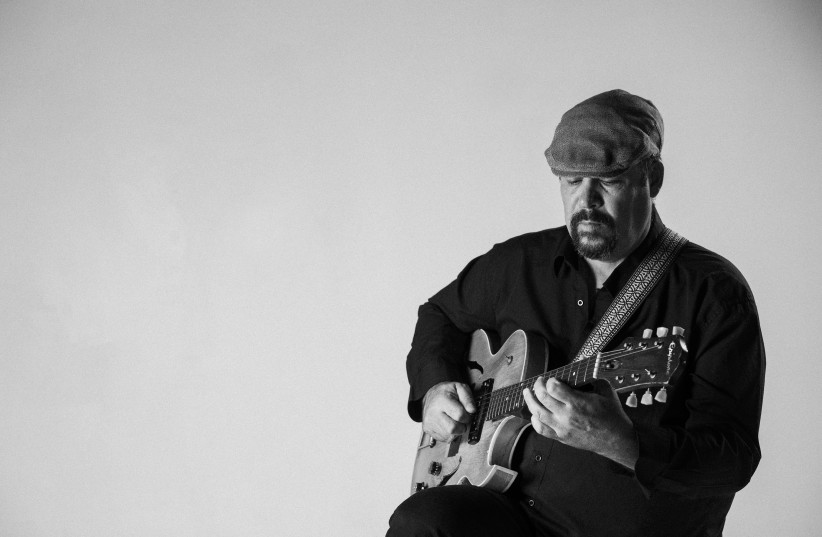
“I met Ron, and I was taken with him,” said the saxophonist. “He’s a sweet guy who lives and breathes jazz, the blues and swing.” That suited the former Bostonian down to the ground, and they quickly joined artistic forces.
“I took him on the road with my band at the time, the [soul-jazz group] Sugarman 3. We had a great time. He is so talented. He has that great feeling.”
That, for Sugarman, is paramount to the creative continuum. “I love being on the road. Playing in a group,” he declared. “There is something so wonderful when the band is greater than the sum of its parts.”
It is not about the technical expertise of the individual players. “I have heard jazz musicians who are great when it comes to soloing, but their ensemble playing is not so good. You have to be open-minded.” Communication is very much the name of the entertainment game. “You have to engage with the audience.”
I COULDN’T agree more. For the past 20 years or so, or more, there has been a general movement in jazz away from the joy that informed the art form in its earliest years, through ragtime and the insouciance of the Swing era, basically until modern jazz – the first iteration of which became known as bebop – emerged in the 1940s, led by the likes of peerless alto saxophonist Charlie Parker.
A freshness, earnestness and heartfelt frontier-pushing core
Many jazz players today convey a sense of seriousness and studiousness, and punctilious intent to make sure they get the sound spot on, and hit all the technical heights rather than imparting a feeling of pleasure they get from doing what they do, and then proffering that to their audiences.
There was a freshness, earnestness and heartfelt frontier-pushing core to Parker’s pursuit of ever-higher artistic spheres, which caught the young Sugarman’s ear and enticed him over to the jazzy side of the musical tracks.
“My dad had a great record collection, with jazz, so I got into that,” he recalled. “There were also records by Count Basie. All that really grooving jazz.”
Still, he was also a product of his times, and the contemporary commercial music sounds he heard. “When I was in high school, I was actually into rock, and the DIY raw side. I was into [1960s left field rock outfit] The Velvet Underground and garage rock bands, like The Sonics. There were saxophones in those bands. I liked that.”
There was a rebellious, unpolished edge to the garage rock crowd that appealed to Sugarman. “There was groove and intensity,” he added. Iconic jazz reed player John Coltrane also came into Sugarman’s evolving listening radius, and he gradually segued into ever bluesier territory. Sugarman is anything but a genre snob.
His incipient plan of exploratory action continued to ebb and flow. He excitedly imbibed the Motown sound out of Detroit, and the whole black soul music scene also grabbed his interest and imagination. It remains a mainstay of his musical endeavor.
“I listened to the radio,” he said. “These days it is so much easier to access as much music as you want, and I appreciate that too, but I’m glad you had to work harder to get to the music when I was a kid.
“I keep on going back to the records I heard when I was young.” In those days, it was very much about chancing upon stuff that came across the radio airwaves, and listening to records which may have been recommended by some like-minded pal or family member.
Motown recording artist saxophonist-vocalist Junior Walker was a favorite, as were r&b, jazz and rock reedman King Curtis, singer Diana Ross, and jazz tenorist Gene Ammons.
Sugarman clearly had an open mind, ear and heart, and was drawn to groovy and funky vibes. That broad sweep of interest also means steering clear of narrow genre and stylistic categories.
I told Sugarman about the interview I did with great modern jazz founding father, drummer Max Roach around 25 or so years ago.
As I asked him about various pockets of jazz, such as bebop, hard bop, and free jazz, Roach eventually interjected and summarily told me to stop getting lost in those pigeonholing names.
“It’s all just music,” he informed me. It is a lesson that stuck with me. Sugarman goes along with that viewpoint. “Yes, it’s just about the music,” he concurred.
“Jazz musicians aren’t any better than any great funk musicians. They play on a high, emotional level. They have that high level of understanding. And you need great rhythm.” It is, for Sugarman, about the feel rather than the ability to reel off white-hot arpeggios in fast lane style.
“If a piece is played well, you can hear a thread running through it all,” he observed. “And it always has to be rhythmically strong.”
He duly learned his craft at Berkeley College of Music in his hometown, and on local bandstands – including stints with punk rock acts such as X-Ray Spex and the Psychedelic Furs – before moving to New York to pay his onstage dues, spread his street-level wings, and came across some of our own similarly-minded guys and gals in the process.
“This was in the 1990s, and there were all sorts of Israelis playing in the East Village at the time. I have fond memories of those days.” It was also an opportunity to hear some of the fixtures on the New York jazz scene strut their stuff, and pick up a tip or two while he was at it.
Over the years, Sugarman mixed it with a whole host of artists, from different age groups and various areas of sonic pursuit, playing in bands such as the funk and soul outfit Dap-Kings. His bulging bio also features studio time with such rock and pop powerhouses as Eric Clapton, Amy Winehouse and Foreigner, soul titan Al Green, and fabled r&b, soul and blues guitarist Steve Cropper.
The man clearly keeps his musical options open, a leaning that he has also nurtured with the co-founding of the Daptone Records label together with musician producer Gabriel Roth.
True to his raw-leaning bent, Daptone is an independent enterprise which has been a going concern for a quarter of a century now.
The company website notes that Sugarman and Roth established the label “that would help them realize their vision of what great music can be.”
That appears to be typical of the man’s free-flowing, genuine quest for the types of sounds that move him and, hence, will hopefully move his potential patrons.
A stable of attractive acts was accrued, including funk and soul singer Charles Bradley, vocalist Sharon Jones, who fronted the Dap-Kings for a decade and a half before her tragic early death.
Funk, soul, blues and gospel singer Naomi Shelton was also on Daptone’s books, as is American instrumental group The Budos Band, which has been described as a “doom rock Afro-soul big band with a 70s touch.” That makes for quite a stylistic reach that suits the all-embracing Sugarman take on his craft.
That uncompromising bent should be palpable and, naturally, audible at the gig with Magril et al., with the simpatico factor coming into creative and joy-inducing play.
The Sugarman-Magril hookup will also yield some more entertaining fruit with Daptone due to release a record by the guitarist in the near future. As the saxophonist said: “It’s all about the music.”
ELSEWHERE IN the Tel Aviv Jazz Festival lineup there is plenty on offer to draw in music lovers from across the field of sonic and cultural tastes. Hebrew Israelite vocalist Margeeah Aharon joins forces with American-born, Greek-based singer-songwriter Alek Lee, while Iranian-rooted singer Liraz Charhi hosts Grammy Award-winning Iranian-American multi-instrumentalist Sahba Motallebi in intriguing beyond-jazz slots.
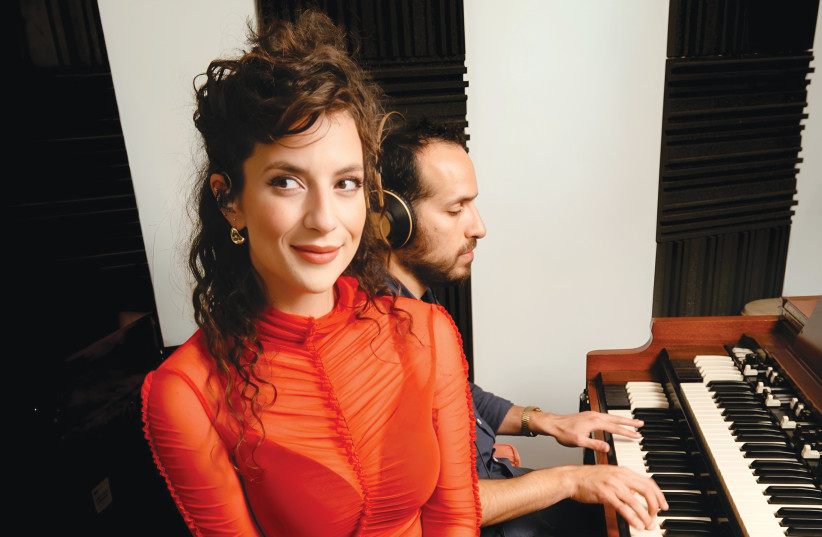
There are fascinating items strewn right across the three days, with plenty of jazzy tidbits to choose from. Jewish British jazz vocalist Emma Smith returns to these shores for a tête-à-tête with pianist Yonatan Riklis, and 70-year-old American pianist-vocalist Johnny O’Neal brings his silky skills to the Bet Romano stage.
There will be a blast from the Israeli jazz past when octogenarian Jerusalemite saxophonist Mamelo Gaitanopolous – known professionally simply by his given name – leads a quintet, with the far younger, suitably named Shalosh crossover threesome also on the festival roster. Shalosh drummer Matan Assayag is another local jazz artist who has worked with the aforementioned Mr. Sugarman, which surely makes for a cozy professional ambiance.
Amos Hoffman makes a rare appearance here in a much-anticipated show. Guitarist-oud player Hoffman was one of the local jazz lions in the late 1990s-early 2000s, playing and recording with the likes of globally renowned bassist Avishai Cohen, before relocating to the States.
Hoffman fronts a quartet in Tel Aviv which will, no doubt, season its offerings with some Middle Eastern spices.
There are quite a few intimate settings dotted around the agenda, such as the pairing of pianist Alon Tayar with drummer Daniel Dor, and the Yonatan Rosen Plays the Blues concert led by the eponymous drummer should deliver some heartfelt and tender dynamics.
Bassist Shay Hazan will put out some dynamic vibes across a broad energetic stretch and, if it’s fearless sound-making and unbridled energy you’re looking for, The Kadosh Brothers trio should provide that, in spades, as the drum, double bass, oud combo tears its way through a Middle Eastern-laced repertoire.
On the numerically grander side, pianist-educator Ronen Shmueli will offer festivalgoers a glimpse of things to come when he guides The Rimon Jazz Institute Ambassadors through their paces. Folks with a more eclectic musical penchant might enjoy the Cinema Royal date led by jazz pianist, and serving Jerusalem Jazz Festival artistic director, Nitai Hershkovitz, and drummer Mark Moshayev’s quartet showing culls sounds and rhythms from across the world into a loosely bounded package.
The three-dayer is a good metropolitan fit
TEL AVIV Municipality cultural portfolio holder Chen Arieli believes the three-dayer is a good metropolitan fit. “The Tel Aviv-Jaffa Jazz Festival is an accurate reflection of the city’s cultural spirit – open, free, compelling and full of creativity,” she declared.
Making top-notch fare available to all and sundry, regardless of income bracket, is also a veritable boon. Arieli also felt that the ploy may also serve to expand the local jazzy hinterland. “The fact that the festival offers free entrance, and in the public domain, enables numerous sectors to enjoy quality music and to discover jazz across all its various guises.
This is part of our commitment to preserve Tel Aviv as a home for creativity, artists and audiences, and as a city in which culture and art are an inseparable part of life itself.” Bold words indeed and, in a country which generally does so little to support cultural endeavor, very welcome.
And the festival is not just about live music acts. There will be DJs on hand to spin the wax, and screenings of thematically related movies.
Considering the almost blanket worldwide ostracizing of anything Israeli, the appearance of the incoming artists over here, not to mention the seemingly inexhaustible array of local talent that will strut itself in Tel Aviv next weekend, is a – non-pharmaceutical – shot in the arm.■
For more information: https://bit.ly/4ysBr1O