NATO is reshaping how it develops military technology as alliance leaders warn that cheap drones, artificial intelligence, and rapidly evolving battlefield threats are compressing timelines for innovation from decades to months.
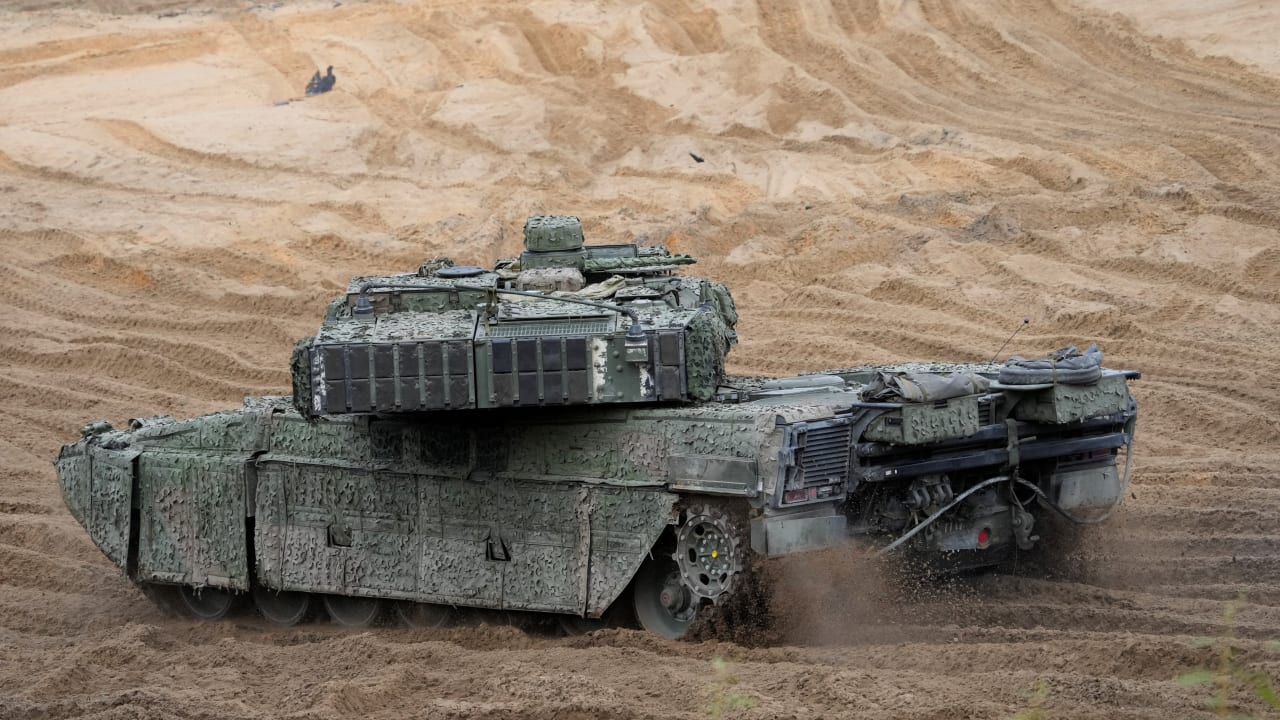
The effort was on display at NATO FUSE, held in Latvia on October 29-30, where NATO's Allied Command Transformation brought together three major initiatives: the Digital Backbone eXperimentation (DiBaX), the Layered Counter-UAS Initiative (LCI-X), and Next Generation Targeting (NGT).
The event brought together military organizations, operators, and industry to test concepts and gather data on what works under realistic conditions rather than serving as a procurement exercise.
Speaking to Defense & Tech by The Jerusalem Post right before the Operation NATO FUSE drills in Latvia, Maj.-Gen. Arnoud Stallmann said repeated drone incursions and lessons emerging from modern conflicts have forced the alliance to rethink both its defenses and how quickly it adopts technology.

According to Stallmann, more than 30 countries and over 100 companies are now participating in the drills in Latvia. D&T understands that while Israeli companies have participated in prior NATO events, none participated in Operation NATO FUSE.
"What we see nowadays is that the incursions into Poland last September were the start," said Stallmann, who is the assistant chief of staff for multi-domain capability at NATO. "We see it all the time in our nations on the eastern flank, with drones entering our airspace."
But the challenge extends beyond just drones.
"Simultaneously, we have a task to build a backbone; we recognized a problem that the whole targeting process in general is very labor intensive,” Stallmann said, adding that NATO commanders have identified key gaps in connectivity, digital infrastructure, and next-generation targeting that must be urgently addressed.
"It’s a sprint," he said, pointing to funding already allocated this year and next year.
Modernization push
At the same time, NATO is confronting a strategic environment in which allied territory can no longer be assumed safe from direct threats. Small drones have emerged as a low-cost means of surveillance, disruption, and attack, creating pressure for defensive systems that are both scalable and affordable.
"We really need to find other solutions," Stallmann said, emphasizing the importance of developing lower-cost intercept options rather than relying on expensive air defense assets such as fighter aircraft or missile interceptors designed to defeat larger threats.
Stallmann explained that NATO’s current focus is on building a layered and interoperable network capable of protecting key areas while sharing data across borders and domains. And that requirement places command-and-control at the center of NATO's modernization effort.
The alliance is exploring a framework in which national and industry-developed systems can plug into a common command architecture – a concept such as a mosaic of interoperable capabilities connecting air, land, and cross-border operations.
But cross-border coordination remains one of the most complex challenges facing NATO's command structure, making data sharing and interoperability critical requirements for future systems.
That challenge sits at the center of NATO's modernization push. DiBaX serves as a test environment where NATO, allied operators, and industry evaluate connected technologies against operational problems. NATO describes its developing digital backbone as an integrated layer of software, data networks, and infrastructure designed to allow forces to connect, share data, and operate together.
This year's DiBaX experiments focused on resilient command-and-control, maintaining communications when networks are disrupted, and accelerating decision-making through the integration of data, sensors, and artificial intelligence. The event also hosted both counter-UAS and targeting experimentation.
Drone threat
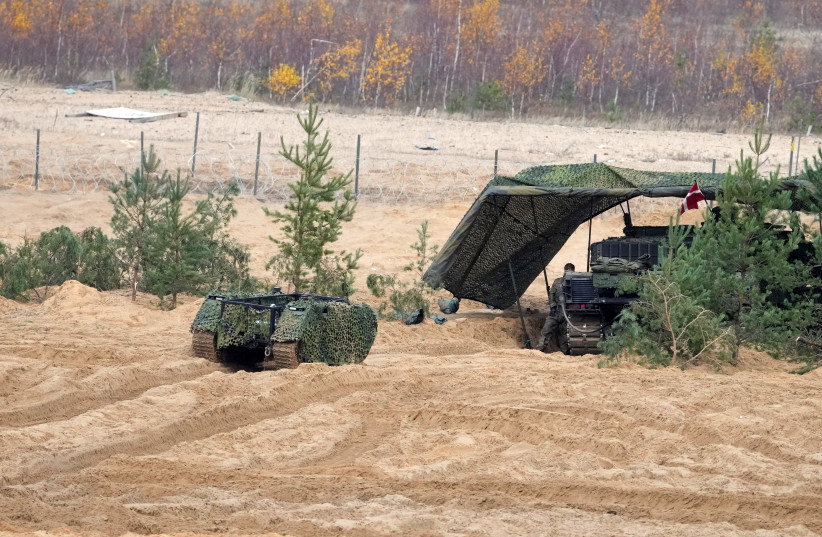
To address the drone threat, NATO is advancing the Layered Counter-UAS Initiative, or LCI-X, a campaign of operational experimentation designed to test, integrate, and scale counter-drone capabilities across the alliance. According to NATO, the initiative moves progressively from testing individual systems to integrating connected counter-UAS cells and linking them with NATO command-and-control networks.
LCI-X has been running through a series of dedicated C-UAS events conducted in Finland and Latvia over the past year. The campaign is intended to connect sensors, effectors, and command-and-control systems while providing industry with direct operator feedback.
The alliance is deliberately avoiding commitment to a single technology path.
"We are looking wider than just what we have in our own stock," Stallmann said, adding, "We're not advocating that we have a total solution, but we have a layered C-UAS solution.”
Next-generation targeting
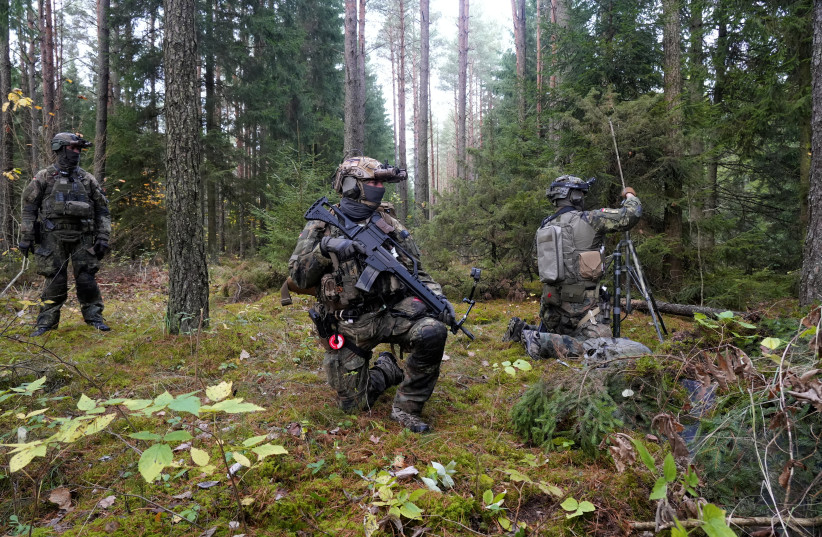
NATO's targeting effort is advancing in parallel. The Next Generation Targeting initiative aims to create a federated framework that integrates national data through modular AI and data-management tools while retaining human authority over engagement decisions.
Stallmann explained that the goal is to reduce information-to-decision timelines and improve sensor-to-shooter coordination across land, sea, air, space, and cyberspace domains.
NATO says NGT is intended to complement existing command-and-control systems through federated data sharing and AI-assisted analysis. One objective cited by the program is reducing information-to-decision latency by more than 50%, while keeping human operators in control of engagement decisions.
For Stallmann, the broader challenge is institutional rather than technological. For much of his career, Stallmann said military modernization followed a predictable path of incremental improvements, but the rise of AI and autonomous systems has altered that dynamic.
"During my first 20 years as an operator, I was seeing incremental improvements and developments. Once in a while, you get a new airplane or platform and there's a leap. But in the digital age, and with what’s going on in AI, decision-advantage needs to go faster than that of the enemy."
‘Ramping up speed’
According to Stallmann, NATO must also adopt capabilities faster than traditional procurement timelines allow.
"We have our innovation hubs, but we need to ramp up our speed, and we need to not introduce weapons systems that take 20 years. We need to adopt quicker and innovate quicker, because the enemy is doing that too."
Stallmann explained that NATO understands that it cannot rely solely on existing inventories to solve emerging challenges.
Lessons from Ukraine have demonstrated that the pace at which drone technology evolves creates the need for military organizations to adapt much more quickly than traditional procurement systems allow. Prior to his current position in NATO, Stallmann led the Directorate for Ukraine, with all Dutch efforts to support Ukraine, such as deliveries of platforms and training, combined in his team.
Stallmann described the current experimentation exercises not as an endpoint but as the beginning of a continuous process of adaptation driven by operational feedback from ongoing conflicts, particularly Ukraine.
"The character of war is changing, and we need to adapt to that new character of war," he said.
The same mindset is driving NATO investments beyond drones and digital networking. Stallmann said that the alliance is also examining emerging technologies such as quantum computing and quantum-resistant systems, which he described as a potential game changer approaching the horizon.
For NATO's transformation leaders, the broader objective is cultural as much as technical. The alliance must learn to field new capabilities at a pace measured in months and years rather than decades. And FUSE might just be the critical part of a broader effort to move technologies from experimentation into operational capability.
"This is not only the end point. It's the start of a learning curve; learn fast and we are going to continue," Stallmann said. "This is the beginning of a never-ending cycle."