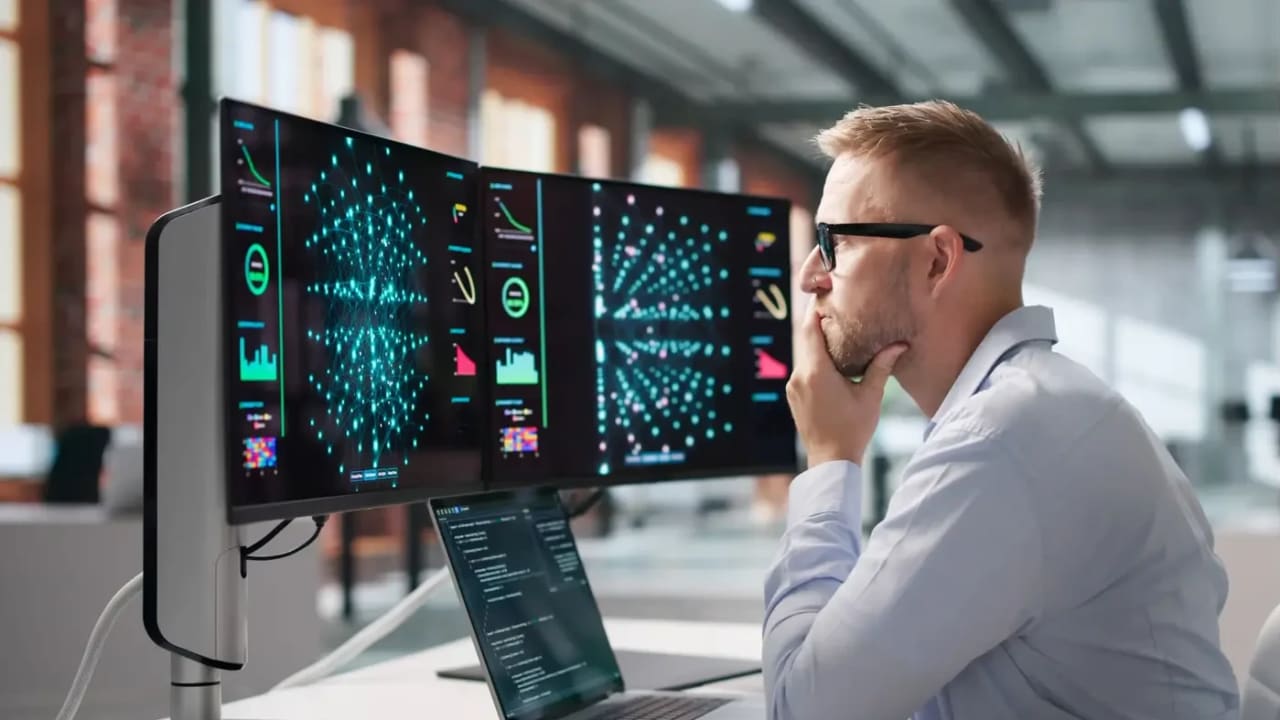
Thousands of new scientific studies are published worldwide every day. Researchers develop technologies, test theories, and present discoveries that could change our lives. Some will be forgotten within a few months, while others may lead to a technological, medical, or economic revolution. But how can one know which idea will become the next breakthrough? And how does one identify a significant change before its impact becomes clear to everyone?
If in the past the primary challenge was obtaining information, today the challenge is knowing what to do with it. In a world where technologies, markets, and needs change rapidly, the ability to distinguish between a passing trend and a significant shift can grant a strategic advantage to companies, organizations, and even countries.
This challenge is manifested in almost every field: In a technology company required to decide where to invest, in a healthcare system required to prepare for emergency situations, or in a country seeking to identify its next growth engines. In all these cases, decisions are made today, but their consequences will only become clear in the future. Therefore, the question is not only what we know, but how existing knowledge is used to cope with uncertainty and make better decisions regarding tomorrow.
From information to better decision-making
As someone engaged in forecasting, optimization, and the development of decision-making models under conditions of uncertainty, it is clear to me that an accurate forecast is only part of the story. Artificial intelligence enables us to identify patterns and trends that are difficult for the human eye to perceive, but true value is created when these insights are successfully translated into action. In the fashion industry, for example, early identification of a trend may affect collection design, production planning, and inventory management, and its impact may later be reflected in financial and business results as well. The same applies in the fields of technology and economics: It is not enough to identify what might change, one must also know how to act accordingly.
In the world of scientific research, too, a great deal can be learned from information that already exists. Scientometrics, a field dealing with the measurement and analysis of scientific activity, makes it possible to examine academic publications, citations, and collaborations among researchers to understand how fields of knowledge develop. By combining artificial intelligence and data analysis tools, it is possible to identify emerging research directions and examine new opportunities. However, a high citation count is not necessarily evidence of a scientific breakthrough, and even the most sophisticated algorithm cannot predict the future with certainty.
Can data and AI predict the next breakthrough?
For Israel, whose human capital and innovation are among the central growth engines of its economy, this is an issue of special importance. Developments such as the Iron Dome demonstrate the extent to which innovation can become a strategic asset and even vital to national security. Yet alongside the ability to develop advanced technologies, the ability to timely identify new opportunities (or threats) and decide where to appropriately invest limited resources is no less important. The question is whether we use the information at our disposal solely to measure what has already occurred, or also to influence what may yet happen.
After all, even the most sophisticated models are based on data and patterns observed in the past, while significant changes may precisely break those patterns. Therefore, the goal is not to eliminate uncertainty, but to learn to make informed decisions despite its existence. Sometimes, the ability to prepare for multiple possible scenarios is more important than attempting to accurately predict a single scenario.
At the scientometrics conference held last week at Shenkar, we addressed the question of how data on scientific activity can be used to identify trends and understand the development of knowledge. But in my view, the question is much broader than the world of research: How do we transform the vast amounts of information at our disposal into the ability to make better decisions regarding the future?
Ultimately, in a world where knowledge is accessible to almost everyone, the true advantage will not necessarily lie with whoever holds the most information or the most sophisticated algorithm, but with whoever knows how to timely identify where things are developing, understand the significance, and act accordingly. The future will always remain uncertain, but our ability to prepare for it does not have to be.
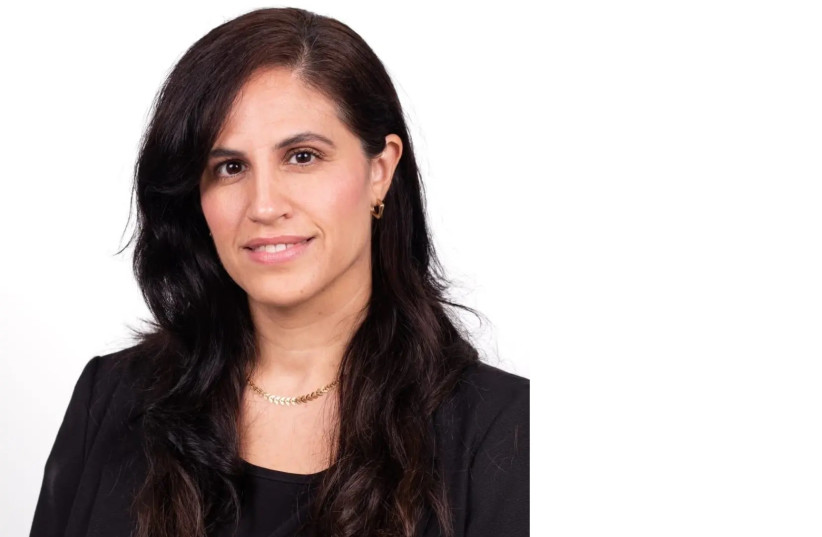
Dr. Michal Koren is head of the Department of Industrial Engineering and Management at Shenkar, and a researcher in the fields of operations research, forecasting, and decision-making.