In Israel, they learned to run to the safe room when an alarm sounds, to get used to the fact that Dad is in reserve duty once again, and to grow up as stories of bereavement become part of everyday life. The children who left with their parents since October 7, 2023, gained distance from the war, but also a new classroom, sometimes in a new language, and friends they need to make all over again. In places where they encounter antisemitism, the question of whether to share that they are from Israel can also turn into a dilemma.
According to an estimate presented to the Knesset Committee for Immigration, Absorption, and Diaspora Affairs, about one million Israelis live abroad.
Some 250,000 have left since the beginning of the war. Many of them left with children. Some had children born there. Among parents in Israel and the Diaspora, the question that is hard to answer in numbers is now arising. Who has a happier childhood: Israeli children living abroad, or those who remained in the country? Even after countless conversations with Israelis here and there, and with psychologists familiar with the issue, the answer is not trivial and not unequivocal.
Dr. Keren Or-Chen, head of the Interdisciplinary University Clinical Center and one of the founders of the Unit for Happiness Sciences at the University of Haifa, says there is not enough research comparing the two groups. She distinguishes between a child's sense of security, the degree of satisfaction with their life, and the positive emotions they experience on a daily basis. A child can feel safer after the move, and at the same time miss friends and the place where they felt a sense of belonging.
"When I look at what affects a child's happiness, I look, for example, at the issue of belonging," Or-Chen says. In Israel, she says, the shared language and culture make it easy for children to form connections. Abroad, they may grow up between two cultures, and the Israeli identity, which at home is a self-evident part of everyday life, sometimes requires effort to preserve. When the parents are also still deliberating whether the move is for a few years or for good, the sense of transience can make integration difficult.
Or-Chen also attributes the question of what the move can offer a child, for example in terms of education and opportunities, to the country the family moves to and the place they lived in previously. She emphasizes the quality of family life and the child's connections with their environment. A child can grow up in a quieter place and still feel less of a sense of belonging. A child who stays in Israel can find a sense of belonging and meaning in their community even during a crisis, while simultaneously paying a mental price for living under ongoing threat.
'As far as they are concerned, when we arrive in Israel, it is a sort of paradise'
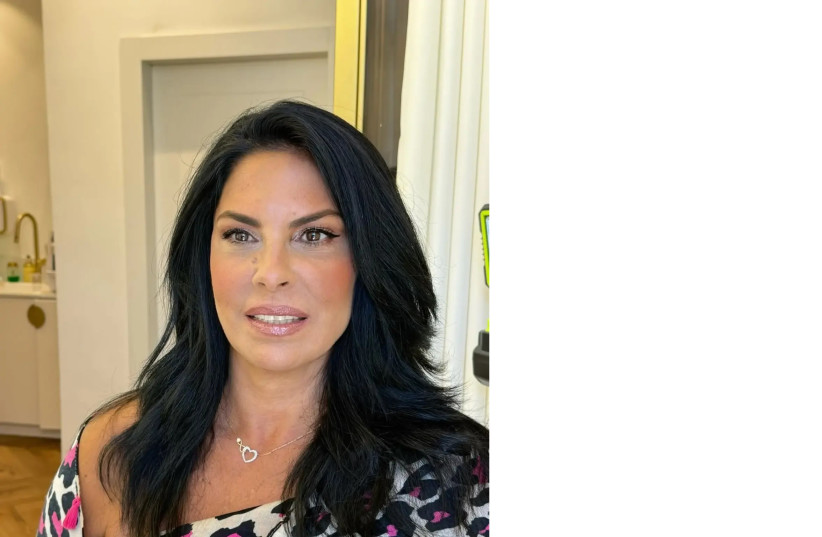
"We are actually sparing them one thing, but creating something else." This is how Michal, a 46-year-old artist who grew up on a kibbutz in the Arava, describes the childhood of her three children, aged 11, 8, and 4, whom she is raising with her husband in Potsdam, Germany. They moved nine years ago, when they had only one child. The move, she recounts, began out of curiosity and a desire for an adventure. Even today, the word "immigrant" feels too big to her.
At home, they speak only Hebrew. The two older ones also read in Hebrew, and every time the family arrives in Israel, grandparents and cousins are waiting for them. "As far as they are concerned, when we arrive in Israel, it is a sort of paradise," she says. At her parents' home in Ness Ziona, the children pick oranges from the tree in the yard. This is the Israel of visits, she notes, where they spend time with family without going to school. Germany, where they grew up, is their natural environment in many ways.
Even during visits to Israel, the children heard sirens and entered safe rooms. In Germany, Michal says, that is not part of their daily routine. She thinks some of the anxieties that children in Israel experienced during the war years were spared from them. Does that mean they are happier? "That I cannot say."
According to her, the children have not experienced antisemitism directed at them. When they noticed a swastika near the school, it aroused anger and questions in them, including in conversation with non-Jewish children. They know that Hebrew might provoke a reaction from those angry at Israel, but the family speaks Hebrew on the street and in public transportation as well. In several cases, she recounts, people who asked what language they were speaking reacted positively instead. "I think they feel on a day-to-day basis that they are safe," she says.
In Germany, she does not need to run with them to a shelter, but the distance is also from the extended family and from life in an environment where their language and culture are taken for granted. That sense of belonging, she says, can also give a child confidence.
Reports from various countries point to antisemitism accompanying Jewish children into the classroom, to the schoolyard, and on the way to studies. In the reports reviewed, there is no separate picture of the situation of Israeli children abroad: They blend into the data on Jewish students, without a breakdown that allows isolating the harm done to them specifically as Israelis. In the United States, the Anti-Defamation League documented 825 antisemitic incidents in non-Jewish schools in 2025, including bullying and vandalism using swastikas.
In Britain, the Community Security Trust (CST) documented 204 incidents related to schools, students, and staff that same year – more than double the number in 2022, although a decline was recorded compared to 2024. An independent review commissioned by the British government and published in October 2026 found that three out of five Jewish students aged 16-19 surveyed experienced antisemitism or witnessed it.
In Canada, research commissioned by the office of the government's special envoy to combat antisemitism gathered reports from 599 Jewish parents about 781 incidents in Ontario schools between October 2023 and January 2025. According to the parents' reports, 49% of the incidents brought to the schools' attention were never investigated at all, and nearly one in six included the involvement of a teacher or school-approved activity. Children removed Jewish insignia and Hebrew writing so they would not be identified, and others asked their parents not to complain out of fear of further harassment. In Australia, UNESCO presented real cases reported in schools: A picture of a Jewish student circulated in a class chat group with the caption "gas chamber aspirational," a child told to die in a gas chamber, the words "burn the Jews" written in the bathrooms, and a Jewish student whose assault was filmed and distributed online.
Behind the data are children like Eytan Cohen, whose story we reported on Walla in May 2024. Eytan, then 13, the son of a couple of Israeli doctors and the grandson of Rambam director Prof. Michael Halberthal, suffered threats, humiliation, and stone-throwing in Toronto. According to his family's testimony, children threatened him: "We'll do to you what Hamas did to Israel," and in another instance demanded he bow down to them because they were Muslim and he was Jewish. Following months of appeals that his parents claim received no proper response, hundreds of community members showed up to accompany him to school – so that an Israeli child could arrive for studies safely.
Israelis we speak with generally report that they personally have not experienced antisemitism. This stems perhaps from preventive measures of "keeping a low profile" that they practice, raising the threshold for what is considered an "incident," lack of clarity in many cases whether it is antisemitism or harassment on another background, and also, it must be said, burying one's head in the sand. This has been the case throughout the generations, including in the 1930s before the Holocaust.

'I think they experience the world with much less tension'
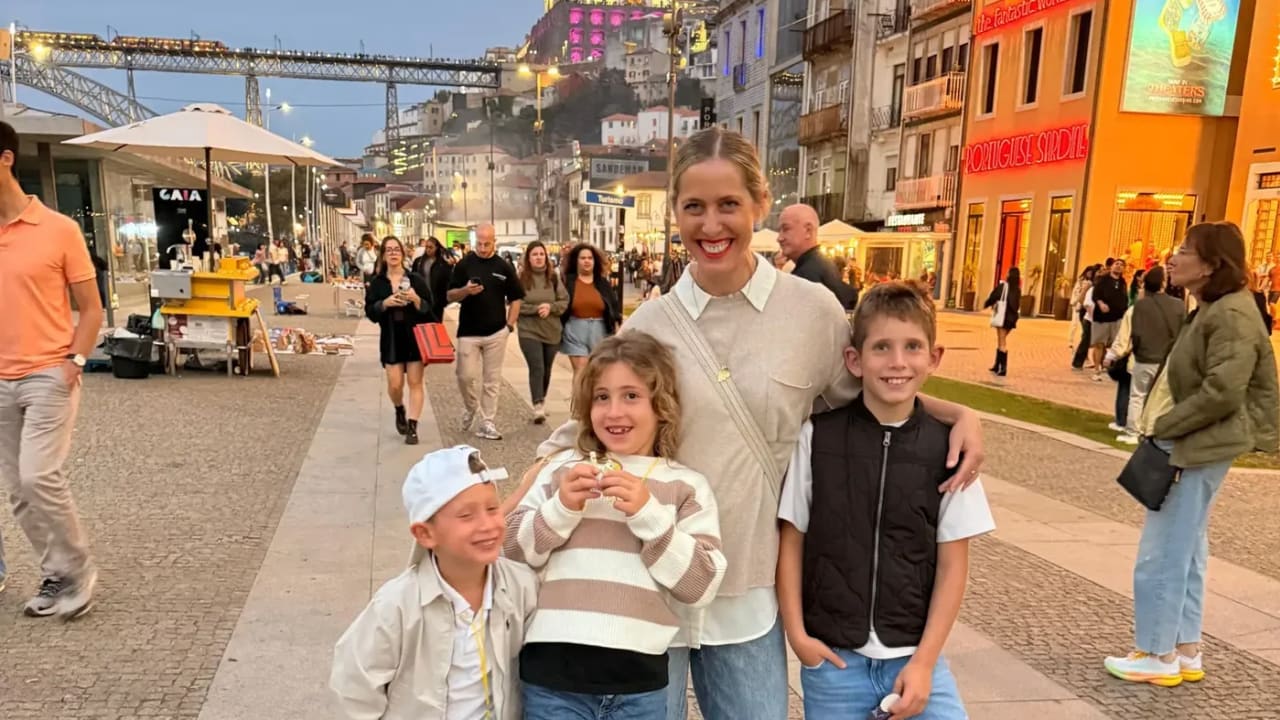
Itay and Meital, both 42, are raising three children aged 5, 8, and 10 in Porto, Portugal. "Compared to the Portuguese family, we are a tribe," Itay laughs. The couple, originally from the Haifa area, moved to Porto from Ramot Hashavim almost four years ago. The move was planned even before COVID-19, partly because Itay was already managing businesses in Portugal. The search for a more stable educational system was also part of the considerations. When the massacre occurred on October 7, they had been living in Porto for less than a year.
The children study in an international school. In Porto, Itay says, there is a growing Jewish community, but the family lacks the support network provided by Jewish schools and educational institutions in other European cities. In the first half-year after October 7, there were small demonstrations and signs in the city, he says, that made him feel uncomfortable. Over time, he says, this faded. Today he does not feel the need to conceal his Israeli identity or avoid wearing a Star of David.
"I think they experience the world with much less tension," he says of his children. His daughter has friends from various backgrounds – a Muslim Pakistani, a Chinese girl, and a British girl. As far as she is concerned, he recounts, this is a natural part of class life. He wonders if during adolescence the children will feel differently, but in the meantime he sees how the directness and spontaneity they brought from Israel help them connect. Instead of scheduling a meeting weeks in advance, at their home the door is open.
'A Maccabi Haifa shirt? Maybe that's not a good idea'
Nachman, 73, and his partner traveled to Paris for two years. That was 36 years ago. Their son and daughter were born in Israel and grew up in France, and today each of them has two children. The oldest of the grandchildren is seven, the youngest is a year and four months old. Nachman speaks Hebrew with them, even on the street. They are in touch with family in Israel, and until three years ago they would visit once a year.
Once, the oldest grandson wanted to go down to the park wearing a Maccabi Haifa shirt. "I told him that maybe that's not a good idea," Nachman recounts. From his perspective, it was a passing remark. When asked if the grandchildren grow up with the feeling that they must be careful not to speak Hebrew or not to talk about their connection to Israel, he answers immediately. "Not at all, they don't live in such an atmosphere at all."
The war also reaches them from afar. The oldest grandson knows that the apartment of Nachman's sister in Haifa was damaged when a missile landed nearby. He heard about it as a story that happened to someone in the family, Nachman says, without experiencing the tension that accompanies children living under the threat of fire. Children in Israel, he adds, also have friends going through that same period with them. He assumes the shared experience helps them cope.
Nachman sees his grandchildren's happiness in the small things. The two oldest study in a Montessori education setting, and he sees how they find things to play with and engage in even without a phone or television. They know something is happening in Israel, but when they go down to play in the park, that is almost never what occupies them. When asked if their childhood in Paris is happier, his answer is clear primarily regarding tension. In his view, his grandchildren have a more relaxed and free childhood.