Prehistoric
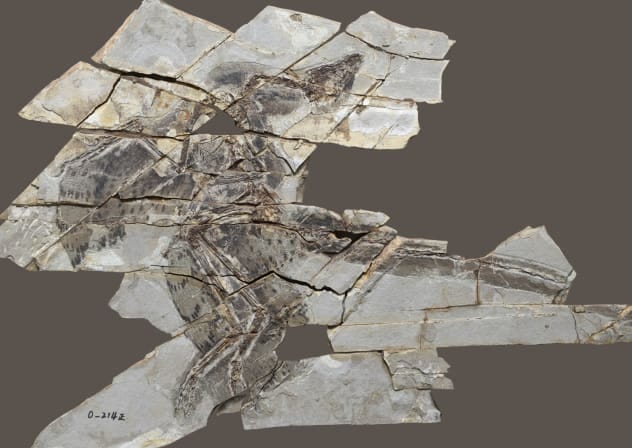
160 million years later: This rare fossil is overturning everything we knew about how birds evolved
Research on the Anchiornis specimen reveals hidden feather structures that contradict old theories on dinosaur flight. Scientists are now re-evaluating how and when animals first took to the skies.

Oldest-known fire-making found in Britain, pushing Neanderthal mastery back 415,000 years

Stone age site in Germany yields Europe's oldest blue pigment, rewriting prehistoric art palette

Scientists reconstruct face of 10,000-year-old prehistoric woman found in Belgian cave
A monster diet: Research reveals ancient marine predator ate more than just whales
Doctor Jeremy McCormack stated, 'Our study paints a picture of megalodon as an ecologically versatile generalist.'

Rare fossil sheds light on unusual claw-bearing Therizinosaur
A rare fossil unearthed in Mongolia's Gobi Desert has led to the identification of a new dinosaur species Duonychus tsogtbaatari.

Quartz analysis could confirm 200,000-year-old engravings in Marbella
Discovery could predate oldest known cave art by 100,000 years, confirming early human presence in Spain.

Researchers precisely date Lapedo child, Neanderthal-Human hybrid
'The new date for the child is consistent with original estimates for the age of the burial, but it has changed our interpretation of the burial events themselves,' said lead author Bethan Linscott.

New evidence confirms prehistoric brain cannibalism in Poland's Maszycka Cave
Advanced 3D microscopy revealed cut marks on 68% of bones, indicating cannibalism.

Roman ritual site found 200 meters deep in prehistoric Spanish cave
Find includes fifteen Roman inscriptions and a coin from the reign of Emperor Claudius.

Surprising Discovery: How Neolithic paintings and echoes created prehistoric 'surround sound'
A recent study by researchers from the University of Helsinki unveiled the unique acoustic properties of prehistoric rock art sites in Finland's Lake District.

Surprising Discovery: How Neolithic paintings and echoes created prehistoric 'surround sound'
A recent study by researchers from the University of Helsinki unveiled the unique acoustic properties of prehistoric rock art sites in Finland's Lake District.

Stonehenge altar stone traced to northeast Scotland, revealing monument's unifying purpose
Stonehenge may have been a monument uniting Britain's peoples before it became a kingdom.

IAA discovers rare 6,000-year-old elephant ivory vessel near Beersheba
The discovery provides evidence of ties between this region and Egypt in the Chalcolithic period.
