
Europe has institutions, treaties, commissions, and endless summits, yet it remains uncertain about its own political character. It struggles to define itself.
Is it a civilization, a market, a geopolitical power, a normative power, or simply a bureaucratic arrangement binding together nations with divergent histories and interests? The European Union (EU) speaks the language of values while operating according to the logic of procedure. It rarely acts quickly.
Yet this week, the EU Foreign Affairs Council achieved something remarkable: all 27 member states agreed on sanctions against violent Israeli settlers in the West Bank. Even Hungary, which for years shielded Israel from collective European pressure, gave its approval.
Israel's foreign relations failure
Henry Kissinger once remarked that Israel had no foreign policy, only domestic policy. The comment was cynical but perceptive. Israel often treats external criticism as secondary to coalition arithmetic and strategic questions as subordinate to political survival.
That habit is now yielding consequences far beyond Jerusalem.
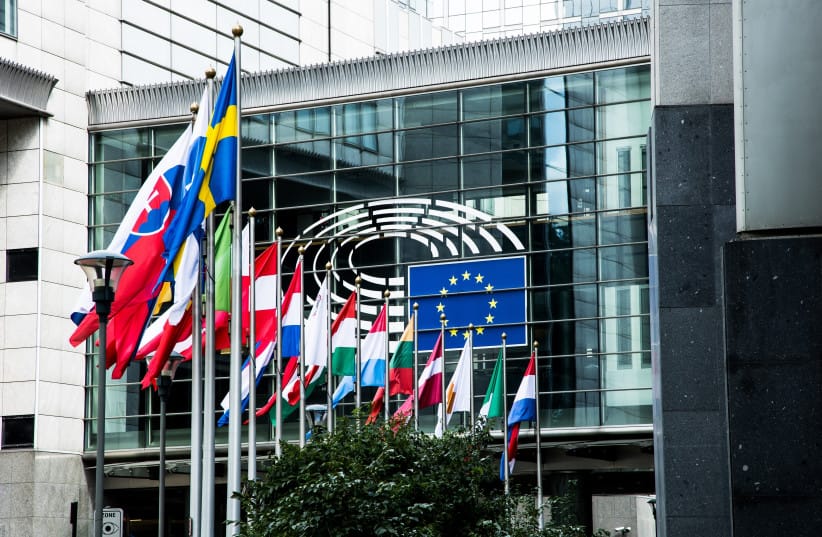
Ironically, Israel has accomplished what generations of European leaders could not: it has united Europe around a coherent foreign policy position.
Not Russia, not China, not migration.
Europe found common purpose through opposition to settler violence in the West Bank. At a moment when the continent struggles to articulate what it stands for, it has become increasingly certain about what it rejects.
This is what scholars describe as “otherness.” Political communities sometimes define themselves less by a shared ethos than through contrast with an external figure representing what they refuse to become. Netanyahu’s Israel has assumed that role for Europe.
The continent may not fully agree on its binding principles. Still, it knows it does not stand for masked violent settlers torching homes, attacking Palestinian villages, and subverting any remaining possibility of separation between Israelis and Palestinians.
For years, European governments carefully distinguished criticism of settlement expansion from criticism of Israel itself. The distinction mattered deeply to European diplomacy. Opposition to settlements, officials insisted, was not opposition to the Jewish state. That line is now collapsing.
Settlement violence is no longer viewed as the work of isolated extremists. Across Europe, it is increasingly perceived as tolerated by the Netanyahu government and politically legitimized by some of the ministers within.
That is why the sanctions decision carries significance far beyond the individuals included on any list.
Sanctions are rarely just punitive instruments. They are political signals. They establish moral boundaries and create institutional momentum. Bureaucratic systems, once set in motion, rarely stop with an initial measure.
Today, the sanctions target violent settlers. Tomorrow, the debate may extend to ministers such as Bezalel Smotrich and Itamar Ben-Gvir, whose rhetoric is already widely regarded across Europe as racist. After that, the discussion could shift toward settlement products. From there, broader economic and diplomatic measures, once considered politically inconceivable, may enter the mainstream of European policy.
Europe coming together
The most portentous element in this story is not the sanctions themselves. It is the disappearance of Viktor Orban as Netanyahu’s reliable shield within the EU. For years, Orban blocked or diluted collective measures against Israel. Hungary functioned as Jerusalem’s veto in Brussels, and Israeli diplomacy became dependent on that arrangement. And that dependence is now exposed.
With Peter Magyar now in power, Budapest no longer obstructs European consensus. Israel now faces a Europe that is more internally cohesive and more willing to convert moral outrage into policy.
The danger is not only diplomatic isolation abroad, but strategic blindness at home. Israeli leaders continue to speak as though European criticism amounts to the symbolic posturing of weak states. That attitude fundamentally misreads the cumulative nature of international legitimacy.
Europe remains Israel’s largest trading partner and one of its most important scientific and cultural partners. Alienating Europe carries tangible costs. Dismissing European opinion altogether risks pushing even moderate governments toward adversarial positions they might otherwise avoid.
The tragedy is that none of this is inevitable. Europe is not inherently hostile to Israel. Many Europeans retain genuine historical sympathy for the Jewish state and a profound awareness of Jewish suffering on the continent.
But sympathy is not unconditional. Guilt diplomacy cannot indefinitely override present realities. Images of settler violence, combined with inflammatory statements from senior Israeli ministers, are reshaping European perceptions faster than many Israelis appear to understand.
Israel still retains agency. It can enforce the rule of law against violent settlers. It can restrain ministers. It can demonstrate that state institutions remain stronger than ideological militias. Above all, it can recognize that domestic political expediency is wreaking strategic damage of historic magnitude.
Kissinger’s observation now returns with renewed force. A country consumed by internal politics eventually loses control over its international standing. Coalition survival tactics in Jerusalem are reshaping Europe’s geopolitical posture. Decisions aimed at preserving a sitting government at all costs have produced consensus in Brussels.
Europe has found a unifying foreign policy language, and it found it through Israel. That should concern Israelis far more than any sanctions list. Because once a continent of this economic and political sees a country as its defining political other, reversing that perception becomes extraordinarily difficult.
And in politics, especially EU politics, institutional momentum matters more than intentions. Once the Brussels machinery begins moving, nobody can predict with confidence where it will end.
The writer is a senior fellow at the Jewish People Policy Institute (JPPI) and a professor of European studies and international relations in the Department of Politics and Government at Ben-Gurion University of the Negev.