
Israel owes America gratitude. But Israel also owes itself honesty.
Prime Minister Benjamin Netanyahu told Israelis this week that “our soldiers fell [in Gaza] because we didn’t have enough ammunition” and that “part of the loss of ammunition was also a result of the embargo,” before adding, “that changed when Trump took office.” The prime minister was, in essence, laying battlefield deaths at the feet of a specific American administration.
Two senior American veterans of the last two years of crisis say the claim is wrong. Former US special envoy Amos Hochstein told The Jerusalem Post’s Amichai Stein that Netanyahu’s words were “decidedly false” and “ungrateful,” arguing that a US president and the American people “saved Israel repeatedly at their most vulnerable moments.”
Former ambassador Tom Nides dismissed the allegation outright: “There was no arms embargo… he knows that,” he told Stein.
Israelis should not ignore the Americans’ rebukes, because they speak to two simultaneous realities at once.
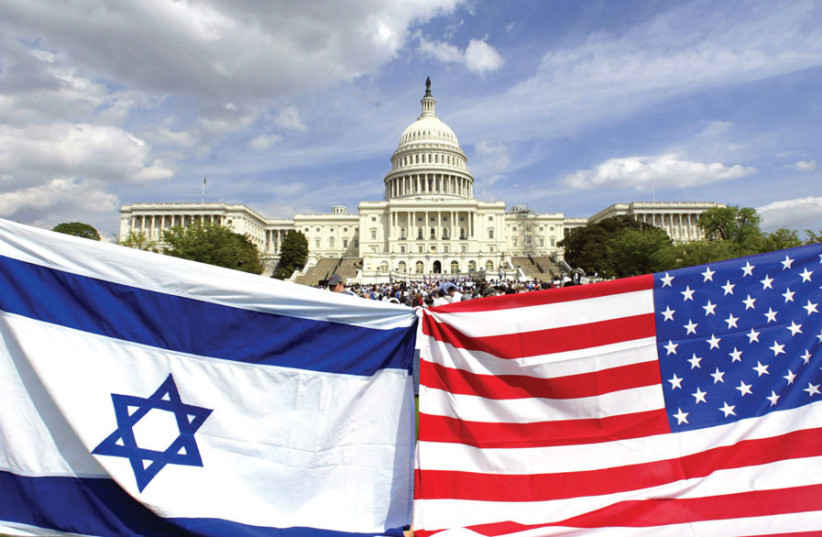
Biden was there in the most dangerous months
Firstly, in the most dangerous months post-October 7, US support was operational under Biden, who rushed to visit Israel and show solidarity. His administration also rushed forces to the region, helped deter a broader war, backed Israel diplomatically, shared intelligence, and supported Israel’s air defense when war with Iran broke out last year.
It also authorized massive military assistance packages, even while the White House absorbed political punishment at home for standing with Israel. Those are facts, and facts deserve a simple response.
We should say thank you to the US for that, and mean it.
Hochstein underlined the scale in a blunt post, more than $20 billion in military support, two aircraft carriers sent to the region, and American participation in defending Israel from Iranian missile and drone attacks. Israelis can debate policies and personalities, but the truth is that American help saved many Israeli lives.
Secondly, gratitude is not the same as dependency, and it should never become a muzzle. Israel has a duty to learn from every operational failure of this war, including any periods of shortage, bureaucratic delay, or disagreement with allies. The question is how those lessons are framed.
Turning them into partisan blame risks burning down the strategic asset Israel cannot replace: bipartisan American support.
Nides put it plainly that Israel must remain a bipartisan issue “for the sake of the security of the state of Israel.”
He is right. If Israelis treat Washington like a domestic election arena, they will wake up one day and discover that support for Israel has become another tribal marker. When that happens, military aid becomes easier to condition.
Netanyahu is also right that Israel must be able to sustain itself, as he stated weeks ago in an interview with The Economist. A long war exposes many vulnerabilities and increases domestic political pressure.
Lessons learned from Israel’s longest war should lead to a serious national project to expand domestic manufacturing capacity, diversify suppliers where possible, and build deeper stockpiles.
It should also lead to a more disciplined public conversation with allies. That we resolve disputes in private and never turn fallen soldiers into partisan ammunition.
Nides noted that the Biden administration did debate a specific issue, that of whether to supply certain heavy bombs amid concerns about an operation in Rafah. Debate is legitimate, and democracies argue. But a dispute over one category of munitions is not the same thing as an embargo, and it does not erase the broader flow of weapons, intelligence, and diplomatic backing.
Hochstein’s anger and Nides’s alarm should be heard in Jerusalem as a warning about consequences. If Israel’s leaders present US support as conditional on which party holds the White House, they will encourage Americans to see Israel the same way. That is strategic malpractice.
There is room for criticism of any administration, including Biden’s, including Trump’s, and including the next one. But words matter. Allies are not interchangeable, and Israel, more than any country, understands how quickly a narrative hardens into “truth.”
Israel should express gratitude to President Biden and the American people for what they did when Israel was under fire. Israel should also thank President Trump for his support.
Then Israel should stop treating Washington as a prop in Israeli politics and return to the only posture that protects us: unity at home, honesty about our needs, and bipartisan strength abroad.