I begin with a quote attributed to George Bernard Shaw: 'Youth is the most precious thing in life; it’s a shame that it has to be wasted on the young.'
Ah, the joys of senior citizenry. The latest perk that Israeli society has thrown our way is free public transportation: From the age of 67, Israeli citizens can travel for free on all buses and trains throughout the country – even the Haifa funicular.'
Not only that, but the seats at the front of the bus are reserved for seniors, with a sign quoting the biblical verse “And you shall rise before the aged” (thus allowing us to unseat recalcitrant youngsters).
It’s a nice gesture, to be sure; but as I gazed upon that sign, another thought grabbed me: Had I really grown that old, so old that there had to be special accommodations for me? Was I now to be treated with kid gloves, the subject of special treatment or, perish the thought, pity? Is that really where I’m at?
We live in a world that is disproportionately tilted toward youth. Hollywood mercilessly bombards us with alluring pictures of young people wearing the newest fashion of clothes, driving the coolest cars, scaling the mountains and sailing the oceans on the most exciting of vacations. The only TV commercials that feature the elderly are those advertising medicines, lubricants, or senior “care centers.”

Out to pasture
Companies look to retire their longtime employees, putting them out to pasture when they hit their 50s – and certainly they are obsolete by age 65.
Meanwhile, life expectancy continues to rise, creating even more of us. At the beginning of time, people – at least those whom the Torah identifies – lived to be almost 1,000 (Methuselah holds the record at 969).
Later, select personalities, such as the Patriarchs and Matriarchs, would live well past the century mark.
Moses would finally set the bar at 120, and since his death virtually no one in history would (authoritatively) achieve that miraculously predicted distinction, though Jewish sources do claim that Rabbi Yohanan Ben-Zakai, Rabbi Akiva, and Hillel the Elder equaled Moses’s longevity.
What we now consider "middle age" was, until relatively recently, the average lifespan. In 1850, US life expectancy was just 39 years. Today, in Israel, that number has remarkably shot up to 84, due primarily to advances in medicine, hygiene, and diet. In fact, Israel is ranked in or near the top 10 on the list of countries with the highest life expectancy.
What does Jewish tradition say about aging?
First and foremost, we believe that every moment of life is of inestimable value; thus Jewish law dictates that a terminally ill person is considered alive in every respect. As I remarked in my last article, the fact that the Torah records Sarah’s life as “100 years and 20 years and seven years” – as opposed to “127 years” – indicates that every stage of life has its own purposeful value.
While we may indeed lose a few steps along the way as life goes on, our productivity need not vanish.
Moses, for example, only began his leadership of Israel at age 80; Rabbi Akiva began to study Torah at age 40, at the urging of his wife, Rahel. Benjamin Franklin signed the American Declaration of Independence at 70; astronaut John Glenn went into space at 77; and Pablo Picasso produced 347 engravings at the tender age of 87.
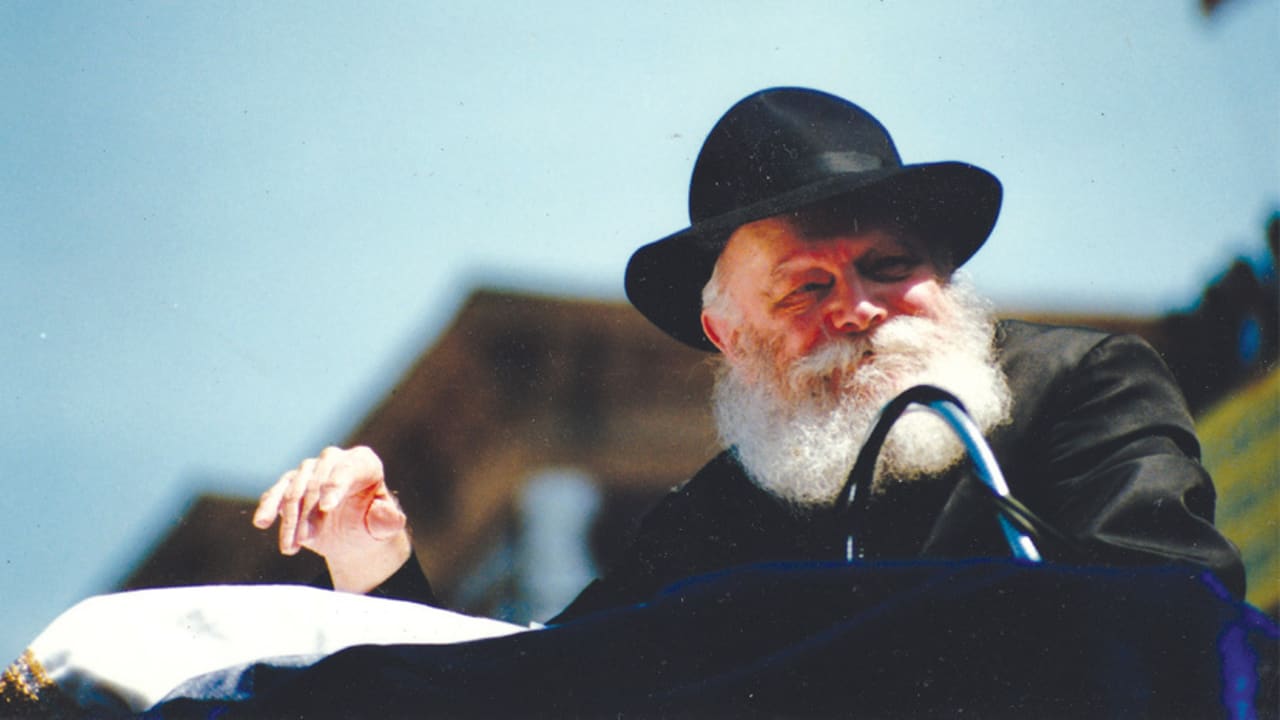
The Lubavitcher Rebbe at age 70 initiated the establishment of 70 new educational institutions. On his 80th birthday, he delivered a six-hour speech, and then personally distributed gifts of the Chabad text Tanya to the 10,000 participants. Even after his stroke in 1992 – at age 92 – he continued to lead the movement, until his death in 1994.
Age-wisdom correlation
In the Torah world, there is a direct correlation between age and wisdom. In fact, the very word used for aged, zaken, also means “wise.” In Talmudic debate, a sage who came later in time cannot overrule one who came earlier, as the transmission of the Law from Sinai only gets weaker as time goes on, not stronger (as opposed to science or medicine, where later generations may be better informed than those of the past). Says the Torah (Deuteronomy 32:7): “Remember the days of old... ask your father and he will tell you; ask your elders and they will teach you.”
This is clearly the reason the vast majority of acknowledged Torah sages are of advanced age, and why their teachings are so eagerly sought after. Says the Midrash (Ex. Rabbah 3:6): “Anyone who takes advice from the elders will not stumble.” The midrash summarizes: “The people of Israel are a bird, while the elders are the wings; without them, the bird cannot fly.”
That is why it is not unusual to see centenarian rabbis addressing huge throngs of students who hang on to their every word. Torah teachers and communal leaders are invaluable assets to the greater community.
Staying active and useful
Staying active and staying useful – in any capacity – are the keys to avoiding depression, dementia, and even suicide. If an older person has no function or purpose in life, he will hasten his own end. Say the rabbis: “A person only ever dies from having nothing to do.” On the verse at the very end of the Torah, “And Moses’s eye [at age 120] was undimmed and his natural energy was unabated,” Rabbi Jonathan Sacks comments, “I used to think these were simply two descriptions until I realized that the first was an explanation of the second. Moses’s energy was unabated specifically because his eye was undimmed, because he never lost the idealism of his youth or his passion for justice.”
Each day anew
Every day brings a new opportunity to learn, to teach, to experience the grandeur of life. On Rosh Hodesh, at the beginning of each new month, we customarily recite the phrase “And they [Abraham and Sarah] came with their days.” The rabbis explain this cryptic comment to mean that they came before God, at the end of their lives, holding calendars.
They graphically showed the Almighty that each and every day of their lives, they had done something of value – exchanged a pleasant word with someone, learned a new insight, brightened another’s day.
A hassidic saying sums it up best: Old age can be a winter, but it can also be a harvest.
This world is for compiling mitzvot, for advancing in knowledge and good deeds. I vividly recall that when, in yeshiva, our Talmud classes would go far beyond their intended close and we would begin to drift off, our rabbi would raise his voice to wake us up and say, “This world is for learning, gentlemen; you will have plenty of time to sleep in the next world!”
The Talmud (Megila 27b-28a) records the comments of several rabbis as to how they achieved the blessing of longevity. Rav Nehunya ben Hakana: “I never sought respect by degrading another.” Rav Zeira: “I never was harsh or unforgiving with the members of my household.” Others said: “I never rejoiced at the misfortune of others”; “I never let my anger accompany me to bed”; and “When wronged, I did not seek revenge or retribution.”
Not only should each person continue to take his or her rightful place in society, but perhaps the greatest opportunity age provides is the chance to affect the next generation. Is there any greater love than that of a grandparent for a grandchild? In communities where both father and mother work, grandparents can take a healthy share of the child-rearing and share their knowledge and life experience. “Intergeneration learning” has a beauty and power all its own.
In short, life is for living. I hope and pray that it will always offer a forum for learning, an opportunity for giving, and a corridor to the eternal hall of justice and redemption. At the same time, I hope it will bring me simple, childlike joy each and every day.
And so I close, as I began, with another witticism of Shaw's: “We don’t stop playing because we grow old; we grow old because we stop playing.”
May you live to 120.