My late rabbi, Rav Herzl Kaplan, was fond of saying that nothing significant ever happens that is not found somewhere within the Torah portion of that week. And that wise observation was surely true for me this past week.
I was notified by my cousin that my last surviving aunt – about to celebrate her 103rd birthday – was in severely deteriorating condition, and if I wanted to see her for one last time, I had better come NOW. So, I jumped on a plane to Los Angeles, and would spend 30 hours in the air flying back and forth in order to spend 50 hours on the ground together with her.
It was worth it. Though slipping away, Aunt Mollie was still able to speak to me, and I could gain a sense of closure as this last matriarch of her generation was now coming to an end. And as a bonus, I could see far-away family members for the first time in decades.
What was most amazing was how prepared and propped up I was by reading the week’s serendipitous Torah portion of “Chayei Sarah.” It depicts and describes the first funeral and burial mentioned in the Torah, and it carries eternal messages.
First, the title references Sarah’s life, even though it begins with her death. This, say the rabbis, comes to tell us that if you live a full and meaningful life, if you leave this world somehow better than you found it; you do not vanish with your demise. You live on – perhaps forever – through your accomplishments, and through the wisdom you impart to others, particularly your family. And Sarah, who battled through countless challenges, most notably her infertility, her having been kidnapped – twice! – and the near sacrifice of her son, Isaac, remains an immortal role model for all peoples.
In fact, the adage that Sarah personified – “The righteous, even in death, remain alive” – is the exact phrase which we chose to write on the tombstone of our beloved son Ari, who fell in battle while defending the state. He, too, lives on forever.
The Torah portion describes Sarah’s age as “One hundred years, twenty years and seven years.” As the Torah never wastes words, the commentators ask why the verse does not simply say, “One hundred and twenty-seven” years? They respond that every segment of a person’s life is of inestimable value; from childhood to senior citizenship, we all have something important to contribute at every stage of our existence.
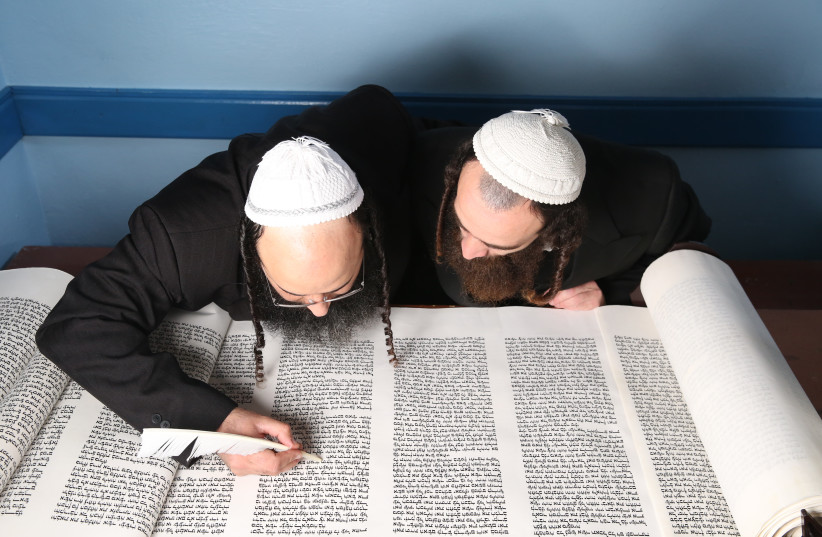
Then there is the sentence “And Abraham came to eulogize Sarah and to cry over her.” In the Torah parchment, the letter kaf in the word “to cry” is smaller than the other letters. This is a hidden message telling us that while we surely must grieve over the loss of a loved one, we are not to be overwhelmed with sadness.
The unfortunate death of a relative should be accompanied by the upbeat celebration of his or her life. This was certainly the case with one who passed the century mark. I remarked to my cousins that the well-known blessing “You should live to 120” was certainly bestowed upon my aunt; if you take off the state and federal tax – or 18% VAT – 120 becomes 103!
AND THEN there is this week’s portion of “Toldot.” Its primary subject is the controversial “selling” and bestowing of the first-born blessing. But what it really is, at its core, is the continuing saga of the sibling rivalry that has always rocked our nation. This “spiritual herpes” seems to go on and on, creating an “Achilles’ heel” that we cannot seem to banish.
It starts at the very beginning of time, when Cain murders his brother, wiping out 25% of the population. And then Isaac and his older half-brother, Yishmael, develop an animosity that will reverberate until this very day. Jacob and Esav, of course – though they are full brothers – will continue to face off against each other, via arch-enemy Amalek, until the end of time. And let us not forget Joseph and his brothers; our descent into slavery and subsequent untold suffering emerge from their enmity and estrangement.
This is not to say that we are always the “good guys” in the story, and they are the ones solely at fault. A closer look at the evidence suggests that we, too, share in the guilt and are not totally blameless for the lack of brotherhood. To wit: Abel does not respond to older brother Cain when Cain is distraught over God’s rejection of his offering; Jacob is punished for preventing brother Esav from marrying Jacob’s daughter Dinah, who might have “rehabilitated” him; and Joseph behaves in an immature, “holier than thou” manner – arrogantly sharing his dream of the whole family bowing down to him – that rightly upsets both his siblings and his father.
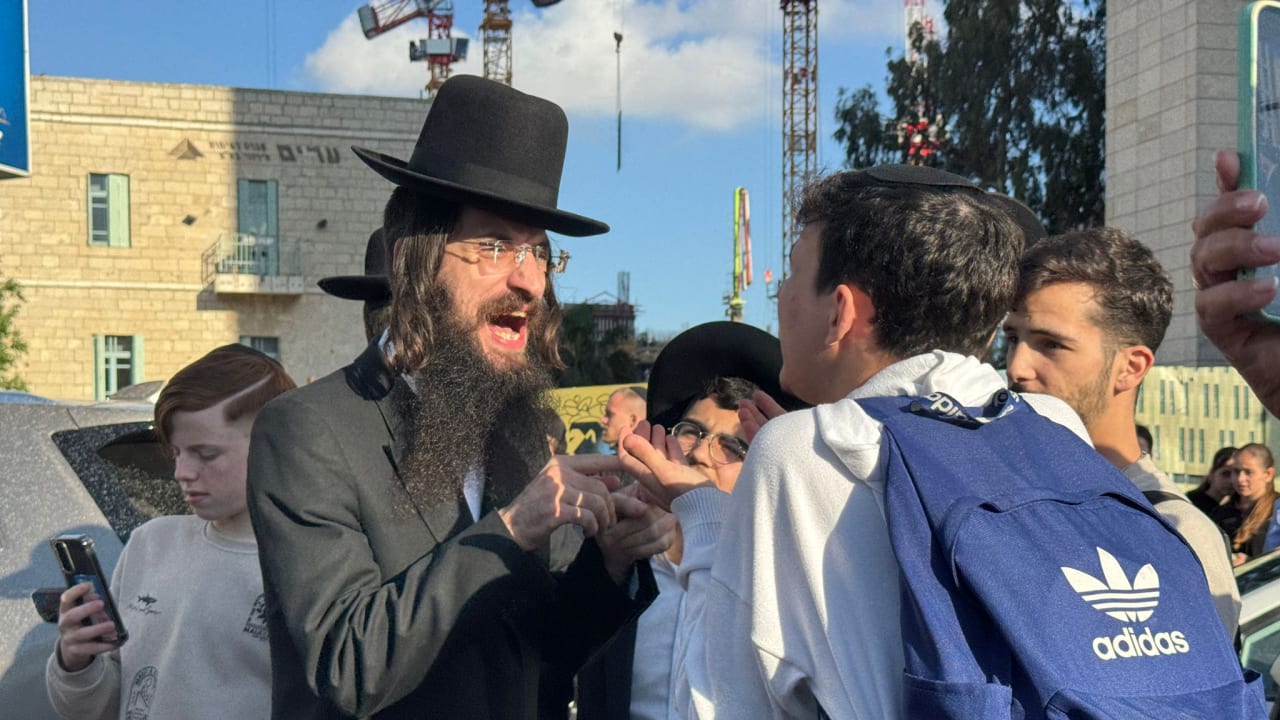
Disturbing division among the Jewish people
AND SO, in our own day, we are harvesting the bitter fruits of this syndrome, as our ongoing disunity remains the glaring problem of the day. We see it all around us, expressed in so many diverse and distressing ways:
Zionistic Jews deplore the haredi refusal to endorse military or national service for the young men and women of their communities; they recoil at the general lack of respect shown for the miraculous rebirth of the State of Israel.
The haredim, in their insistence that it is their Torah service alone which protects the state, resent the negation of their contribution to Jewish life, both now and throughout our history. Secular and observant Jews erect social and cultural barriers between them, while political divisions exacerbate our fragmentation.
So where can we go from here? I suggest it starts with respect, even if it is a grudging one, of “the other,” and admission that we are not the solitary owners of the Truth. I urge the National-Religious leaders to lead the effort to bridge the gaps, as they are the natural peacemakers, living at once within the Torah world and the modern world, traversing between the Bible and the Bursa (stock market), the Book and the shuk. Rabbis like Rav Kook and Rav Herzog – the first of our chief rabbis – are the template for building a magnificent, multi-door tent that is ultra-inclusive.
In short, what we need is an all-Jewish “Abrahamic Accord” between ourselves, an expansive middle ground in which all may safely graze. If they can do it, why can’t we? After all, Abraham is our forefather, isn’t he?!
The writer is director of the Jewish Outreach Center of Ra’anana. rabbistewart@gmail.com