When President Donald Trump’s recent deal secured the release of 20 living hostages from Hamas captivity, many in Israel exhaled for the first time in months. Though Hamas still cruelly holds bodies as bargaining chips, this diplomatic breakthrough has shifted attention to what lies ahead. The region, remarkably, is beginning to look beyond the smoke of Gaza.
Lebanon is stabilizing as Hezbollah, Iran’s once-mighty proxy, faces disarmament under a US-backed plan. Syria’s post-Assad transition has opened dialogue channels long thought impossible.
Saudi Arabia and Israel continue quiet discussions that could finally bring Riyadh into the circle of peace, reminding us that such talks dominated Israeli headlines in early October 2023, before Hamas attacked Israel and dragged the region to war.
These are extraordinary developments. Each holds the promise of a more secure, integrated Middle East. And yet, as Israelis dare to hope for the best, we must also prepare for the worst.
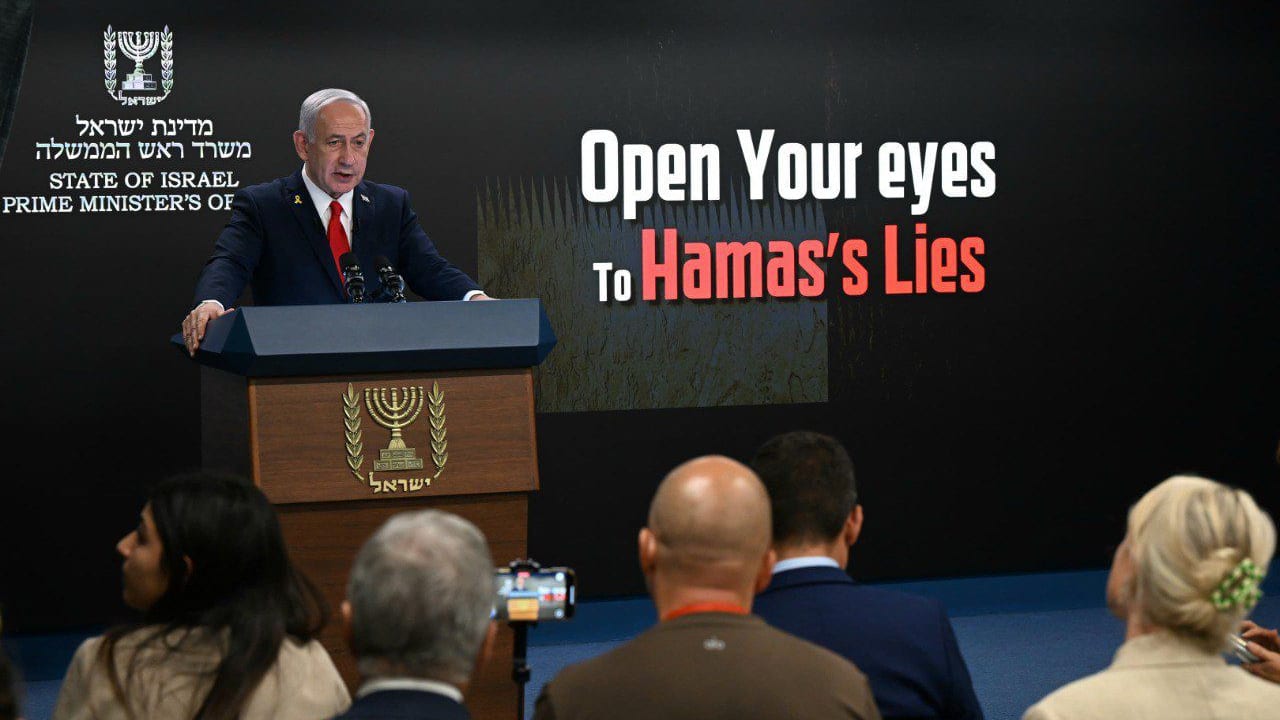
The Israel Defense Forces are already absorbing lessons from the last war: replenishing emergency supplies, refining battle doctrine, and investing in intelligence. However, there is another front where Israel cannot afford complacency: the war of perception. Militarily, Israel won; diplomatically and digitally, it was caught off guard. Hamas and its sponsors understood this fight from the start.

Hamas's information strategy
Hamas launched its attack at 6:29 a.m., October 7, 2023. Under the cover of thousands of rockets, hundreds of terrorists invaded Israeli communities – eventually murdering over 1,000 people in a single day. Only minutes later, at 6:33 a.m., before Israel had fired a single shot, Muhammad Smiry posted a call for the world to pray for Gaza on his X/Twitter account.
This example highlights how Hamas, financed and choreographed by Qatar, entered the battlefield with a sophisticated information strategy. It weaponized images of suffering, positioned military sites within civilian areas, and ensured cameras would capture the aftermath.
Knowing Israel would retaliate, it built its command centers, weapon caches, and fighting positions in schools, mosques, and tunnels below civilian buildings. Hamas knew every Israeli attack would serve it in the fight for public sympathy and was ready to amplify its cause through an onslaught of disinformation.
This cost Israel dearly. While IDF soldiers risked their lives to minimize civilian harm, social media flooded with staged videos and doctored footage. Western audiences, bombarded by repetition, began to doubt Israel’s morality before understanding the context. The battlefield victory was decisive; the narrative defeat was devastating.
Information warfare readiness
If Israel is to be ready for the next confrontation, and history teaches us there will be one, it must treat information warfare as seriously as kinetic warfare. That requires structural reform, not improvisation. Here are four immediate steps.
(A) Strengthen the information directorate. In theory, the Prime Minister’s Office already has an arm responsible for coordinating Israel’s messaging. In practice, it is underfunded, understaffed, and underutilized. A modern state cannot rely on ad-hoc spokespersons or part-time consultants during wartime.
The directorate must become a standing institution: professionally staffed, technologically equipped, and empowered to operate 24/7 while clearly leading the strategic objectives and coordinating other governmental bodies: the IDF, Foreign Ministry, and intelligence community.
(B) Build full-time capacity in the world’s top 10 languages. Wars today are waged on screens, not just in trenches. Eylon Levy did an amazing job while he was employed, but there should be dozens of such people employed there on a full-time basis, and in 10 languages, not only in English.
During emergencies, a reserve corps of trained communicators should be activated to speak on Israel’s behalf across every major outlet. Just as combat soldiers are mobilized, so should information reservists be.
(C) Impose discipline on official communication. Few things damaged Israel’s image more than irresponsible statements from members of government who spoke without authorization. When fringe ministers call for “flattening Gaza” or make reckless threats, those words echo far louder internationally than any clarification. Israel’s adversaries replay such quotes endlessly.
A democracy can sustain debate, but in wartime, message discipline is national security. The prime minister must establish clear communication protocols defining who speaks, on what topics, and with what oversight.
(D) Coordinate with Israel’s global allies and advocates. During the war, I was interviewed dozens of times on international networks. Like many others defending Israel in the public arena, I often struggled to obtain timely, verified data. Instead of supporters chasing information, Israel should proactively push accurate updates, visuals, and talking points to the public at large, and especially to those willing to amplify the truth.
The Diaspora, academic experts, and social-media defenders can form an enormous multiplier force, if Israeli decision-makers understand how to empower them. A future information directorate could run a secure digital portal feeding real-time updates to vetted advocates worldwide. Every day without that system is another day Israel fights with one hand tied behind its back.
Beyond these immediate reforms lies a broader principle: Truth must be organized to win. The media war will not wait for the next invasion or missile barrage. It has already begun. Hamas, Qatar, and Iran are investing heavily in influence operations that blur the line between journalism and propaganda. They understand that global perception shapes diplomatic outcomes, economic sanctions, and even battlefield deterrence.
Israel cannot merely react to the next disinformation campaign. It must anticipate it by rehearsing communication drills as rigorously as military ones, by integrating AI tools to detect fake content, and by cultivating credibility long before a crisis erupts.
Victory in the 21st century requires excellence not only in arms but in arguments, visibility, and a broad range of communication channels. Israel’s enemies will continue exploiting humanitarian imagery to mask barbarism; Israel must counter by coupling transparency with speed, facts with empathy, and professionalism with unity.
The military’s courage saved lives. The truth, properly told, can save nations.
The writer is the CEO and founder of Genesis 10, and serves as a board member of the Partnership for Peace Fund of the US Agency for International Development (MEPPA) – the largest investment by the US Congress in peace-building in the Middle East.