
Today, we mark World Mental Health Day. However, every therapist will say that for them, every day is Mental Health Day, especially over the past two years.
For two years of war, national upheaval, fluctuating stress, and countless traumatic events, the mental state of individuals, communities, and society as a whole has remained wounded and is deteriorating.
While people’s physical condition is visible and hard to ignore, the mind often stands as an invisible monument that no one notices.
Depression, anxiety, post-trauma, and other mental conditions have become part of daily life for many of us, from early childhood and school-age children to adults and the elderly.
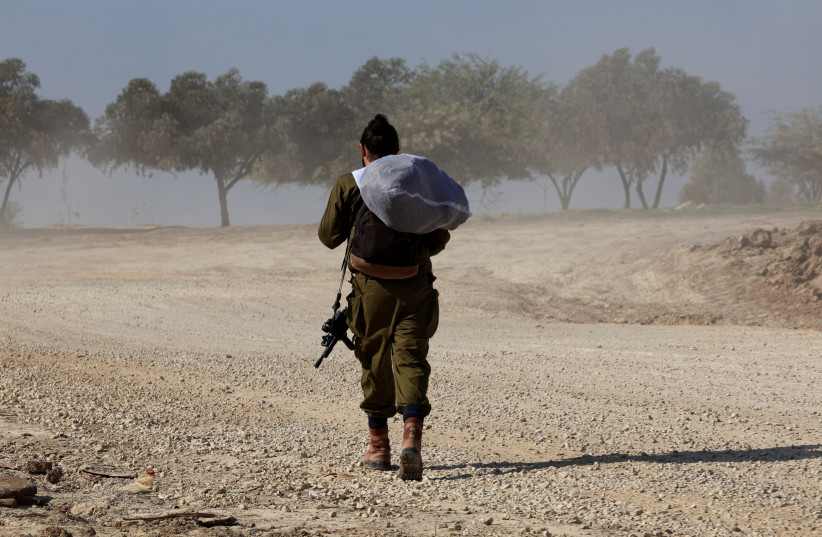
From exhausted medical teams to soldiers who have not experienced a routine that is not a combat routine for a long time, and to members of the education system, all are carrying emotional scars from the past two years.
It is also important to note that humans have natural recovery abilities; not everyone who experiences trauma will necessarily carry it in a way that interferes with functioning.
However, when trauma strikes such large numbers of people, it inevitably leaves behind a very long trail of those affected, numbering in the hundreds of thousands.
This is a real catastrophe. It does not disappear after one or two treatments. It requires long periods of support and assistance for those affected.
THIS IS WHERE the state must take responsibility for itself and its citizens, and where decision-makers must think ahead and prepare for what lies ahead.
Israel’s public psychology system was already severely underfunded even before the Israel-Hamas War and before the COVID-19 pandemic.
Because psychological distress and waiting lists for treatment are invisible, policymakers in Israel have never prioritized mental health.
As a result, there is a severe shortage of psychologists in the public system, and the vast majority work in the private sector.
Thus, psychological treatment, to which every citizen is entitled under the National Health Insurance Law, is often not provided to those who need it.
Who does receive it?
Those who can afford it, those with the economic ability to pay for private treatment.
The state must now prepare a multi-year plan that will ensure the number of psychologists required to treat the public.
Such a plan should define clear growth indicators for psychologist positions in public mental health services, general hospitals, educational psychology, employment services, and all other public sectors where psychologists are needed.
The Health Ministry must also require the healthcare services to meet recruitment targets for psychologists as determined.
For years, psychologists have moved away from the public system due to disgracefully low pay and poor working conditions. Today, following the signing of the new wage agreement in April 2025, we can report a significant increase in psychologists’ willingness to return from the private sector to the public system.
Since the signing of the new wage agreement, we have received numerous requests from psychologists who work privately and wish to also work in the public system, but have encountered refusals and the claim that there are no available positions.
This means two things: first, that many psychologists are ready and willing to serve the public; second, that despite the severe shortage of therapists, the public system is still not being expanded.
I know the community of psychologists in Israel very well. It is a community characterized by dedication and conscience, performing sacred work in saving lives.
There are 17,000 registered psychologists in Israel, about half of whom volunteered in the months following the horrific massacre by Hamas on October 7, 2023.
I also know that they want to work in the public system.
Now that salaries are fair and willingness exists, unfortunately, that is still not enough.
This willingness must meet the state’s readiness to recruit, allocate positions for everyone who wishes to return, and set a clear staffing policy.
This is the opportunity to provide the much-needed service to the citizens of Israel.
It is also important to understand that dealing with mental health cannot, and should not, be postponed.
It has a critical impact on the recovery of individuals and society and on the pace of national rehabilitation.
I call on decision-makers to take responsibility, to rise to the occasion, and establish long-term plans for recruiting professionals into the public system now, because we are only at the beginning of a wave of mental health challenges that will affect us all. Its effects will be felt for years to come if these challenges are not properly addressed.
The writer is the head of the Forum of Organizations for Public Psychology.