On September 1, the air in Sderot carried two contrasting sounds: children’s laughter welcoming the new school year and distant booms from military strikes in Gaza. For my family, walking our sons, Lavie, nine, and Eitam, six, into their new classrooms in a new city – after a year exploring wild destinations across North and Central America – was more than routine. It was a declaration that life continues, even on the edge of war.
At the Torah-Science School, first graders were greeted with blessings, songs, and blue-and-white balloons soaring into the sky. Parents clapped, teachers smiled, and children’s faces glowed with excitement. Yet alongside the balloons stood painted bomb shelters – reminders that every family here has only fifteen seconds to seek safety.
The booms in the background were not incoming rockets, but the IDF striking Hamas targets inside Gaza. Still, the sound carried weight. It reminded us that our children’s schoolyard is a front line. And yet, in the shadow of that noise, we celebrated. That duality – joy and fear, resilience and fragility – defines our lives now on the Gaza border.
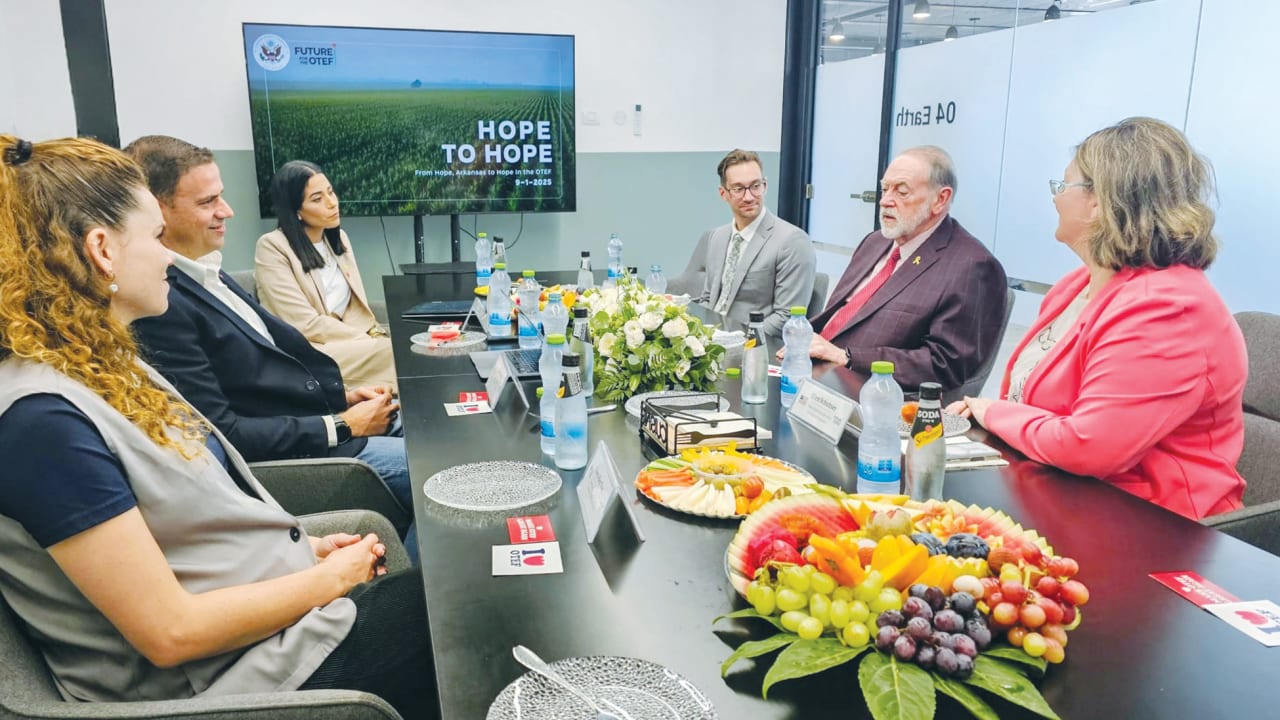
It was here, in this moment of vulnerability and strength, that I met Dr. Liraz Cohen-Biton. Chair of the Parents’ Committee, she offered a heartfelt blessing to the children. An hour later, we would meet again in a private room with US Ambassador Mike Huckabee.
<br><strong>Listening to the ‘Otef’</strong>
The ambassador’s visit to Sderot was no small gesture. With a schedule packed with diplomacy and crisis, he chose to spend an hour with Future for the Otef, a civic leadership movement amplifying local voices along Israel’s Gaza border. His presence signaled that the stories of parents, teachers, and civic leaders matter as much as those of politicians or generals.

Ohad Cohen, the organization’s CEO, opened the discussion with a vision both pragmatic and bold. “Sderot and the Otef have already doubled in size,” he said. “Now we must encourage growth in the southern communities. Our demand is simple: peace and quiet on our borders.”
He stressed that citizens here are not passive victims but active stakeholders. Their vision is not about walls or fear, but about Tekuma – rehabilitation rooted in civic trust. “We want to build back, not barricade ourselves in,” he explained. It was a call to imagine a future where the Gaza border is not a buffer zone but a thriving region.
<br><strong>Civic leaders, personal stories</strong>
At the table with Ohad were leaders whose lives embody resilience.
Dr. Liraz Cohen-Biton, whom I had just seen blessing first graders – including my son – introduced herself as a researcher, psychotherapist, and activist. October 7 had devastated her family and community, yet she chose to remain in Sderot. Within weeks, she established a Resilience Center in Tel Aviv to support evacuees. Today, she is one of the leaders of Atid LaOtef (Future for the Otef), working to strengthen communities and rebuild trust.
Then there was Liora Ben Tsur, whose story silenced the room. On October 7, terrorists murdered her mother, Marcelle Talja, with more than 50 bullets – just a day after Liora had given birth. Still grieving, she now works to bridge gaps in trust and support between residents, the government, and institutions, helping communities heal and rebuild.
She spoke of the need “to be born again, to plant again,” a philosophy rooted in resilience. Just the day before, sirens had sounded at her kibbutz as her six-year-old prepared for the next day, walking to first grade – a stark reminder of the stakes: this is not politics, but the fundamental human right to raise children in safety.
These were not abstract policy discussions. They were testimonies of survival, determination, and an insistence on life.
<br><strong>A global hub of resilience</strong>
Together, these leaders embody the spirit I have come to witness since returning to Sderot: a civic renaissance rooted in tragedy yet determined to shape the future. Whether through Ohad’s organizational vision, Liraz’s resilience work, or Liora’s testimony of survival, the message to the ambassador was clear: the Otef is more than a front line – it is a crucible of civic innovation.
For me, the connection was undeniable. The same voices blessing our children in the schoolyard are negotiating our future in private rooms. The same parents who run to shelters carry the responsibility of rebuilding trust in this land.
Credit must also go to the US ambassador. With his demanding schedule, he chose to be present – not only to meet officials but to listen deeply to civic society. His attention to parents, educators, and community leaders was admirable and essential. It affirmed that our stories matter beyond our borders.
<br><strong>Looking ahead</strong>
The Gaza border region – once seen only through the lens of war – is becoming a global hub of resilience and innovation. Its recovery efforts and civic leadership are redefining not only how we live here but how the world can learn from us.
Eitam and his classmates deserve a year where balloons, not sirens, fill the sky. If the voices of Ohad, Liraz, and Liora are any indication – and with international allies willing to listen – the Otef is already building that future.
The writer, a photojournalist, has returned to Sderot, where he focuses on the Gaza border as a global hub of resilience and innovation, documenting how recovery efforts and civic leadership are shaping the region’s future.