
There may be nothing more cruel than placing three delicious, brightly wrapped candies in front of a five-year-old and asking the child to choose just one – and one only. Making the right selection, choosing the right path – in candy as well as in life-altering situations – can very well mean the difference between tragedy and triumph.
As you read this, Israel is at a dramatic crossroads and must now make a fateful choice. After almost two years of fighting Hamas, the nation must decide if it will support the government’s decision to increase the war effort and occupy Gaza once again or will demand that we “sue for peace,” cut our losses and leave Hamas in power, if only they consent to return the hostages to us.
On the one hand, we have suffered terrible losses. A thousand soldiers – the crème de la crème of this generation – have fallen in battle without our claiming victory. Many thousands of others have suffered major injuries or are traumatized for life.
How many more must fall? Is this war even winnable?! As I have written previously, none of the great generals of our history – from Joshua and kings David and Solomon to the mighty Samson – were able to vanquish this rat’s nest of villains. Can we truly hope to do what they failed to accomplish?
The “collateral damage” – though it is far from being collateral – has been the effect this war has had on the image of Israel and Jews worldwide. We cannot go anywhere today – from the largest metropolis to the smallest island – without fearing that we will be the victim of a hate crime. We hide our Magen Davids, we turn our Israeli T-shirts inside-out, and we hope that the ever-growing crowds of haters will not spot us or seek us out. Meanwhile, the counterintuitive frenzy by (former) allies to declare a Palestinian state – whatever that means – is an ominous part of the fallout.
And what does all this do to the historic, cosmic call for the Jewish people to be a “light unto the nations,” to heal the world and create a kingdom of God? Three times daily we speak of our being messengers of the Almighty, the catalysts who will banish cruel idolatry, create a more moral universe, and influence humanity to come closer to the creator. How can we hope to pursue this eternal mission if we are shunned and shoved into the shadows?
Another no less horrendous casualty of this crisis has been the fragmentation of our nation. War once was the ultimate unifier for Israelis; we could all patriotically converge under the banner of the IDF when our safety and security were threatened.
But now war has become the great divider, pitting the brave defenders against those who arrogantly refuse to step up and protect the nation, as well as generating enormous daily protests against the war effort by those who want the conflict to cease and the hostages to be freed.
On the other hand, giving up the fight and surrendering to the terrorists’ demands would set a dangerous, perhaps fatal, blow not only to our pride but perhaps to our perpetuity as well. How can we bow to evil and allow it to prevail, knowing it will not relent until we are ultimately destroyed? Do we not have a spiritual obligation to wage war against Amalek, the descendants of whom are surely Hamas?
Have we not already altered the Middle East equation, weakening, if not eliminating, the existential threats from Iran, Syria, and Lebanon? And though our fight against Hamas is widely condemned, there are many around the world – either publicly or in their heart of hearts – who want to see these savages humbled and their ilk decimated. The wise among them understand that if we do not succeed, they are next on the Islamic hit list.
Did we sacrifice a thousand soldiers just to raise our hands in surrender and scurry back to our borders with our tails between our legs? Is that who we are?
Turning to prayer
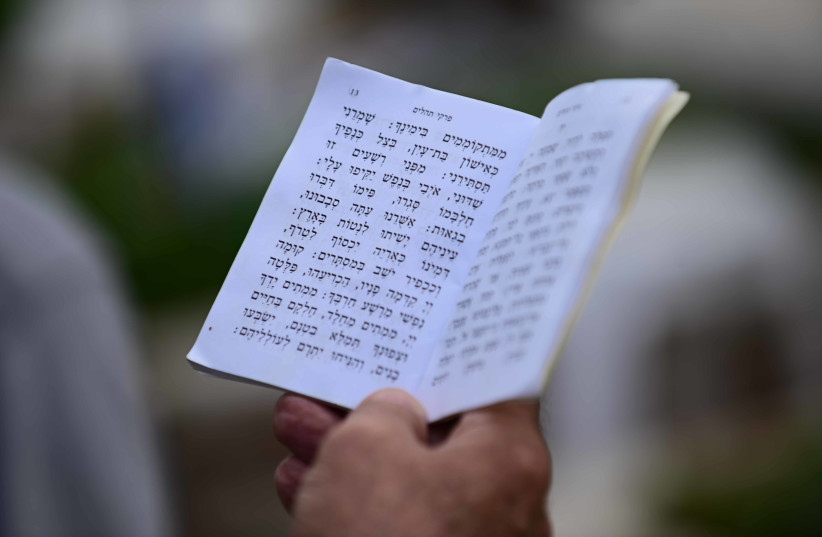
Facing these excruciating, contradictory choices, we must do what Jews have always done: We turn to God, our eternal protector. We admit our mortal inadequacies, and we pray.
There are two forms of prayer. The more common one is called tefilla. This, say the rabbis, is an action that requires kavana. The Hebrew word not only means “intention” but also “direction.”
This mode of prayer presumes that you know what you want and are asking God to help you make it happen. It might be the person you hope to marry, the potential employer you hope will hire you, the school that will admit you. You have your sights set on a specific goal.
But there is a different form of prayer called tza’aka, which means “crying” or “screaming out.” In this approach, we are saying to God: “I’m lost, I’m confused, I don’t know what I want or what is good for me; I am asking You for clarity and inspiration so that I can set a course and then direct myself toward that goal.”
The Talmud in tractate “Brachot” gives four examples of situations that require saying Birkat Hagomel, the blessing of deliverance modeled after the thanksgiving offering once brought in the Temple: recovering from a serious illness; release from prison; crossing a desert; or crossing an ocean. Each of these predicaments connects to verses that reference the word “tza’aka.”
Their common denominator is that without God’s help, we are virtually helpless. We need assistance from doctors and hospitals to cure our illness; we cannot extricate ourselves from jail all on our own; and we are neither birds nor fish that can freely, safely navigate the skies and the seas.
So we let out a primal scream, “God, save us. We don’t know in which direction we should go; we cannot get through this without divine direction. Guide us in selecting the right path so that we might be safe and secure, free from danger.” That, I believe, is where we are now.
It has often been said that Jews are not only the chosen people but also the choosing people. We chose God, and now we cry out: “Heaven help us to make the right choices; our very future depends upon it.”
The writer is the director of the Jewish Outreach Center of Ra’anana. rabbistewart@gmail.com