The fragile illusion of unity in Syria is unraveling once again, this time in Sweida, where recent clashes have left over 400 people dead and exposed the full extent of the Syrian regime’s inability to rein in the militias now masquerading as a national army.
According to the Syrian Network for Human Rights and independent regional sources, at least 426 people have been killed in the Sweida region since mid-July, including civilians and members of both local militias and state forces.
Just months earlier, atrocities were documented in Syria’s coastal regions. A Reuters investigation published in June 2025 reported that nearly 1,500 Alawites were killed in mass executions, many allegedly under direct command from Damascus.
A Syrian fact-finding committee confirmed 1,426 deaths, though it refrained from assigning official responsibility to senior commanders. The pattern, however, points to an unraveling state apparatus increasingly driven by local power centers rather than a unified national interest.
The Syrian state, nominally reconstituted after years of war, is not only ineffective but dangerous. Rebuilt around undisciplined militias, many of which are motivated by sectarian vengeance rather than national reconciliation, the new military apparatus represents a clear threat to Syria’s ethnic and religious landscape.

These groups, empowered by their roles in the Army, are driven not by a vision of national unity but by disdain for minorities, including Druze, Kurds, Alawites, and Christians.
What’s emerging from this chaos is not a functioning central government but a patchwork of militarized zones, each loyal to a different faction, commander or foreign patron. In this context, federalism no longer appears to be a theoretical model. It has become a necessary remedy to prevent Syria’s descent into another generation of bloodshed.
A federal structure, as outlined by several international analysts, would offer Syria’s diverse communities a measure of self-rule and protection. It would reduce the sectarian pressures that have long been exploited by central authorities and external actors alike.
Sweida's increasingly vocal calls for autonomy highlight the urgency. The Druze heartland has seen a rise in civil resistance, not against a foreign invader but against the very state that claims to protect it.
With aid blockades, targeted violence and militia raids, Sweida's demands echo those of the Kurds in the northeast. Both communities are seeking control over their own affairs in the face of a central authority that no longer hides its bias or brutality.
The Kurdish-led Autonomous Administration of North and East Syria (AANES) already provides a working example of what federalism might look like.
Built on principles of decentralization, multi-ethnic governance, and gender equality, this model has not only preserved relative stability in the northeast but has also been crucial in the global fight against ISIS.
SDF remains most effective counter-jihadist force
The Syrian Democratic Forces (SDF) remain the most effective force against jihadist resurgence. Any forced integration of the SDF into Damascus-controlled militias would jeopardize this fight and undermine years of international counterterrorism efforts.
Furthermore, surrendering Kurdish autonomy to a regime increasingly aligned with anti-minority militias would send a dangerous signal not only to Syria’s Kurds, but to every community that dared to imagine a different future after 2011.
Federalisation would also help rebalance power in Syria in a way that counters growing radicalization. Though rarely stated openly, many regional observers note that certain actors in northern Syria have become safe havens for jihadist movements.
External influence, often framed as “security coordination,” has allowed radical groups to embed themselves into local governance structures.
By granting local communities legitimate autonomy under a federal framework, Syria could weaken the pull of jihadist ideologies. When minority regions feel protected and involved in their own governance, the appeal of extremism fades.
Federalisation would also allow Syria’s moderate forces, those who still believe in pluralism, to distance themselves from more radicalized zones under foreign patronage. This would help reshape the Syrian map and create a long-term strategic counterweight to hardline Islamist elements operating in the north.
Syria does not need another revolution. It needs a new structure, one that reflects its communal complexity and historical plurality. Federalism would not solve all of Syria’s problems, but it offers a roadmap for de-escalation, community security, and a more viable future.
If the international community truly seeks a post-conflict Syria that is stable, inclusive, and resistant to extremism, it must let go of the fantasy of recentralization. Instead, it should support a federal model that empowers communities from Sweida to Qamishli and beyond.
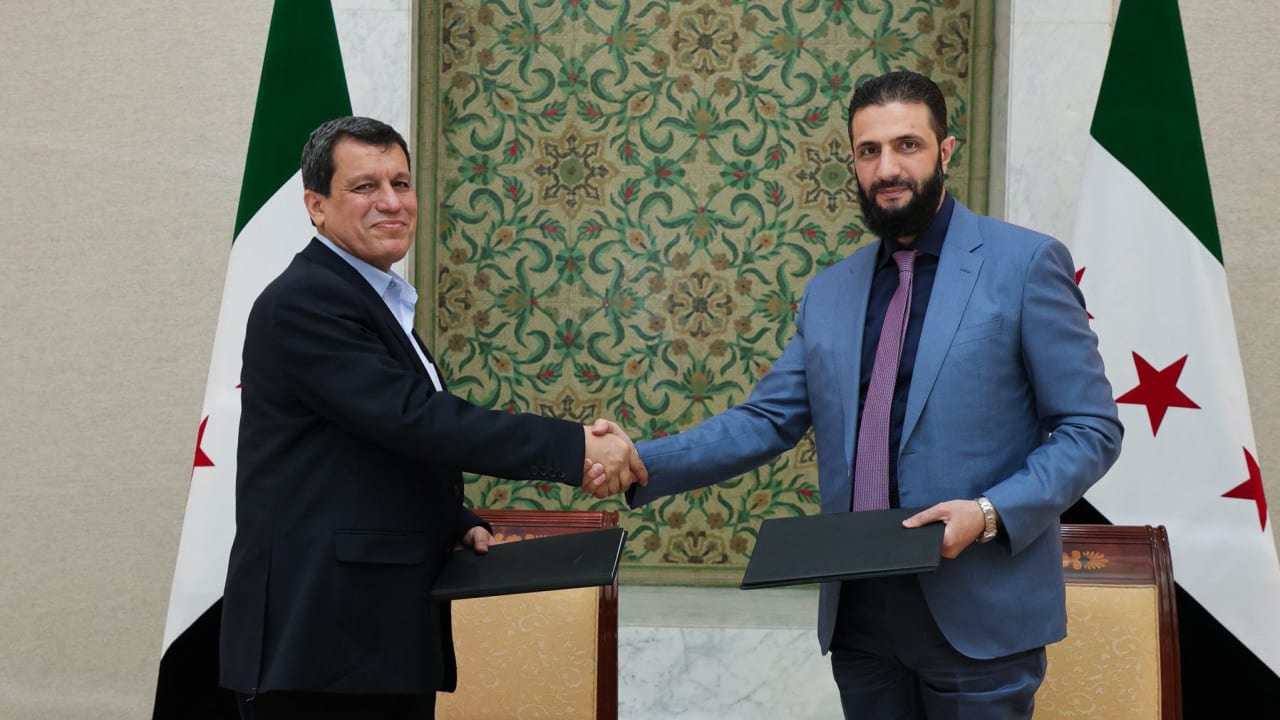
To persuade local leaders like Ahmed al-Sharaa to consider this idea, foreign aid must be tied to serious discussions about federal governance.
Only by adopting such a structure can Syria begin to heal, rebuild, and protect its people from the forces that have torn it apart for more than a decade.
Dr. Mordechai Kedar is a researcher at the Begin-Sadat Center for Strategic Studies at Bar Ilan University and the author of "Asad in Search of Legitimacy", Sussex Academic Press, 2005.