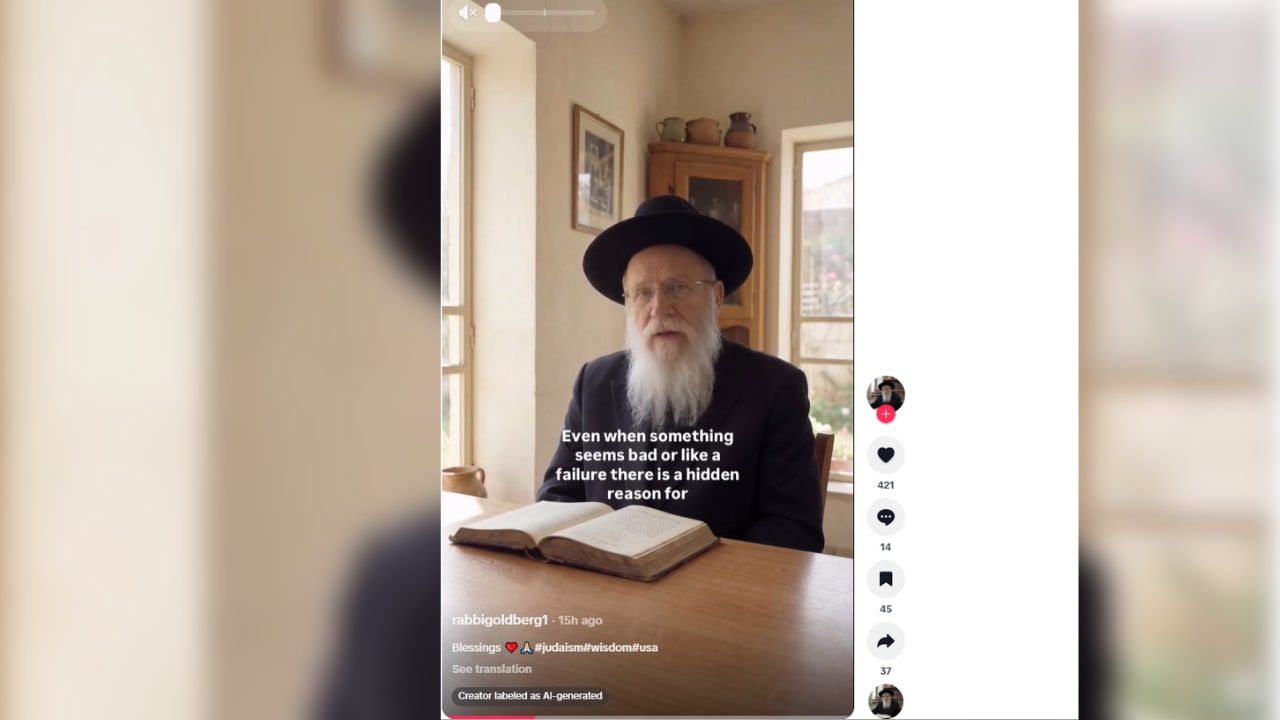
An online figure presented as a hassidic rabbi built a following of tens of thousands on Instagram and TikTok in recent weeks before being exposed as an artificial intelligence-generated persona.
The accounts, operating under the name “Rabbi Menachem Goldberg,” featured a bearded, hassidic-looking character delivering short daily messages about faith, abundance, and personal success. The videos followed a consistent format and often ended with calls to purchase paid digital content, including e-books and guides marketed as spiritual and life-improvement tools, the report said.
A Maariv journalist reported that viewers began raising doubts as the content grew more familiar, describing the language as broad and inspirational, with few identifiable Jewish sources or traditional references. Additional suspicions were fueled by visual inconsistencies in the videos’ synagogue-style backdrops, including Hebrew text that appeared nonsensical and design details that did not match recognizable Jewish settings.
In addition, the linked sales site described “Goldberg” as a Brooklyn rabbi with decades of experience and a method combining Jewish wisdom with financial prosperity, yet searches in rabbinic directories and public records did not surface a corresponding real-world figure. The site reportedly offered paid bundles priced in the tens of dollars, without clear identifying details about the entity behind the operation.
The exposure has triggered a broader debate in Israel about trust, authority, and disclosure in religious content online, particularly as generative AI makes it easier to create convincing video personas.

Jewish organizations caution against use of AI, call for more transparency
In response to the case, the Tzohar Center for Jewish Ethics called the episode a warning sign and urged clear standards for transparency. The center said presenting AI as a human voice of moral or rabbinic authority can mislead audiences, because viewers tend to associate a “rabbinic” persona with personal responsibility and accountability.
Senior figures at Tzohar stressed that halachic and ethical guidance relies on human judgment and real-world context. In a statement, they argued that AI cannot serve as a substitute for a rabbi in areas where decisions affect people’s lives, communal norms, or religious practice.
Tzohar also emphasized disclosure as a core principle, saying audiences deserve to know when content is created or delivered through artificial intelligence, especially when it is packaged in a way designed to signal religious credibility. The center urged public-facing labeling and clearer boundaries for AI use in educational and spiritual settings.