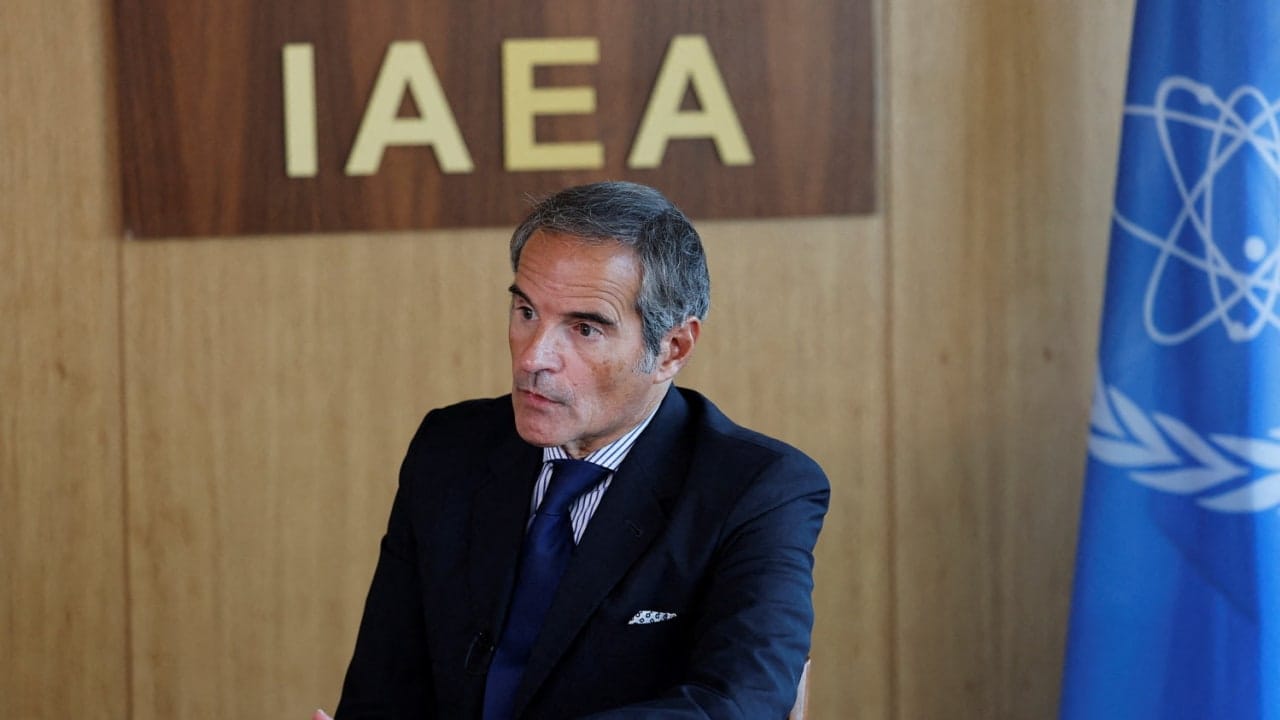
With the IAEA Board of Governors expected this week to call on Iran to specifically give access to its inspectors to Tehran's supply of uranium, which has already been enriched to the 60% level, the sides appear to be digging into an extended standoff.
IAEA Director-General Rafael Grossi, both in a formal speech to the Board and later in a press conference, sounded less diplomatic toward the Islamic Republic than he has sometimes sounded.
Repeatedly, Grossi called Iranian accusations ridiculous, that his agency has provided information about Iran's nuclear program to Israel to facilitate its attacks on Iran's nuclear sites this past June.
He referred to them as "lies" and stated that repeating lies did not make them true.
Rather, Grossi said that the attacked nuclear sites were publicly well-known, as well as much of what occurs within the differing facilities.

Pressed about whether he would follow expected orders from the IAEA Board to report back to it on exactly where the 60% enriched uranium is being held, the IAEA chief said that he is bound by the directives of the agency.
At the same time, he left room for negotiating with Iran about how and when his inspectors would get access to the 60% enriched uranium in order to try to satisfy Tehran's secrecy concerns.
Iran's nuclear facilities being attacked cannot be used as an excuse
Grossi also said that Iran could not hide forever behind its facilities, having been attacked five months ago, to delay IAEA inspections of those facilities.
If initially there were contamination and safety concerns for the inspectors, the IAEA chief said that at this point those concerns had mostly passed, given how long ago the attacks took place.
While he complimented Iran for not leaving the Nuclear Non-Proliferation Treaty, he reminded the Islamic Republic that remaining in the NPT carries obligations with it.
Ongoing accusations that the IAEA passed on information to Israel to facilitate the June attacks by the air force on Iranian nuclear facilities have been referred to as ironic from some Israeli officials, given that a 2018 Mossad operation raiding Iran's nuclear archives provided the IAEA with significant portions of the information that it has on Iran's nuclear program.