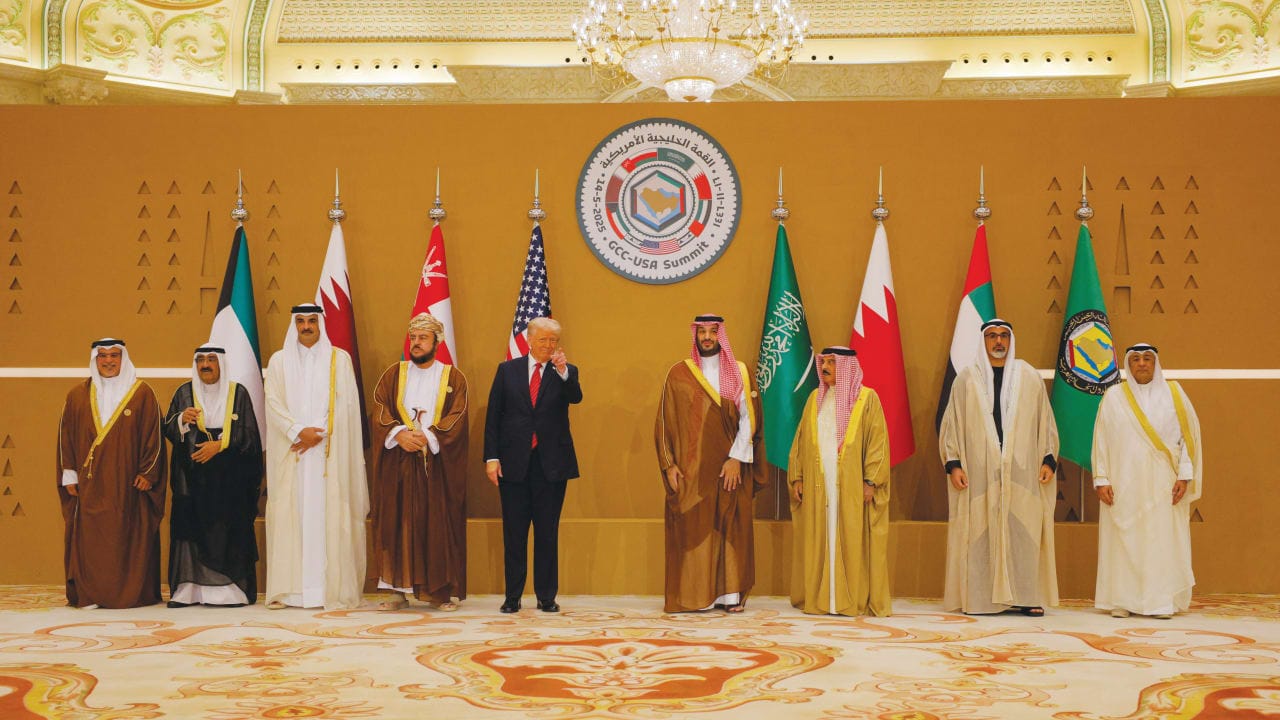
I do not know whether it was a coincidence or fate that I began my work at the Gulf Organization for Industrial Consulting on the very first day of Iraq’s brutal invasion of Kuwait in 1990. I still remember it was a Thursday, and when I heard the news, I was on the street in central Doha buying breakfast. A deep anxiety settled over me for months afterward.
For more stories from The Media Line go to themedialine.org
As a child I had traveled across Gulf cities accompanying my late father on his trips to Qatar, Bahrain, and Kuwait, and my main reason for joining the Gulf organization, headquartered in Doha, was belief in joint Gulf action and integrated industrial and economic projects after witnessing repeated disappointments in broader Arab cooperation: soaring promises and marginal results, from the Arab Common Market to the Joint Defense Agreement.
My work there deepened my attachment to the Gulf Cooperation Council as both an idea and a framework for collective resilience against challenges. I also remember conducting an analytical study on foreign investment and its obstacles, where the numbers revealed competition and rivalry among Gulf states. The challenge was how to build a comprehensive framework that would make investment policies integrated rather than fragmented and competitive. It was a dream, and it remains one.
Now, 35 years later, between the Iraq-Iran War and the current war between the US, Israel, and Iran, what does the picture look like, and is concern justified?
Looking objectively at Gulf economies before the current war, during it, and amid the current truce, we see that in 2025 the six GCC economies – Saudi Arabia, the UAE, Kuwait, Qatar, Bahrain, and Oman – posted relatively strong performance before the conflict erupted. Real growth remained positive, driven by robust non-oil activity, especially in Saudi Arabia and the UAE. Employment improved, unemployment fell in emerging sectors, and the states attracted record foreign direct investment thanks to regulatory reforms and major projects.

Diversification successes were especially visible in manufacturing, transportation and logistics, tourism, and, to a lesser degree, modern agricultural technology. Initial IMF projections for 2026 were optimistic, expecting GCC growth between 3.2% and 4.5%. But with the outbreak of war on February 28, 2026, the Gulf economy faced a severe supply shock caused by disruptions in the Strait of Hormuz, through which roughly 20% of global oil supplies pass, along with wider supply-chain instability.
Oil prices rose because of geopolitical risk, but exports and production in some Gulf states declined while shipping and insurance costs surged. Some countries consequently faced expected contractions in sectors such as tourism, real estate, and construction, all highly sensitive to geopolitical instability. Naturally, the impact was most severe on countries heavily dependent on Hormuz as an export route.
Still, GCC states initially responded by raising oil production where possible, drawing on strategic reserves, and redirecting exports through alternative routes. Later, diversification efforts accelerated in renewable energy, alternative logistics, and trade with Asian and European markets. Overall, the Gulf states showed resilience thanks to financial reserves, food stockpiles, and advanced infrastructure.
Saudi Arabia, in particular, demonstrated remarkable agility by extending transportation and logistics systems westward and northward across its territory, practically embodying the concept of shared Gulf depth, as trade shifted smoothly from Gulf ports to the Kingdom’s western coast. The non-oil private sector also showed notable flexibility, helping preserve partial growth despite difficult conditions.
Geopolitically, the war produced both convergence and divergence within the GCC. On the one hand, the shared threat pushed for greater coordination on energy and food security. On the other hand, individual national responses emerged as each country pursued its own relationships with powers such as the US, China, and Russia. Differences among member states clearly did not disappear, suggesting that Gulf unity becomes strongest during external crises but still faces challenges that require serious effort to overcome. There is no meaningful alternative.
During the current fragile truce, the Gulf economy has seen partial recovery. Growth expectations remain below prewar levels, but non-oil sectors continue driving recovery across most states. Risks nonetheless remain, including high insurance costs and investor hesitation, especially in private capital flows. Returning to the starting point, the slogan “Our Gulf Is One” still carries powerful symbolic value against external threats, yet struggles to evolve into deep economic and political integration amid increasingly divergent and sometimes conflicting national interests.
In the 1990s, we discussed avoiding duplication in petrochemical plants and steel smelters; today, every state pursues its own path in data centers and artificial intelligence initiatives, to cite just one example. The new reality imposed by the war is not entirely temporary. Persistent geopolitical risks and competition for global markets are pushing the region toward more aggressive individual diversification alongside selective and limited collective cooperation. This transition may continue even after the war ends. To avoid that outcome, we need a firmer return to making “Our Gulf Is One” a reality. I would argue it remains the least costly and most rewarding alternative.
Al Bilad, Bahrain, May 10
– Ihsan Ali Buhulaiga
Hantavirus: A new Coronavirus?
El Watan, Egypt, May 10
Global panic over hantavirus has revived fears of another coronavirus-style outbreak. Yesterday, it was the bat; today, it is the rat. Could a disease long endemic to South America become a global pandemic, just as COVID spread from China?
Yesterday, attention focused on a Chinese research lab; today, people are pointing fingers at a ship in the Atlantic. These are questions that require clear answers.
So, what exactly is hantavirus? Hantavirus refers to a group of viruses that primarily live in rodents, especially mice and rats, and are usually transmitted to humans through inhalation of particles contaminated by infected rodents’ urine, saliva, or droppings. People may contract it while cleaning enclosed spaces infested with rodents, or in farms, forests, and rural areas.
The disease is not new and has been known for decades, but it returned to headlines after cases and deaths were reported aboard a cruise ship in the Atlantic in 2026. Its real danger lies not in how quickly it spreads, but in the severity of illness in some patients.
There are two main forms: one causes hantavirus pulmonary syndrome, while the other causes hemorrhagic fever with kidney failure. Symptoms typically begin with fever, muscle pain, headache, vomiting, or diarrhea, but can rapidly develop into severe pneumonia, respiratory distress, circulatory collapse, and respiratory failure requiring intensive care and ventilators.
Mortality rates can be relatively high in certain strains, especially the Andes strain in South America. According to the WHO, the Americas recorded around 229 cases and 59 deaths in 2025, a fatality rate of roughly 26%.
But can it spread between people? Generally, no. Most hantaviruses spread only from rodents to humans, although the Andes virus can rarely spread between humans through prolonged close contact, such as between spouses. This limited possibility is what made the cruise-ship incident so alarming. The story began with the deaths of two Dutch tourists who had been in the area. Has it reached the level of a pandemic like COVID? Will we return to masks, shutdowns, and all the restrictions of the coronavirus years? So far, the answer is no.
The WHO has clearly stated that the global risk remains low and that this is not the beginning of a new pandemic or another COVID. At the time of writing, only around eight cases were linked to the cruise ship, and experts stress that the virus does not spread easily through the air between people like influenza or coronavirus.
So why the fear and constant headlines? The answer lies in the high mortality rate, the limited human-to-human transmission seen in some strains, and the absence of a definitive treatment or widely used vaccine. Public-health logic says any animal virus capable of adaptation deserves close monitoring. Still, the current situation resembles “a contained outbreak under observation,” not a global pandemic scenario.
The next question concerns us directly: does every mouse, including the common Egyptian rat, carry hantavirus? The answer is no. Hantaviruses are linked to specific rodent species, and each strain is usually associated with a particular type of rodent. The mouse must belong to a species capable of carrying the virus and actually be infected with it. The best-known carriers include deer mice in North America, cotton rats, rice rats, and certain wild rats in Asia and Europe. Ordinary house mice in many countries, including Egypt, may not carry dangerous strains at all.
Transmission usually occurs not through bites, as with rabies, but through inhaling dust contaminated with rodent waste while cleaning enclosed areas, warehouses, or abandoned places. That is why most cases occur among farmers, warehouse workers, forest residents, and people cleaning neglected spaces.
What about cats and dogs? So far, they are not considered major carriers, though they may sometimes bring infected rodents into homes. There are currently no known hotspots or outbreaks of hantavirus in Egypt comparable to those in parts of the Americas or Asia, but rodents in general carry many diseases, making pest control and hygiene essential.
So how do we protect ourselves? If you find rodent droppings, do not sweep them dry or blow them away. Spray disinfectant first, wear gloves and a mask, ventilate the area well, and wash your hands afterward. The greatest danger usually comes from contaminated dust becoming airborne during cleaning, not simply from seeing a mouse. We all hope COVID remains the last global pandemic and that hantavirus stays contained. – Khaled Montaser
When the media succeeds
Al Mada, Iraq, May 9
The 1991 Gulf War was the first war broadcast live. Viewers sat in front of their televisions watching bombs fall on Baghdad, and coalition aircraft dominate Iraqi skies. It was the first war to enter homes and cafés directly, after CNN founder Ted Turner decided to transform the concept of news itself. Instead of fixed news bulletins, he wanted viewers immersed continuously in events and changed the way people consumed news.
Before I became occupied with the death of CNN’s founder, I had intended to write about the disappearance of Iraqi media star Ibrahim Al-Sumaidaie, the so-called “maker of prime ministers,” who still has not appeared to explain his role in selecting the new prime minister, Ali al-Zaidi, or to shout at television hosts that he is “the best prime minister.”
Until Sumaidaie reappears, allow me instead to speak about Ted Turner, who moved through many jobs after working at his father’s advertising company before founding the world’s largest television news channel. His unrealized dream had been to stand before Hollywood cameras, which he partially fulfilled by marrying actress Jane Fonda in a love story that lasted years before ending in divorce. Yet Fonda never forgot what she called his “untamed genius.” In his memoir Call Me Ted, Turner describes the suffering he experienced after their separation, recalling the moment he returned home and found she had left with all her belongings. “Our closets faced each other,” he wrote, “and when I saw her empty side, I sat between them and cried.”
Turner presented world events as they unfolded in real time, and his network had enormous influence on global politics.
He once told journalists he preferred to be known as “television’s Kissinger.”
We speak of Ted Turner while living in a country whose satellite channels often descend upon us to turn media into a tool for spreading chaos. These channels seek to hijack people’s thinking and manipulate their emotions through programs, debates, and news built on sectarian and political incitement, convinced that sensationalism means insulting viewers’ intelligence. Whenever I watch Iraqi talk shows and their fabrications, I think of how these channels try to trap viewers in the shouting and delusions of guests who treat the public as enemies conspiring against the symbols of the political order.
– Ali Hussein
Translated by Asaf Zilberfarb. All assertions, opinions, facts, and information presented in these articles are the sole responsibility of their respective authors and are not necessarily those of The Media Line, which assumes no responsibility for their content.
America will win the war against Iran, even if it lasts a year
An-Nahar, Lebanon, May 10
The Islamic Republic of Iran is facing five overwhelming crises: currency collapse, government paralysis, massive unemployment, severe food shortages, and the shutdown of oil wells. Over the past year, the Iranian currency has lost 96% of its value, with the dollar rising from 42,000 rials to between 1.5 million and 1.8 million. Because of President Donald Trump’s blockade, Iran can no longer export anything, from oil to food and industrial goods, while the US Treasury has frozen Iranian bank accounts and overseas assets.
Since the war began, the government itself has been effectively paralyzed, given that 80% of its budget depends on exports. Trump’s blockade has devastated the regime’s primary source of income. The US Navy has intercepted more than 38 Iranian ships and could have destroyed them, but Trump, according to one political source, wanted to be “kind.”
Iran is also facing unemployment approaching 50% to 60% of the labor force, especially as one-third of workers depend on the state sector, which itself is nearing bankruptcy. The halt in exports has eliminated millions of jobs, while the US and Israel have destroyed major sectors, including steel, petrochemicals, and thousands of factories tied to multiple industries.
The Iranian government fears its own people and has therefore restricted Internet access for over 60 days, crippling the digital economy and small businesses. Meanwhile, food shortages are worsening, as Iran relies heavily on imported wheat, rice, corn, and soybeans.
Oil presents another crisis. If Iran cannot export its oil, it may have to shut down its aging oil fields entirely, a technically dangerous process that could lead to explosions and months-long shutdowns. Fuel shortages are already severe inside the country.
Iranian politicians and the Revolutionary Guard fear mass protests and potentially a revolution that could topple the regime. Trump, meanwhile, is expected to maintain the blockade and possibly resume bombing campaigns. According to the same source, Iran has already lost the war despite continuing resistance.
Economically, Iran has not experienced such a crisis since the regime’s founding 47 years ago. The Revolutionary Guard increasingly recognizes that economic warfare can be as devastating as missiles. Forty-one oil tankers carrying 69 million barrels have been immobilized by US forces, while Trump’s blockade has effectively killed Iran’s currency, economy, and trade. Inflation has reached 70% and continues rising, unemployment has surged, foreign-exchange reserves are nearing depletion, and trade has nearly stopped.
Billions of dollars remain frozen abroad, while major industries have been wrecked by the war. The rial’s collapse and shattered supply chains have caused prices to double every five or six months. Steel and petrochemical plants, the backbone of numerous industries, have been bombed. Without steel, there is no construction, and without petrochemicals, there is no textile industry. The government appears headed toward bankruptcy because most of its budget depends on exports. Ultimately, unemployment may soon reach 50%, foreign-currency reserves are close to exhaustion, and prices could eventually double daily.
Without a deal or settlement, Iran faces economic collapse and internal explosion. Why, then, will America win the war, and why must it win? According to the source, the war has devastated Iran, and reconstruction will require 12 years. Trump’s blockade has impoverished workers, many of whom no longer receive salaries. If Israel and the US resume attacks on the remaining refineries, ports, and power stations, Iran could be “sent back to the Stone Age.”
America will also win because Iran is “Hezbollah with a state,” lacking the defenses to stop American aircraft and missiles. In Hormuz, Iran’s harassment of shipping amounts to piracy. If the US does not defeat Iran, how will it deter it? Victory, the source argues, would place the entire Middle East firmly in America’s orbit, securing control over oil and gas and reinforcing the petrodollar system. After Venezuela and Iran, Washington could then turn its full attention to China. For these reasons, the US will win the war whether it lasts one month, two months, or an entire year.
– Sarkis Naoum
Translated by Asaf Zilberfarb. All assertions, opinions, facts, and information presented in these articles are the sole responsibility of their respective authors and are not necessarily those of The Media Line, which assumes no responsibility for their content.