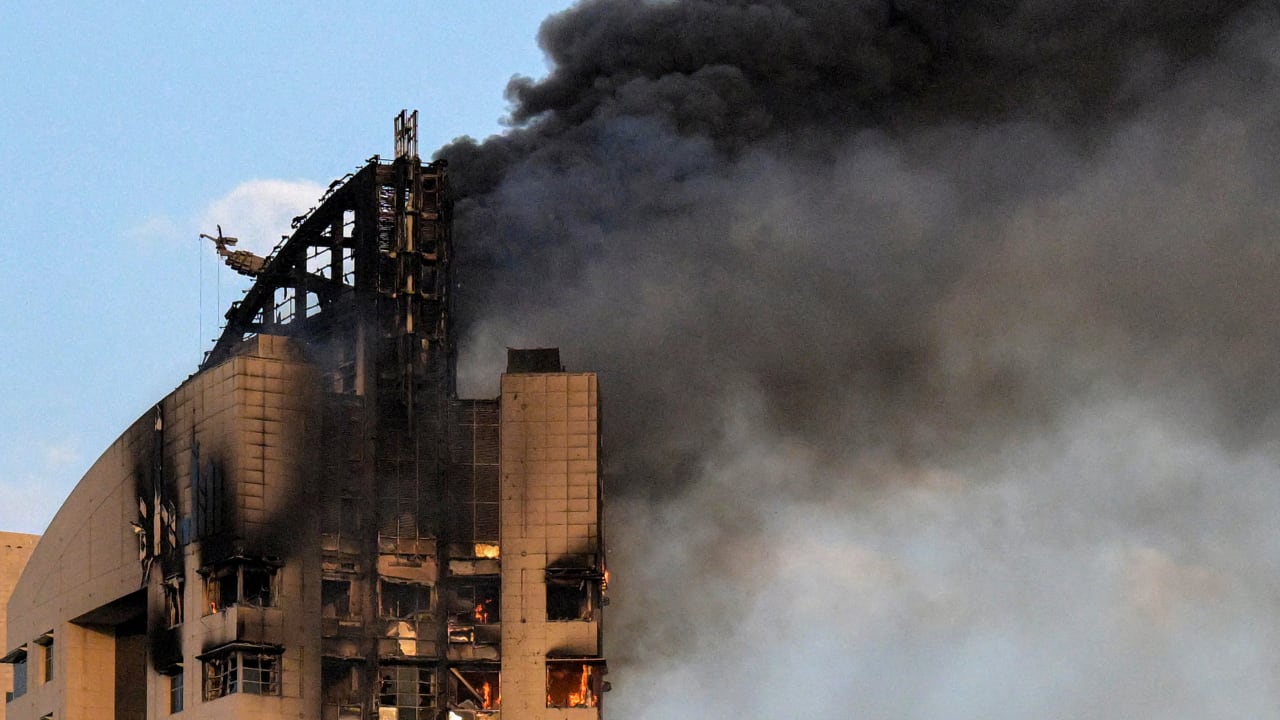
Iran appears to be activating underground terrorist cells in the Gulf states.
“Kuwait’s Ministry of Interior announced on Wednesday evening that state security forces had thwarted a terrorist cell linked to Hezbollah that was planning to target vital installations in the country,” London-based newspaper Asharq Al-Awsat reported Thursday.
It is at least the fourth cell linked to Iran that has been busted in Kuwait and Bahrain, according to reports.
Iran may be using local terror cells to inflame the region
This is important because it shows the intelligence services of these countries are able to tackle the Iranian threat, which has become increasingly multidimensional. It also shows how Iran may be turning to local groups and terrorist cells to fan the flames of war in the region.
“Brig.-Gen. Nasser Bousleib, the ministry’s official spokesperson, said in a statement that the cell consisted of 10 Kuwaiti nationals,” Asharq Al-Awsat reported. “The suspects had reportedly received training in camps affiliated with Hezbollah, including instruction in operating drones.”

The State Security Service in Kuwait has “successfully foiled a terrorist plot targeting vital facilities in the country,” the report said.
Ten people linked to Hezbollah have been detained, it said, adding that they had “engaged in prior planning and coordination with external actors.”
Iran has targeted Kuwait in the past. In the 1980s, Abu Mahdi al-Muhandis was accused of being linked to bombings of the US and French embassies in Kuwait. He later led Kataib Hezbollah in Iraq, an Iranian-backed militia group.
The threats have grown in Kuwait again. Over the past decade, Kuwait has sought to be more neutral in the Gulf. It has been less vocal in opposition to Iran in the past, in contrast to Saudi Arabia. But it is now on the front line.
“Members of the cell had undergone training abroad in Hezbollah-run camps, including weapons handling and drone operation, as part of preparations for sabotage attacks aimed at undermining state sovereignty, destabilizing the country, and spreading fear among the public,” Asharq al-Awsat reported.
Kuwait said it was working to safeguard its security, and the “authorities will continue efforts to track down those behind such plots and pursue the harshest legal measures without leniency or exception,” the report said.
Earlier this week, Kuwait arrested another cell of 14 Kuwaiti suspects and two Lebanese nationals.
“Officials seized weapons, ammunition, encrypted communication devices, drones, and narcotics from the suspects,” State-run Qatar News Agency reported Tuesday, adding that “officials said the suspects were allegedly involved in recruiting individuals to join the organization and attempting to spread unrest and disrupt public order.”
Arab News reported Sunday: “Five individuals were arrested in Bahrain for allegedly providing ‘sensitive’ information to Iran’s Islamic Revolutionary Guard Corps (IRGC), the kingdom’s ministry of interior said Sunday.”
This was the second terror cell busted in Bahrain.
“The detainees took photographs and recorded coordinates of vital sites within the Kingdom and have provided them to IRGC for the purpose of targeting them,” Arab News reported. “Five individuals were arrested and [the authorities] identified a sixth suspect who is at large abroad, after they participated in collecting and passing on accurate and sensitive information to the Iranian Revolutionary Guard through terrorist elements located in Iran.”
The detainees “took photos and recorded coordinates of a number of vital and significant locations, as well as some hotels in the kingdom, and sent the information to the IRGC, which helped in the targeting of those sites during Iranian attacks,” the report said.